
Why go
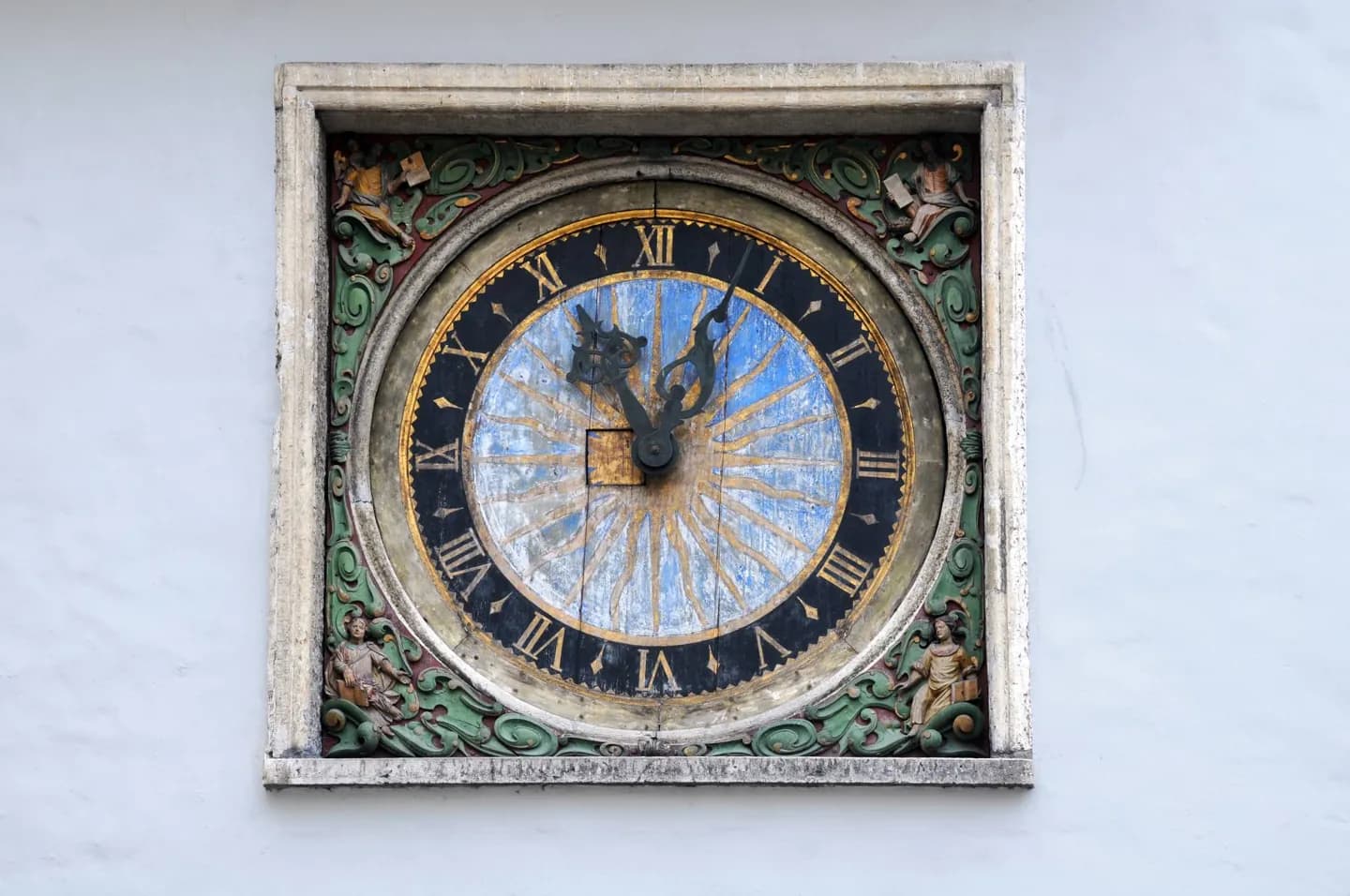
It is a short but detail-rich stop in the Lower Town. The façade clock draws the eye from the street; inside, Bernt Notke’s altarpiece, the 1597 pulpit and painted galleries reward a slower look than the modest exterior suggests at first.
What to look for
- A seventeenth-century clock decorates the façade.
- Bernt Notke’s altarpiece and a 1597 pulpit stand inside.
- Painted galleries add biblical scenes around the interior.
The full story
The Church of the Holy Spirit grew within the dense fabric of medieval Lower Town. Its irregular interior layout reflects a site shaped by existing streets and buildings rather than an ideal plan. The church later became an important Lutheran place of worship, associated with the chronicler and pastor Balthasar Russow. Its furnishings span several centuries. Bernt Notke’s fifteenth-century altarpiece depicts Pentecost, when the Holy Spirit descends on the apostles; a later pulpit and painted galleries add another layer of teaching through images. Outside, the clock makes the building recognizable on Pühavaimu Street. Unlike Tallinn’s churches with commanding towers or broad squares, this one asks visitors to look closely at details. Its setting a short walk from Town Hall Square makes that comparison easy: civic life on the square, religious art and daily worship just around the corner.
Useful to know
- Pair it with Raekoja plats and the nearby Great Guild area for a compact Lower Town walk.
- The entrance has a high threshold and lacks wheelchair access; check current arrangements if this affects your visit.
Your next visit
Estimated · Declared scenario and planning estimates; no live opening, weather, queue or booking service.
Indoor visit · 30–45 min
World planning estimate; admission, opening, visit duration and access need checking.