
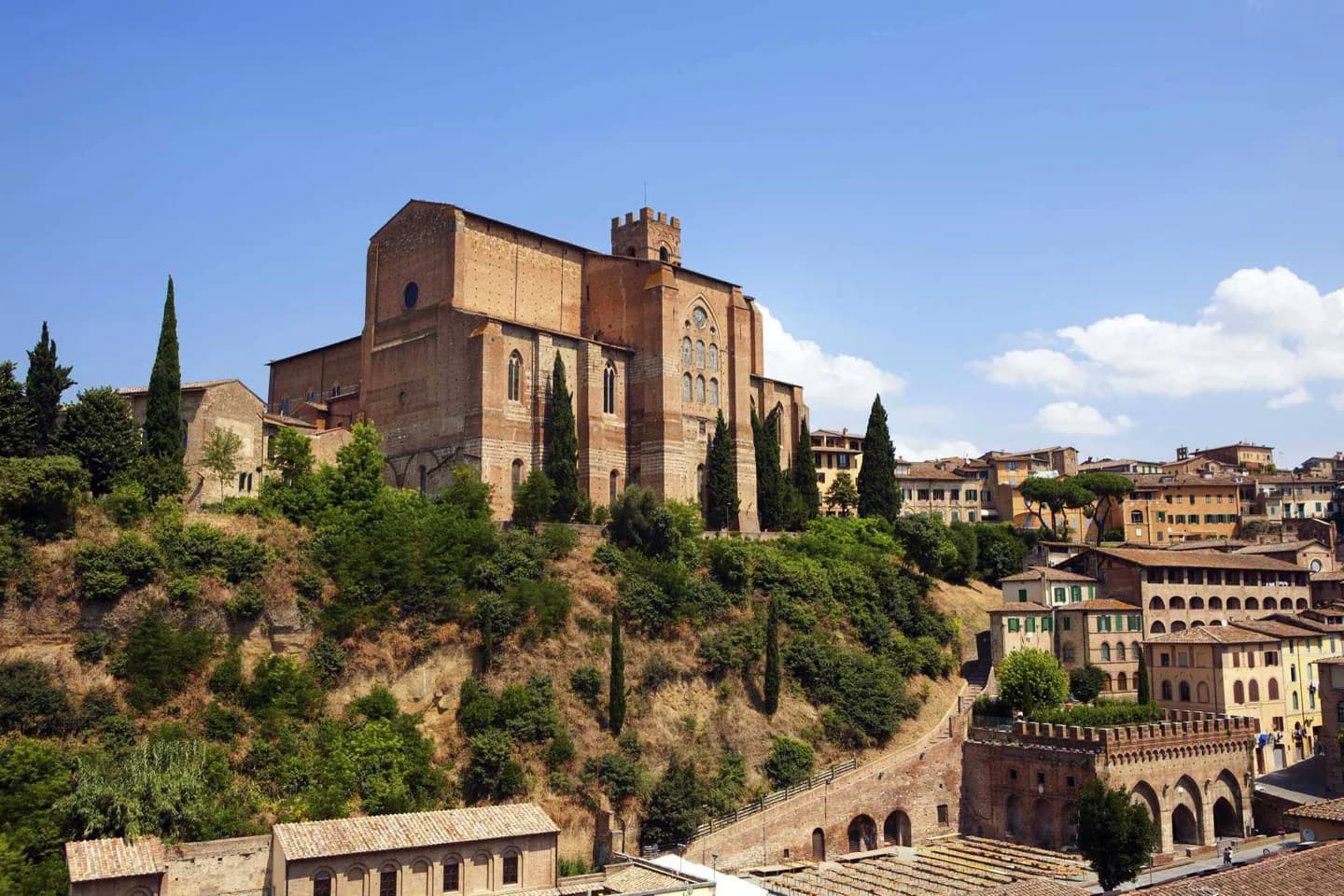
Why go
This is where Siena’s devotion to Catherine becomes tangible. The relic chapel, including the reliquary of her head, and Sodoma’s frescoes give the monumental, spare interior a personal focus that differs from the city’s more ornate churches and helps explain her enduring presence in Siena.
What to look for
- The chapel preserves a relic of Saint Catherine’s head.
- Sodoma’s frescoes depict episodes from Catherine’s life.
- A broad, timber-roofed nave defines the brick basilica.
The full story
Dominican friars began their church in the thirteenth century, and later enlargements gave it the broad Gothic form seen today. Its scale suited a preaching order: a great open nave could hold listeners without the spatial interruptions of many side aisles. The basilica’s strongest local connection is Catherine of Siena, whose family home is nearby. Her relics draw attention to a chapel where Sodoma’s painted scenes add narrative to the physical presence of the reliquary. Look first at the hall-like volume of the church, then at the intimate concentration of images and objects around Catherine. That change in scale explains why the basilica matters beyond its architecture. Siena’s best-known saint is commemorated here through both worship and art, and the setting shows how a public church became a place for remembering an individual life.
Useful to know
- Allow time to move from the open nave to Catherine’s chapel.
- Check current visiting access before making a special trip; worship information alone does not establish sightseeing hours.
Your next visit
Estimated · Declared scenario and planning estimates; no live opening, weather, queue or booking service.
Outdoor visit · 30–45 min
World planning estimate; admission, opening, visit duration and access need checking.