
Why go
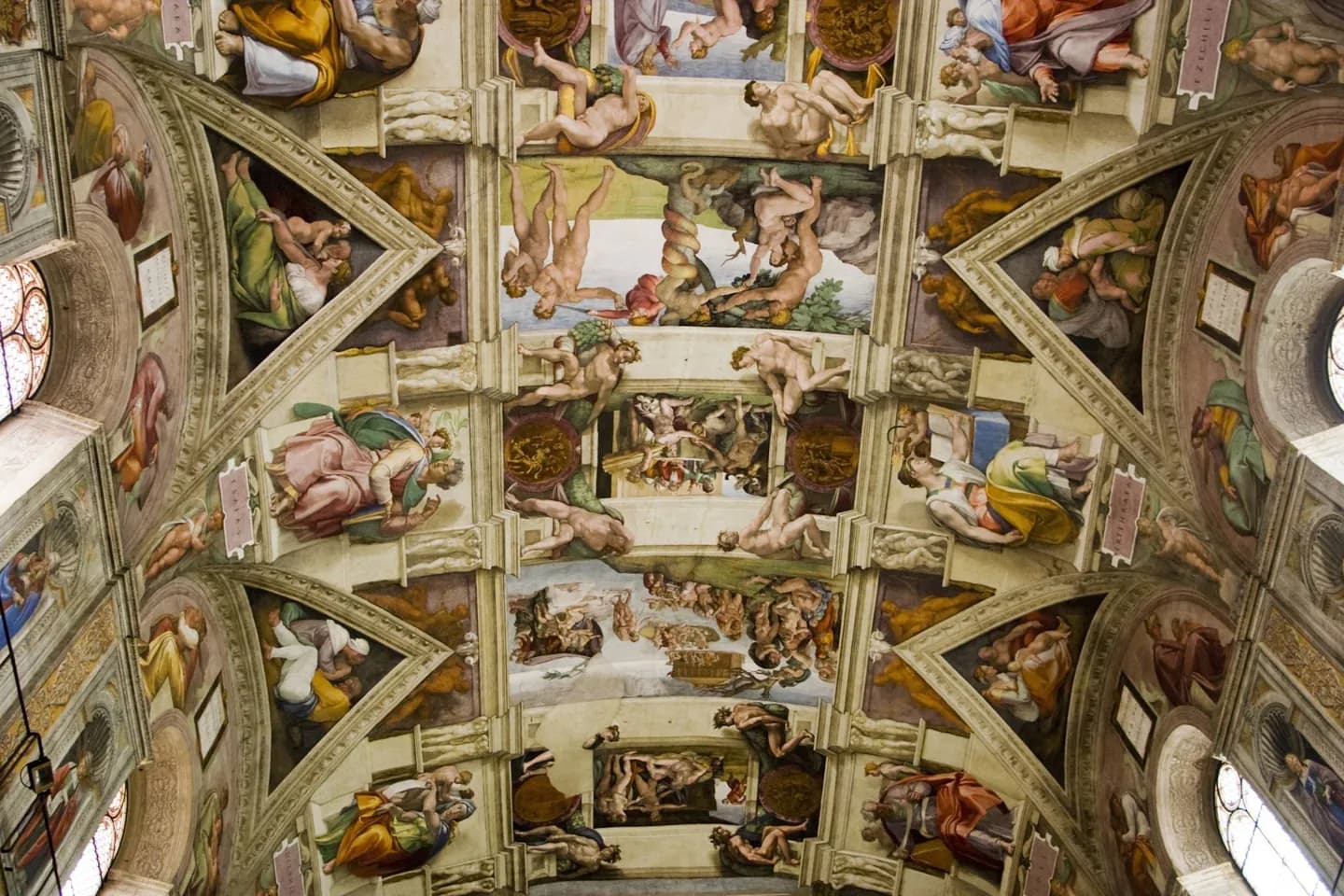
Look beyond the famous ceiling: the wall paintings set the lives of Moses and Christ in parallel, while the altar wall shows Michelangelo’s later Last Judgment. Seeing these works in the same room reveals how the chapel’s art frames its continuing ceremonial role.
What to look for
- Michelangelo’s ceiling unfolds in scenes from Genesis.
- The Last Judgment fills the altar wall.
- Earlier frescoes pair stories of Moses on the south wall with stories of Christ on the north.
The full story
Pope Sixtus IV commissioned the chapel in the late fifteenth century, and it took his name. Painters including Botticelli, Ghirlandaio and Perugino decorated its walls with scenes from the lives of Moses and Christ. Those paired cycles are easy to overlook when attention turns upward. Michelangelo painted the ceiling between 1508 and 1512, replacing an earlier starry scheme with a vast sequence centered on Genesis. Decades later, he returned to paint the Last Judgment on the altar wall. That shift in subject and date explains why the ceiling and altar wall feel like distinct works, even though they share one room. The chapel also hosts conclaves, when cardinal electors choose a pope. Its painted program remains the setting for an active decision in the life of the Church.
Useful to know
- Plan the chapel as part of the Vatican Museums route, rather than as a separate stop.
- Leave time to examine the side walls as well as the ceiling and altar wall.
Your next visit
Estimated · Declared scenario and planning estimates; no live opening, weather, queue or booking service.
Outdoor visit · 30–45 min
World planning estimate; admission, opening, visit duration and access need checking.