
Why go
Pause here to see how sculpture turns wartime suffering, resistance and renewal into a national memorial. The monument also anchors the annual Remembrance of the Dead, giving Dam Square a solemn civic role alongside its commerce and spectacle. The surrounding square makes that symbolism part of everyday city life.
What to look for
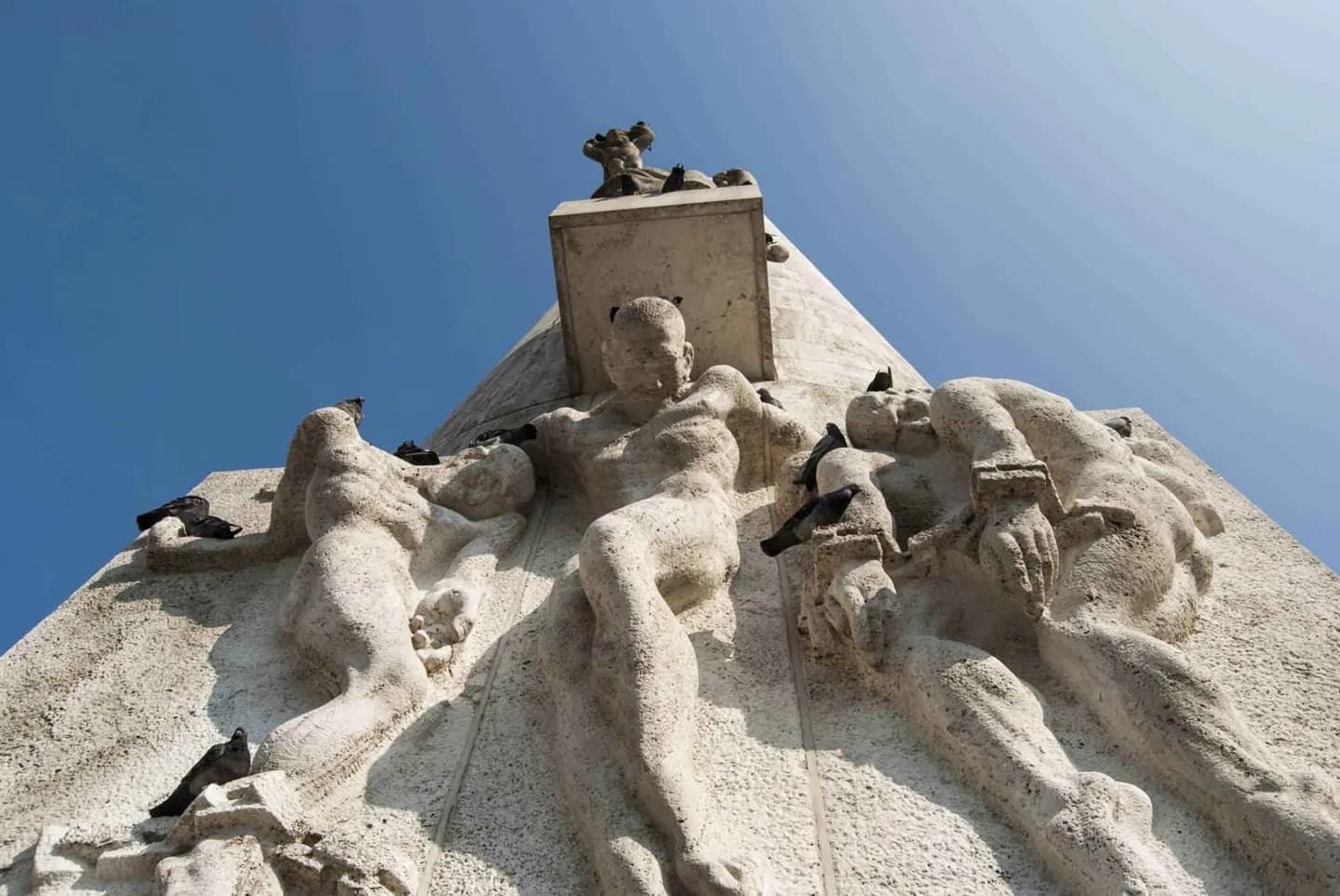
- Read the chained figures on the front relief as images of wartime suffering.
- Find the resistance figures, weeping dogs, mother and child, and ascending doves.
- Walk behind the pillar to see the semicircular wall and its commemorative urns.
The full story
Architect J. J. P. Oud and sculptor John Radecker created the National Monument after the war; Radecker's sons completed it after his death. The white travertine pillar was unveiled in 1956. Its front relief, De Vrede, shows chained male figures for wartime suffering. Side figures represent resistance; dogs signify suffering and loyalty. Higher up, a woman with a child and flying doves shifts the message toward victory, peace and new life. The wall behind the pillar holds urns containing soil from execution grounds and war cemeteries in the Dutch provinces; another urn represents the former Dutch East Indies, now Indonesia. These details make the memorial broader than a single battle or city. Its position at Amsterdam's civic centre also matters: each national Remembrance of the Dead ceremony transforms a crowded square into a place of collective silence.
Useful to know
- Circle the monument slowly; important reliefs and inscriptions continue around the back.
- Visit with Dam Square and the Royal Palace, but give this memorial a separate pause.
- Expect the surrounding steps to be busy even when the monument itself calls for reflection.
Your next visit
Estimated · Declared scenario and planning estimates; no live opening, weather, queue or booking service.
Outdoor visit · 30–45 min
World planning estimate; admission, opening, visit duration and access need checking.