
Why go
The Romanesque mural paintings are the distinctive draw, with later Catalan art and design widening the story. Seeing those works in Palau Nacional links the collection to Montjuïc’s 1929 exposition landscape. It is a substantial art visit, not merely the viewpoint at the top of the stairs.
What to look for
- Romanesque church paintings form a defining part of the collection.
- Later Catalan art and design broaden the museum’s historical range.
- The Palau Nacional halls and terraces add architectural context.
The full story
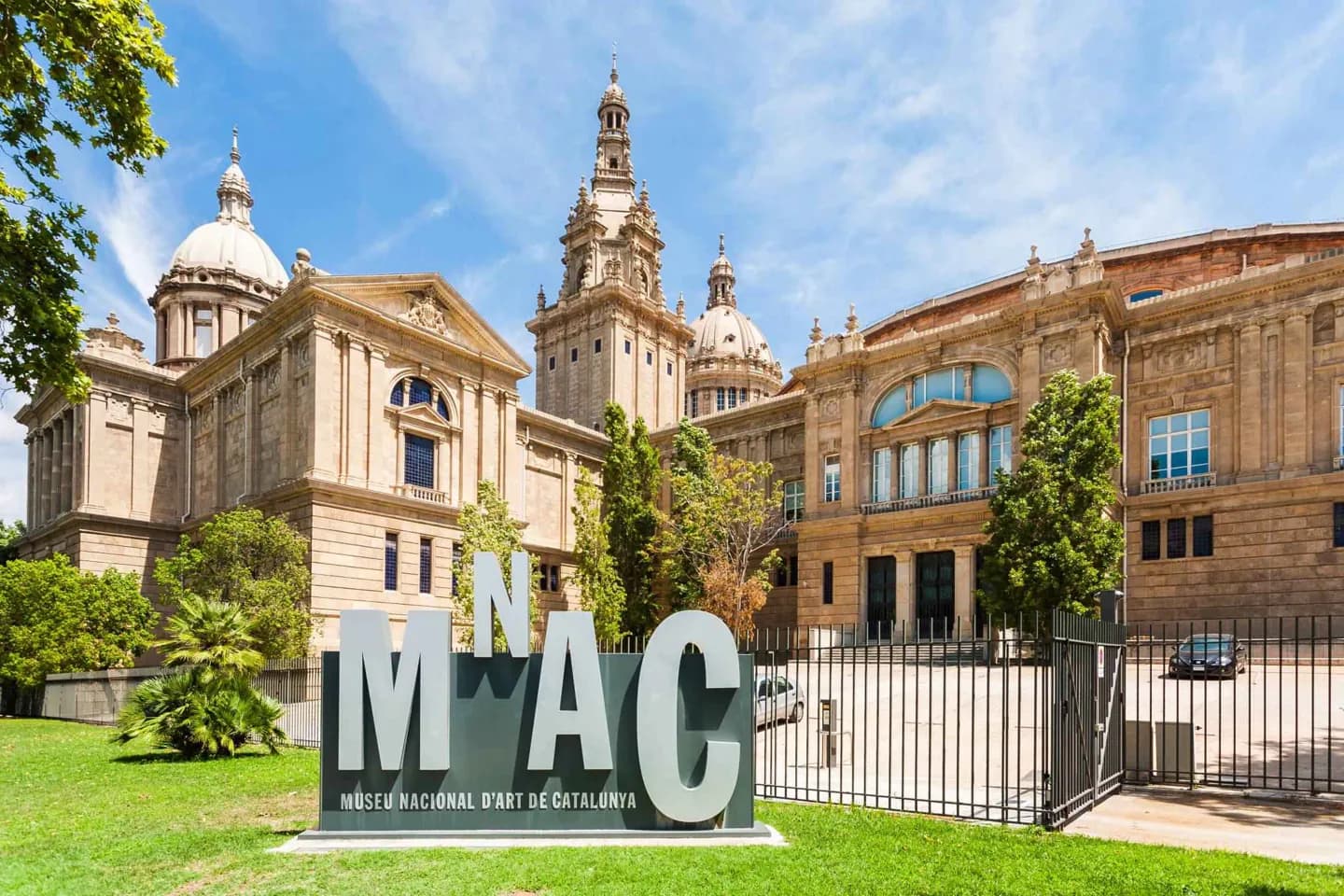
The museum occupies Palau Nacional, built for Barcelona’s 1929 International Exposition. Its grand halls now hold a collection that traces Catalan visual art across centuries. The Romanesque murals are especially important: paintings originally made for churches can be studied closely in the museum, where their forms and colours become easier to compare. Later galleries extend the story through Gothic, Renaissance and Baroque works and into modern Catalan art. The contrast between the collection and its setting is part of the experience. Palau Nacional was designed to dominate the exhibition axis from Plaça d’Espanya; the galleries ask for slower, more detailed attention. A visit can therefore move from the building’s public scale to the intimate surfaces of paintings and objects. If time is short, choose a few periods rather than rushing through every room.
Useful to know
- Select collection sections in advance if you have limited time.
- Check museum admission for galleries and terraces; viewing the building from outside is a different visit.
Your next visit
Estimated · Declared scenario and planning estimates; no live opening, weather, queue or booking service.
Indoor visit · 30–45 min
World planning estimate; admission, opening, visit duration and access need checking.