
Why go
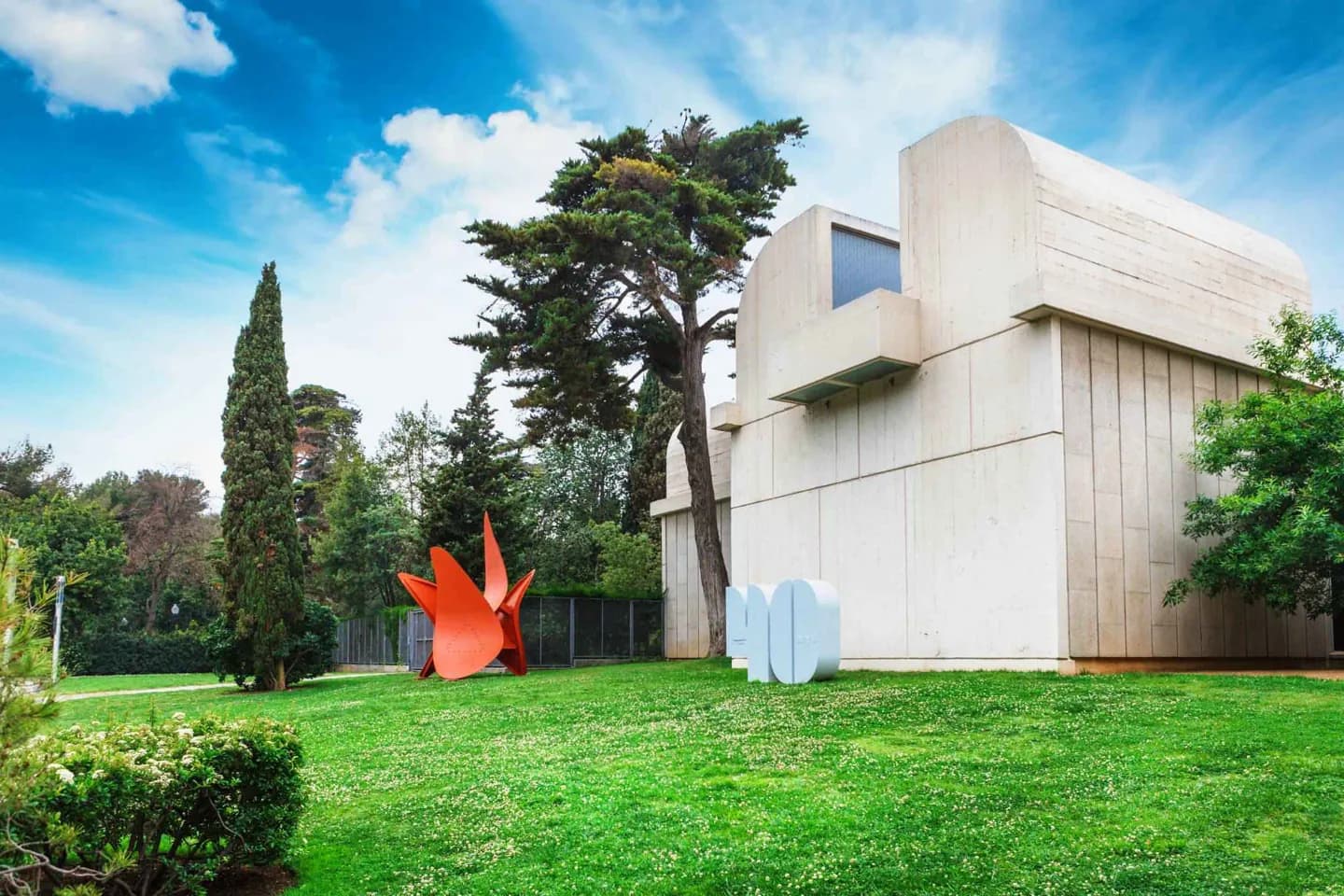
Miró helped create the foundation as a place for his work and for experimentation by later artists. Sert’s bright galleries, courtyards and terraces give the art room to breathe beside the hill’s landscape. It rewards visitors who want to connect the paintings and sculpture with their architectural setting.
What to look for
- Miró’s works anchor the collection.
- Sert’s courtyards and terraces connect the galleries to Montjuïc.
- The building’s natural light changes the way works are encountered.
The full story
Joan Miró and his friend Joan Prats conceived the foundation as more than a storehouse for an established artist’s work. It was also intended to encourage younger artists to experiment. Architect Josep Lluís Sert designed the Montjuïc building around courtyards, terraces and a clear route through the galleries. When it opened in 1975, the setting made the hill and its light part of the museum experience. Miró contributed many works to the collection, while a dedicated space for emerging artists carried forward the experimental aim. As you move through the building, look at how openings, outdoor courts and gallery walls shape the pace of viewing. The architecture offers a deliberate contrast to the monumental Palau Nacional nearby: this museum unfolds through smaller spaces and changing light.
Useful to know
- Reserve time for both the collection and the building’s outdoor spaces.
- Check the current exhibition and admission information before the visit.
Your next visit
Estimated · Declared scenario and planning estimates; no live opening, weather, queue or booking service.
Outdoor visit · 30–45 min
World planning estimate; admission, opening, visit duration and access need checking.