
Why go
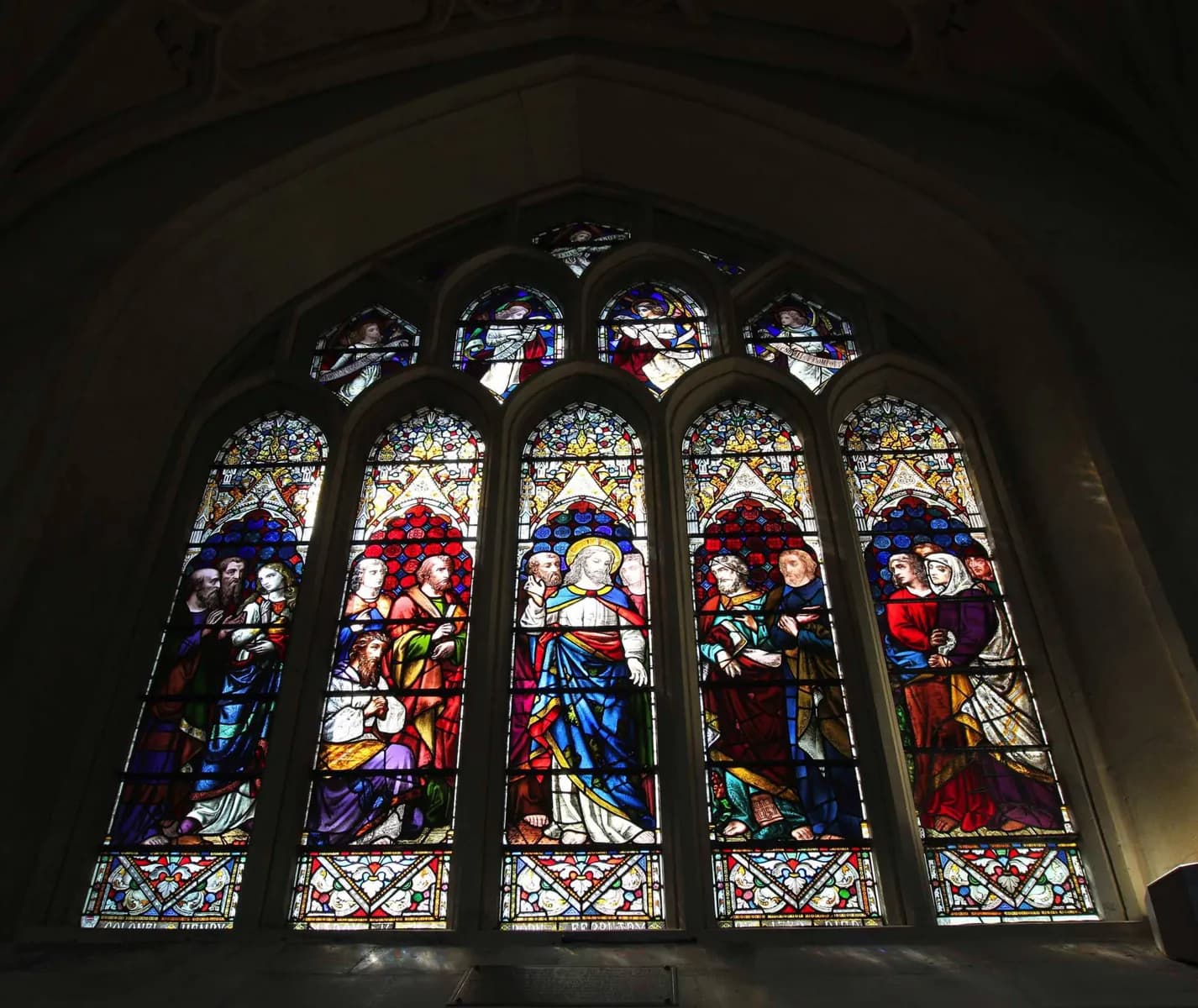
The abbey's tall interior is a sharp change from the low Roman remains next door. Look up at the fan vaulting, then seek out the Great East Window and carved angels. These details give the building its own reason for a stop, beyond its central location, and connect Bath's medieval church history to what you can actually see.
What to look for
- Fan vaulting spreads across the nave ceiling.
- The Great East Window draws the eye along the church.
- Carved angels appear in the abbey's stonework.
The full story
Bath Abbey is both an active church and the surviving expression of a much longer religious history on this site. An early foundation was later reorganised, and the church was rebuilt in different medieval phases. The form visitors see today is strongly shaped by the later Gothic rebuilding, especially its high windows and fan-vaulted ceiling. That ceiling is worth more than a quick upward glance: its branching stone ribs turn the whole nave into a single visual space. The abbey also holds memorials to people connected with Bath and beyond, so the interior records civic lives as well as worship. Its position beside the Roman Baths puts two very different uses of Bath's centre almost side by side. The contrast is clearest after seeing the lower bathing remains and then entering the church's tall, light-filled space. Because worship continues here, the building's present life is part of its meaning, not just its medieval architecture.
Useful to know
- Check the abbey's visitor timetable around services before setting aside an interior visit.
- Allow roughly three quarters of an hour inside, then cross Abbey Church Yard to the Roman Baths.
Your next visit
Estimated · Declared scenario and planning estimates; no live opening, weather, queue or booking service.
Indoor visit · 30–45 min
World planning estimate; admission, opening, visit duration and access need checking.