
Why go
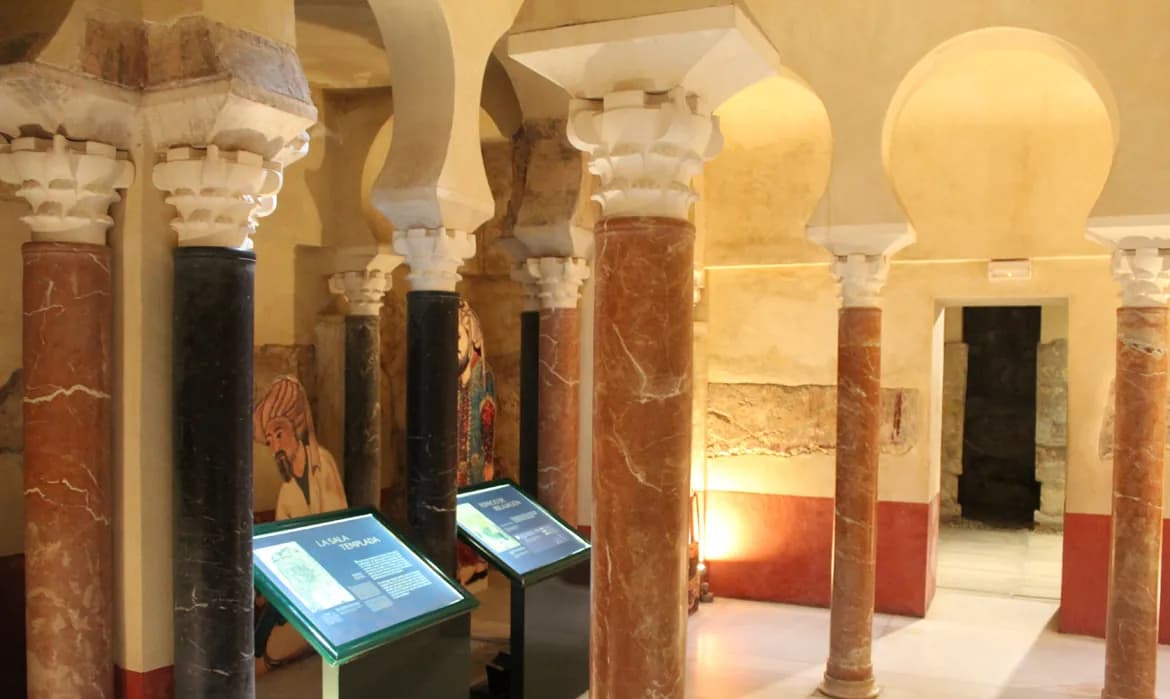
These baths bring the palace world down to human scale. Moving through the bathing sequence makes the architecture’s purpose clear, while star-shaped openings in the vaults add the detail people tend to remember. They also connect Córdoba’s Islamic court to the older Roman bathing tradition.
What to look for
- Rooms follow the cold, warm and hot bathing sequence.
- Star-cut openings punctuate the vaults.
- Arches and columns shape the surviving rooms.
The full story
The baths were built under the tenth-century caliph al-Hakam II for the court beside the Andalusi Alcázar. Bathing served cleanliness and social life, and the rooms follow the Roman-derived progression through different temperatures. The remains therefore show both continuity with an older Mediterranean practice and the particular setting of Córdoba’s caliphal palace. Later Almoravid and Almohad rulers also used the baths, leaving decoration associated with their periods. The complex disappeared below ground, was found in the early twentieth century, and was uncovered again decades later. On site, focus on the sequence of spaces rather than trying to imagine one intact hall. The surviving arches, columns and star-cut ceiling openings give enough clues to reconstruct how visitors moved through the hammam.
Useful to know
- Combine the baths with the nearby Alcázar area, subject to each site’s access.
Your next visit
Estimated · Declared scenario and planning estimates; no live opening, weather, queue or booking service.
Outdoor visit · 30–45 min
World planning estimate; admission, opening, visit duration and access need checking.