
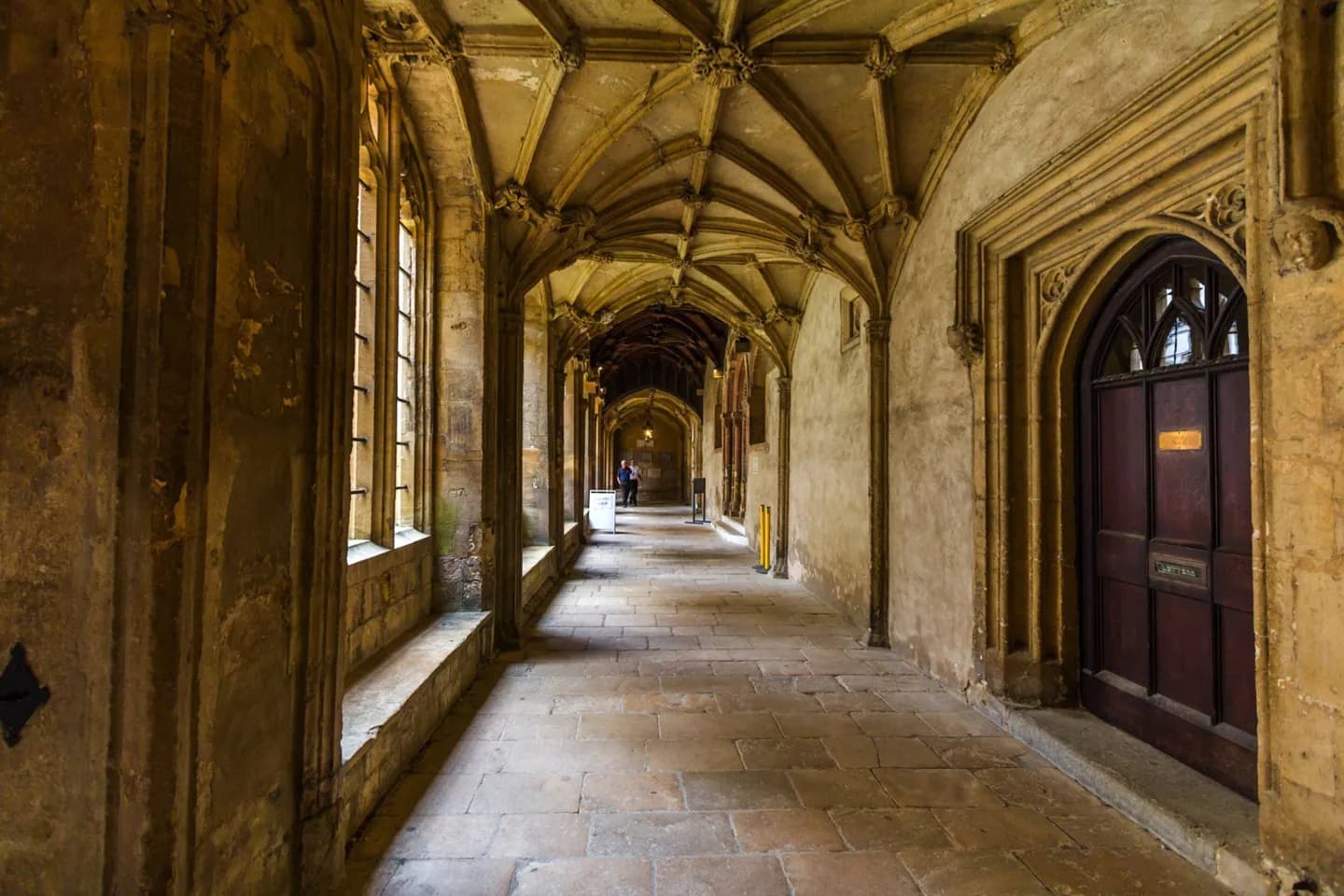
Why go
The Bodleian Library, Sheldonian Theatre and a college such as Christ Church each reveal a different part of university life. Moving between them also shows how university buildings share Oxford’s streets with churches, shops and civic spaces. The separate entry arrangements are part of planning a realistic university visit.
Useful to know
- Check each college, library or museum separately for public entry and tours.
- Plan around individual buildings rather than searching for one university visitor entrance.
The route, stop by stop
Times are planning estimates. Unknown visit durations start at an editable 30 minutes; access is checked separately.
- 01
Optional · – min
Christ Church
Christ Church combines an Oxford college, grand historic rooms and the cathedral in one visitor route. Plan ahead for a ticketed visit, since access can change around college and worship use.
Explore Walk · 8 min · Estimated
02Optional · – min
Bodleian Library
Oxford's historic research library occupies several buildings around the university centre. A guided tour is the way to see its famous old rooms; public Weston Library spaces offer a different visit.
ExploreWalk · 2 min · Estimated
03Optional · – min
Sheldonian Theatre
Christopher Wren's seventeenth-century ceremonial theatre stands beside Broad Street. Its roof and cupola reward an architectural visit, but university ceremonies and events can change public access.
Explore- 04
Optional · – min
Visiting the University of Oxford
Oxford's university is spread through the city, with colleges, libraries and teaching buildings occupying separate sites. Plan around the particular places you want to see, since each has its own visitor arrangements.
Explore - 05
Optional · – min
How Oxford’s University Began
Oxford’s university has no single foundation date. Teaching is recorded by the late eleventh century, while later student, town and college arrangements gradually formed the institution visitors recognise.
Explore - 06
Optional · – min
Renaissance and Reformation at Oxford
New learning, religious change and political conflict reshaped the university from the late fifteenth to seventeenth centuries. Colleges and the Bodleian connect those shifts to places still visible in Oxford.
Explore - 07
Optional · – min
The Modern University Takes Shape
Nineteenth-century reforms broadened Oxford’s subjects and loosened older religious restrictions. Later wars and displaced scholars changed university life again, even while its colleges remained visible in the centre.
Explore - 08
Optional · – min
Women and the University of Oxford
Women studied in Oxford before they could take university degrees on equal terms. The histories of Somerville, Lady Margaret Hall and other colleges make that long, uneven change visible.
Explore - 09
Optional · – min
Finding the University Across Oxford
Oxford’s university buildings are woven through the city rather than gathered on one campus. Radcliffe Square, Broad Street, the Science Area and university green spaces each show a different side.
Explore - 10
Optional · – min
How Oxford’s Colleges Work
Oxford’s colleges are distinct communities within a wider university. Understanding that split helps you choose a college to visit and explains why libraries, departments and ceremonial buildings have separate roles.
Explore - 11
Optional · – min
Oxford's university libraries
The Bodleian is a network of Oxford libraries, not a single reading room. Its historic buildings around Broad Street and Radcliffe Square give visitors a way to understand the university's book culture.
Explore - 12
Optional · – min
People who studied at Oxford
Oxford's alumni include writers, scientists and political leaders, but their connections belong to individual colleges and different periods. Use those associations to add meaning to a college visit.
Explore