
Why go
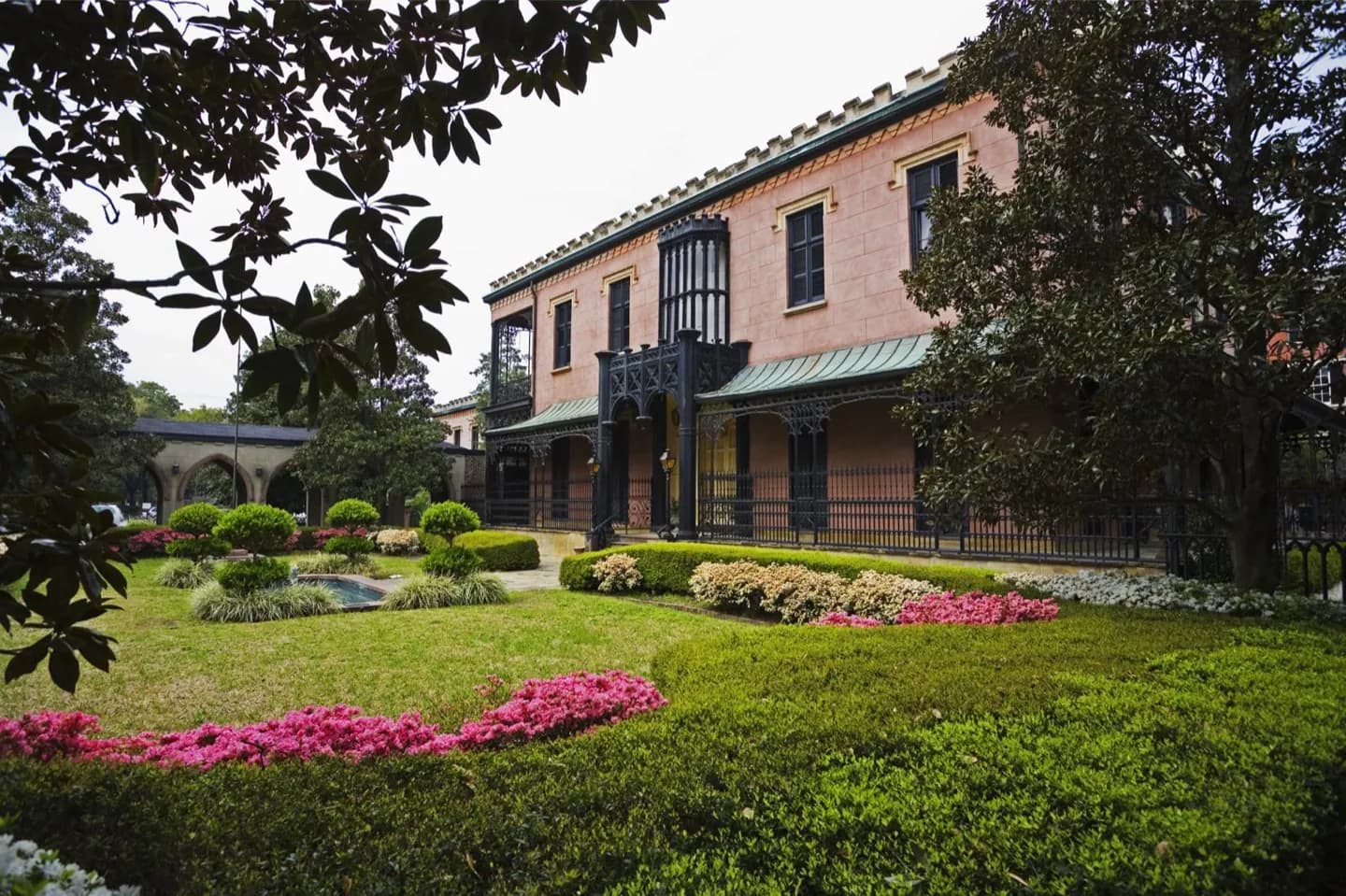
John Norris designed a striking house for cotton merchant Charles Green, with pointed arches, projecting oriel windows and ironwork that stand apart from Savannah's more familiar classical houses. After Union forces took the city in 1864, William T. Sherman used it as his headquarters. That contrast between private wealth and wartime command gives the rooms more to say than their decoration alone.
What to look for
- The cast-iron porch, fence and oriel windows give the Madison Square frontage its Gothic outline.
- The house served as Sherman's Savannah headquarters after the Union capture of the city.
- St. John's Church next door explains the building's continuing parish connection.
The full story
Charles Green, a cotton merchant, commissioned John Norris to build this Madison Square residence in the years before the Civil War. Its pointed Gothic details, iron porch and projecting windows made a sharp departure from the classical fronts around many Savannah squares. The house gained another role when Union forces entered Savannah in 1864 and General William T. Sherman used it as his headquarters. From here he sent President Lincoln his message offering Savannah as a Christmas gift, amid a cotton merchant’s wealth. Peter Meldrim later bought the house, and his heirs sold it to neighboring St. John's Church. The parish connection explains why a historic-house visit must coexist with an active religious property today. Madison Square still frames that contrast.
Useful to know
- See the facade from Madison Square even if you skip the house tour.
- Check the house's tour calendar before planning an interior visit; parish events can affect access.
Your next visit
Estimated · Declared scenario and planning estimates; no live opening, weather, queue or booking service.
Outdoor visit · 30–45 min
World planning estimate; admission, opening, visit duration and access need checking.