
Why go
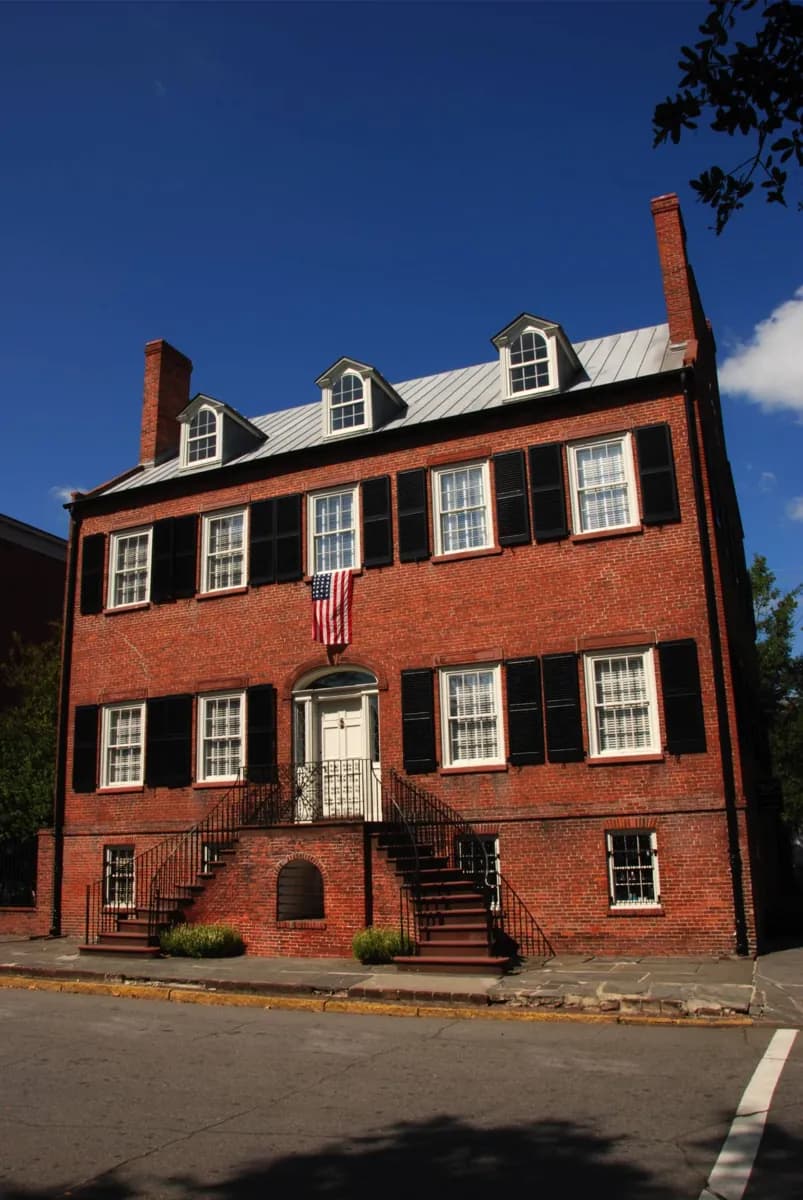
Davenport’s home shows a master builder’s ambition in the 1820s, then the rescue that helped launch Historic Savannah Foundation. The exhibits make room for the labor and lives of enslaved people within that household history. The preservation story is visible through the survival of the whole building, not just one furnished room.
What to look for
- The Federal-style house stands at the edge of Columbia Square.
- Curved stairways organize the main-house tour.
- The Urban Enslaved exhibition addresses people who lived and worked there.
The full story
Isaiah Davenport, a master builder, designed and built this house for his family around 1820. It also demonstrated the skill of his building crew. His household included enslaved people whose labor and lives must be part of the account of the home, not a footnote to its architecture. After Davenport died, his widow Sarah turned the building into a boarding house. Its fortunes changed again as the neighborhood and house aged. In 1955, when demolition threatened it, local residents bought the property; that rescue became the first act of Historic Savannah Foundation. The museum opened in 1963. A tour now offers two stories at once: the rooms and craft of an early nineteenth-century house, and the mid-twentieth-century decision to save it. The separate Urban Enslaved exhibition helps correct the old habit of telling such a house only through its owner and decorative features.
Useful to know
- Book a specific guided-tour time to secure entry.
- The main-house route uses three stair sets; ask about accessible exhibitions if needed.
- Combine the visit with a walk around Columbia Square.
Your next visit
Estimated · Declared scenario and planning estimates; no live opening, weather, queue or booking service.
Outdoor visit · 30–45 min
World planning estimate; admission, opening, visit duration and access need checking.