
Why go
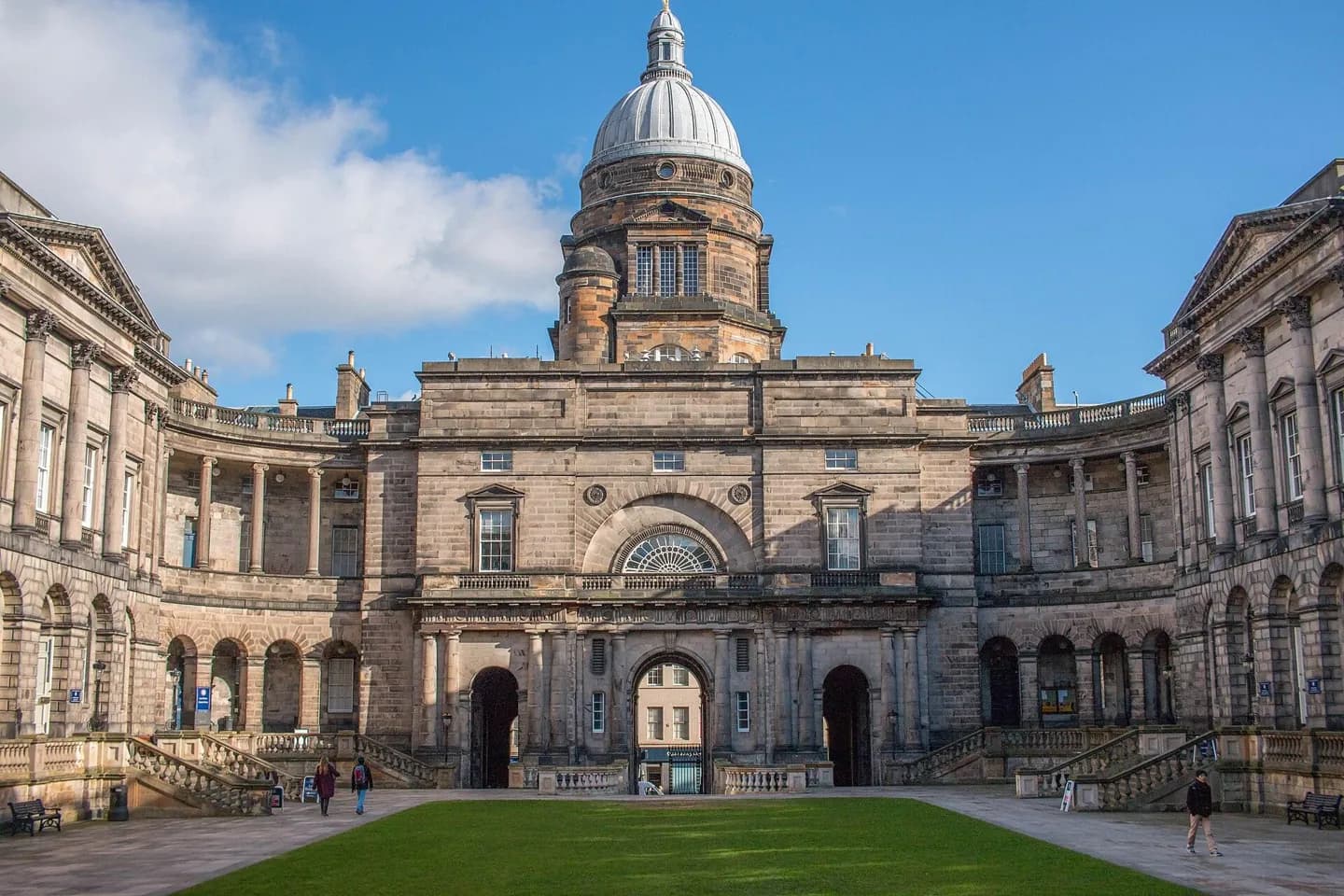
Robert Adam’s university project and William Henry Playfair’s later revisions explain the scale of this building amid the Old Town. Look at it as a working university rather than an open historic house. Art visitors can also consider Talbot Rice Gallery, whose visitor arrangements are separate from access to the wider college.
What to look for
- Robert Adam designed the replacement for the university’s older buildings.
- Playfair’s revision combined two planned courts into one quadrangle.
The full story
Old College began as an ambitious replacement for a collection of worn university buildings. Subscriptions funded Robert Adam’s scheme in 1789, and the foundation stone was laid that November. His plan arranged professors’ lodgings around a first court, with academic halls and lecture rooms around a larger court beyond it. Some rooms were already in use by the end of 1791. Adam’s death, war and financial pressures then slowed the project and brought work to a halt. Building resumed after further funds were raised in 1815. William Henry Playfair followed much of Adam’s design but made a substantial change: he combined the two courts into a single large quadrangle. Most of the building was complete by 1827, with library fitting and the proposed dome still outstanding. The result is a university complex shaped by two architects and interrupted construction, rather than a single uninterrupted Georgian scheme.
Useful to know
- View the South Bridge frontage; confirm college or courtyard access before planning to enter.
- Check Talbot Rice Gallery separately if an exhibition is your reason for visiting.
Your next visit
Estimated · Declared scenario and planning estimates; no live opening, weather, queue or booking service.
Outdoor visit · 15–20 min
World planning estimate; admission, opening, visit duration and access need checking.