
Why go
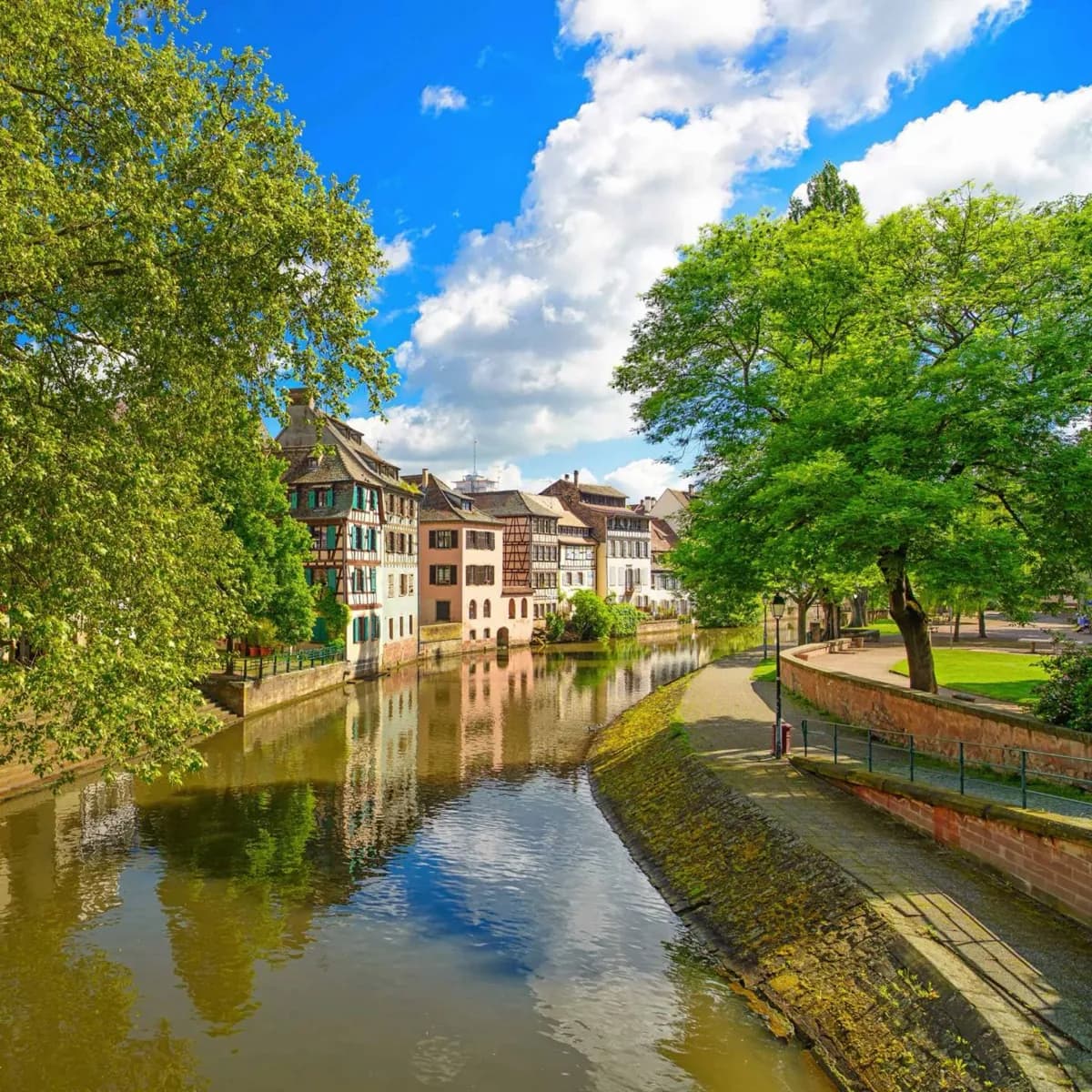
Grande-Île lets you read the old city as a whole: the cathedral anchors the streets while the Ill and its canals mark the island’s edge. It is the useful starting point for linking major monuments with smaller lanes, squares and bridges, without assuming access to every building you pass.
What to look for
- Cathedral-centered streets lead through the historic core.
- Bridges reveal the Ill and canals that define the island.
- Churches such as Saint-Thomas and Saint-Pierre-le-Jeune show another side of the centre.
The full story
The island’s shape made water part of Strasbourg’s street plan, rather than a distant backdrop. The Ill splits around the historic centre and returns through a network of canals, so short walks repeatedly shift from close stone streets to open views over water. The cathedral gives the island a strong centre, but it is only one layer of the story. Saint-Thomas and Saint-Pierre-le-Jeune preserve different chapters of the city’s religious life, while the squares and bridges show how civic space grew around them. Grande-Île was inscribed on the UNESCO World Heritage List in 1988 for the coherence of this historic urban ensemble. Notice how the experience changes as you move outward: near the cathedral, façades and lanes crowd together; nearer the river, the edges of the island make its geography visible. That contrast is the reason to explore on foot rather than treat the area as a single monument.
Useful to know
- Treat the mapped point as an area; choose a route between the cathedral and the river.
- Check each church or museum separately if you plan to go inside.
Your next visit
Estimated · Declared scenario and planning estimates; no live opening, weather, queue or booking service.
Outdoor visit · 40–75 min
World planning estimate; admission, opening, visit duration and access need checking.