
Why go
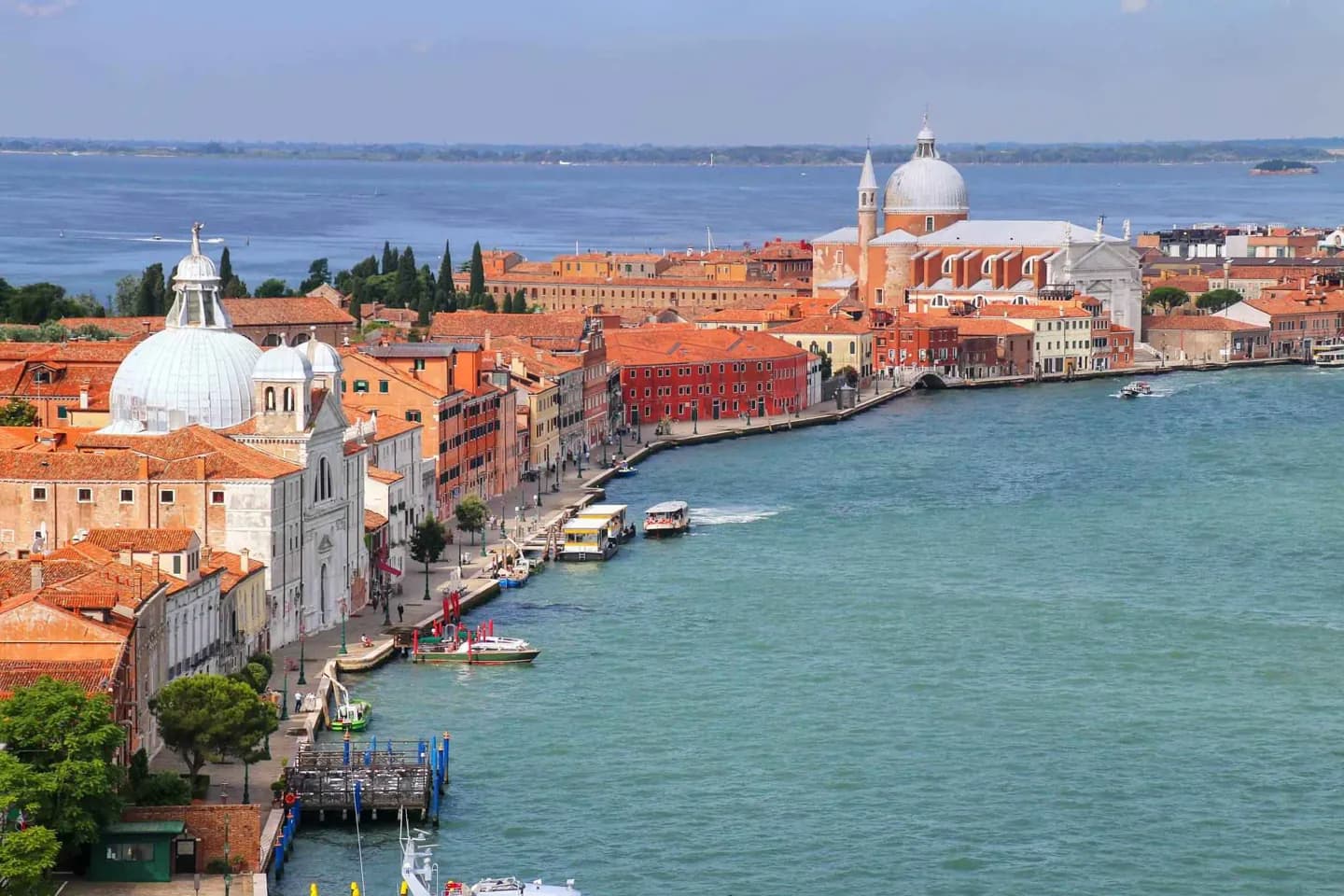
The broad Giudecca Canal gives this outing a different perspective on Venice from the central islands. Palladio's Redentore and the Zitelle anchor the waterfront, while the Molino Stucky recalls the island's industrial chapter. This is useful for an outdoor walk focused on water, large buildings and changing land use.
What to look for
- The Redentore's white façade faces the Giudecca Canal.
- The Zitelle marks the eastern waterfront itinerary.
- The Molino Stucky preserves the scale of a former flour mill.
The full story
Giudecca was once known as Spinalunga. Its later name has sometimes been linked with Jewish settlement, but the name alone does not establish that history; Venice's documented Ghetto is in Cannaregio. That distinction prevents the island from being confused with a very different part of the city. Large residences and gardens preceded a period of shipyards, factories and other industrial activity. The enormous Molino Stucky is a visible reminder of that working landscape. Later reuse of industrial buildings added another layer without erasing their scale. The island belongs administratively to Dorsoduro, yet the Giudecca Canal separates it physically from the central district. That separation matters more to a visitor's route than the shared sestiere name. Its long waterfront and prominent churches face Venice across open water, making the island a place from which to observe the city as well as a destination with its own history.
Useful to know
- Plan Giudecca as an island outing and check water transport for both arrival and return.
- Follow the waterfront between Redentore and Zitelle for a focused walk.
- Prefer fair weather when the open canal-facing promenade is the main activity.
Your next visit
Estimated · Declared scenario and planning estimates; no live opening, weather, queue or booking service.
Outdoor visit · 75–150 min
World planning estimate; admission, opening, visit duration and access need checking.