
Why go
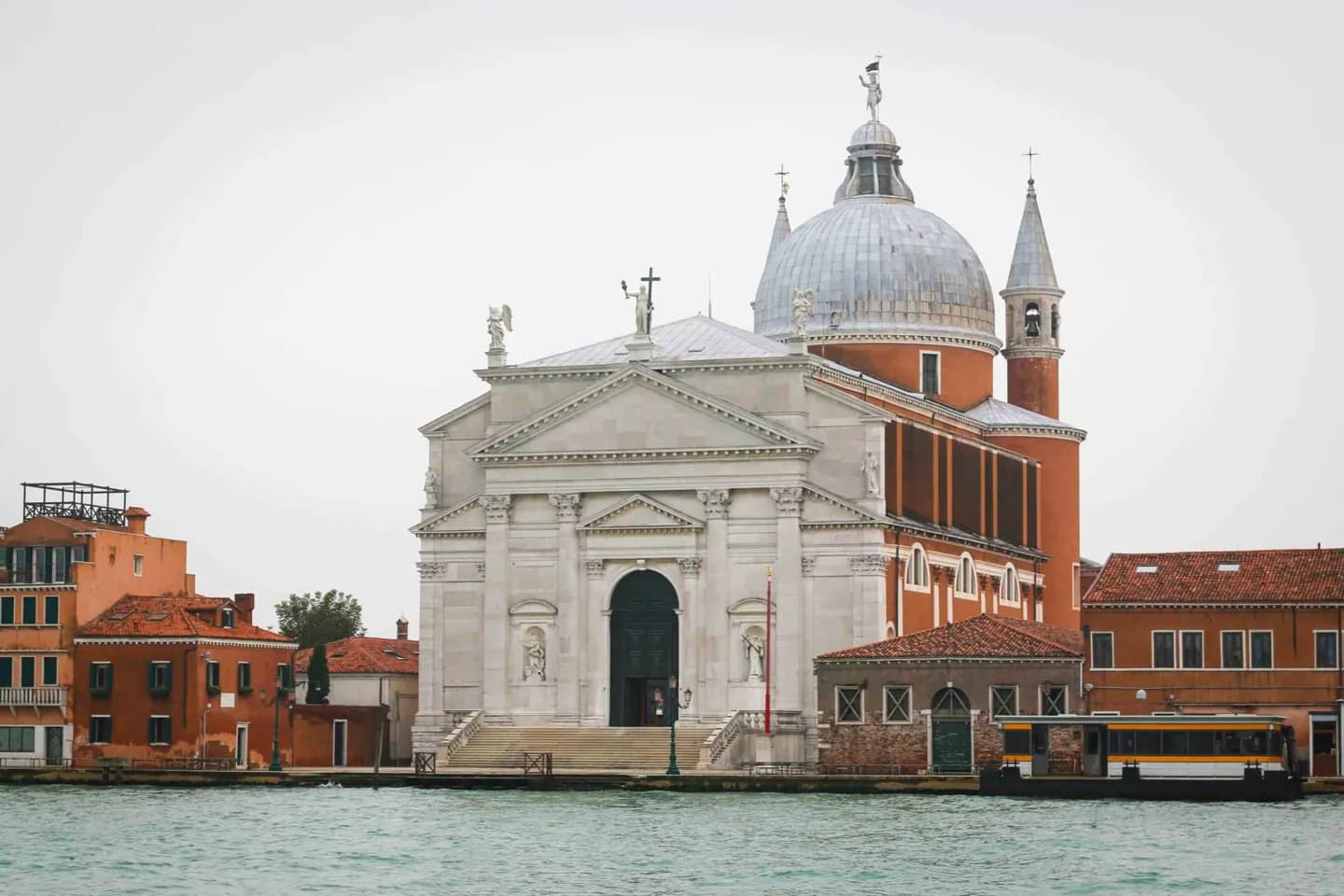
The church rewards following the architecture as a sequence rather than treating it as a collection of paintings. The raised entrance, ordered façade and single nave guide the approach to the altar. Its canal-facing position also makes a close-up visit part of understanding Giudecca's skyline from across the water.
What to look for
- A central triangular pediment overlaps a broader lower pediment.
- A statue of the Redeemer crowns the dome.
- Three chapels line each side of the single nave.
The full story
The Venetian Senate commissioned the church after a devastating plague outbreak, making it a votive building: architecture offered in thanksgiving for the city's deliverance. Palladio chose a single nave even though the Senate had favoured a square plan. The result gives the ceremonial movement toward the altar a clear direction. The approach also has religious meaning. A broad plinth and rising steps separate the entrance from the waterfront, making ascent part of the act of entering. Classical forms on the façade belong to Palladio's effort to give a Christian church an ordered monumental presence. The Republic's leaders later crossed from the Zattere to Giudecca on a specially constructed pontoon bridge to attend Mass here. That ritual connected the building with the city across the canal. The Redentore festival carries this association between public thanksgiving, water crossing and religious observance into Venice's continuing cultural life.
Useful to know
- Include the church in a Giudecca waterfront walk toward the Zitelle.
- Look at the façade from the waterfront before following the nave's progression inside.
Your next visit
Estimated · Declared scenario and planning estimates; no live opening, weather, queue or booking service.
Indoor visit · 30–45 min
World planning estimate; admission, opening, visit duration and access need checking.