
Why go
The point makes Venice's water geography legible. San Giorgio Maggiore lies across the basin, the Molo di San Marco faces it from the central city, and two major canals converge beside the old customs house. The setting explains why controlling maritime arrivals belonged here and gives the waterfront architecture a practical historical purpose.
What to look for
- The point overlooks San Giorgio Maggiore and the Molo di San Marco.
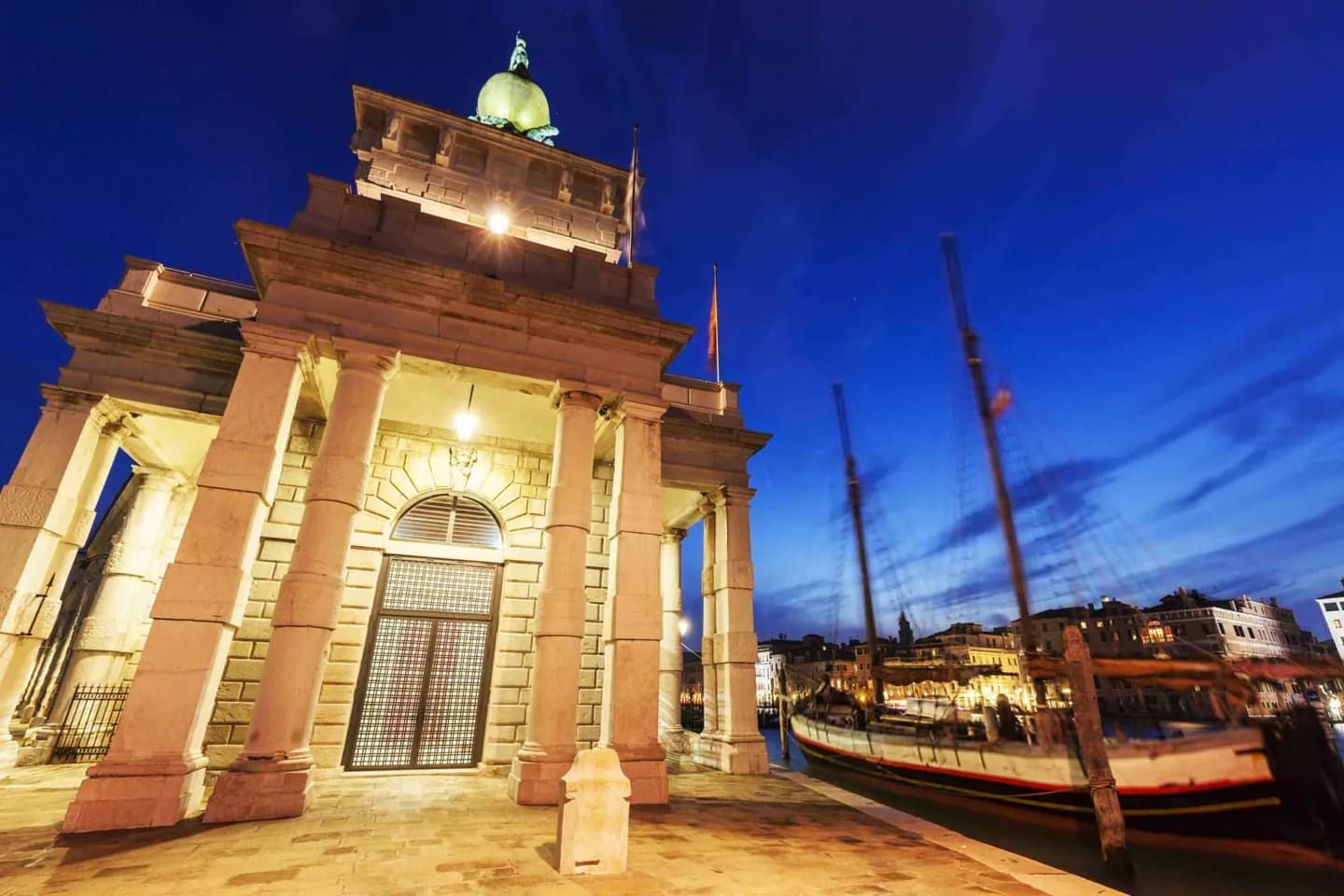
- A golden globe and the figure of Fortune crown the old customs house.
The full story
The tip of Dorsoduro served docking and customs activity before the permanent Dogana da Mar was built in the late seventeenth century. Its location was functional: ships approaching Venice passed a point between major waterways, where merchandise could be supervised before moving farther into the city. The sculpture above the building gives that function a ceremonial expression. Supporting figures hold a golden globe topped by Fortune, a figure designed to turn with the wind. The composition expressed the Republic's power while borrowing movement from the maritime environment beneath it. The customs building later acquired a cultural use through restoration by Tadao Ando. That change belongs to the history of adapting Venice's working infrastructure for art. The outdoor point retains its own identity, however. Looking across the basin connects the former commercial checkpoint with the civic waterfront opposite and the separate island of San Giorgio Maggiore. The view explains the original building more directly than its later use alone.
Useful to know
- Combine the outdoor point with neighboring Santa Maria della Salute.
- Treat the waterfront viewpoint and a customs-house exhibition visit as separate choices.
Your next visit
Estimated · Declared scenario and planning estimates; no live opening, weather, queue or booking service.
Outdoor visit · 20–30 min
World planning estimate; admission, opening, visit duration and access need checking.