
Why go
The palace gives the art a social setting: its broad façade and principal floors were designed to express patrician standing. Frescoes that remained in the building connect the rooms with their earlier occupants. This makes the visit a focused complement to the Accademia's wider survey of Venetian painting.
What to look for
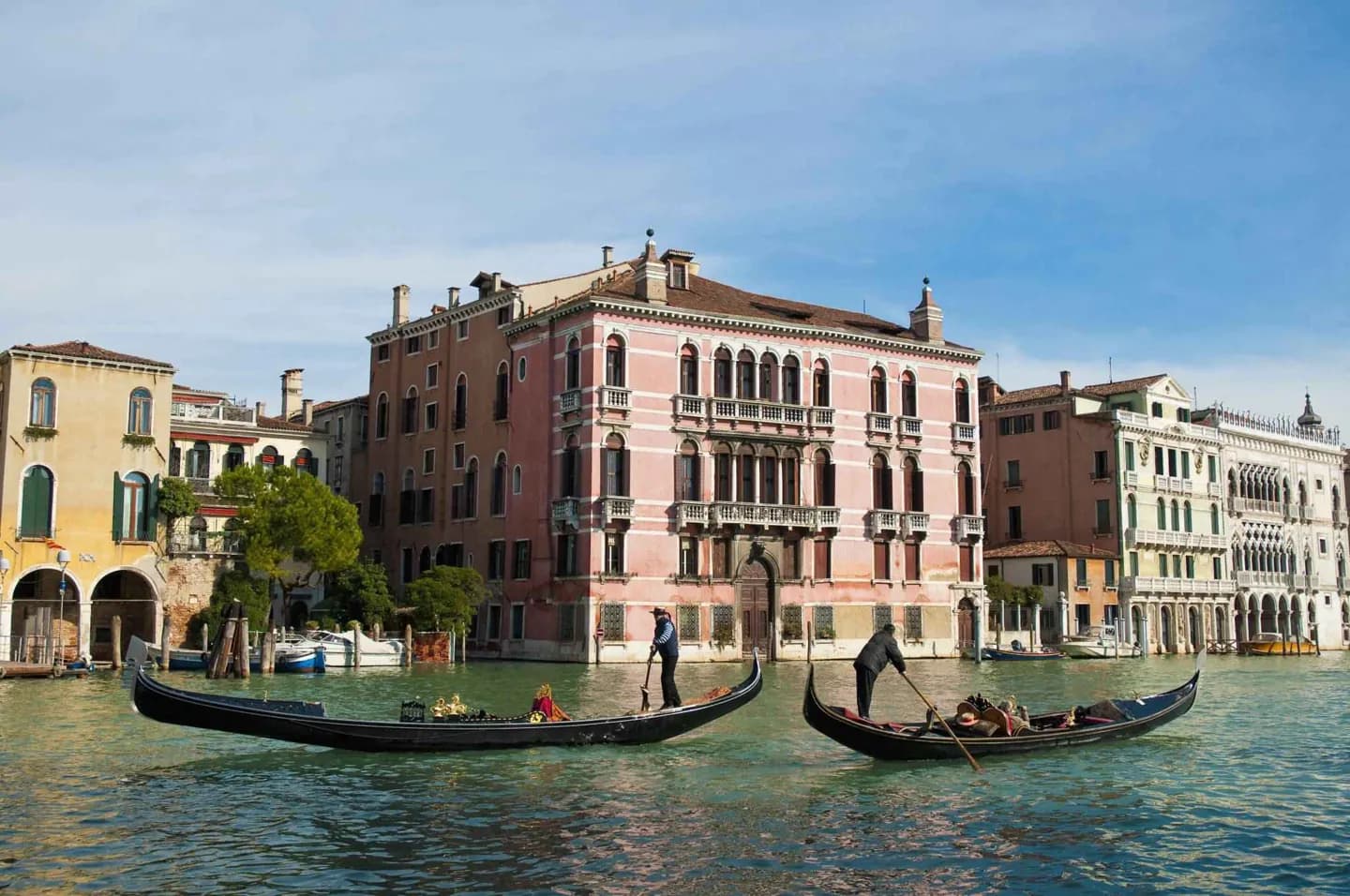
- Two tiers of arched windows and balconies mark the principal floors.
- A rusticated lower level frames the recessed canal portico.
- Low oval windows form the upper mezzanine.
The full story
The palace began as Filippo Bon's ambitious project with Baldassarre Longhena, but financial trouble and the architect's death left it unfinished. The Rezzonico family later acquired the building, and Giorgio Massari completed it while retaining much of Longhena's design. Its architecture therefore joins a Baroque conception with a later phase of completion. For the Rezzonico, finishing the palace expressed a social ascent. The family had acquired Venetian noble status through a large contribution to the Republic during a period of financial need. Their completed Grand Canal residence made that position conspicuous. Later sales dispersed furnishings and collections, while the frescoes stayed in place. Subsequent occupants included Robert Barrett Browning; his father, the poet Robert Browning, died here. The palace eventually became a museum, giving a building shaped by ambition, dispersal and changing residents a civic role in presenting eighteenth-century Venice.
Useful to know
- Make Ca' Rezzonico the main palace museum in a western Dorsoduro walk.
- Combine it with nearby Campo San Barnaba rather than adding several major museums to the same outing.
Your next visit
Estimated · Declared scenario and planning estimates; no live opening, weather, queue or booking service.
Indoor visit · 60–90 min
World planning estimate; admission, opening, visit duration and access need checking.