
Why go
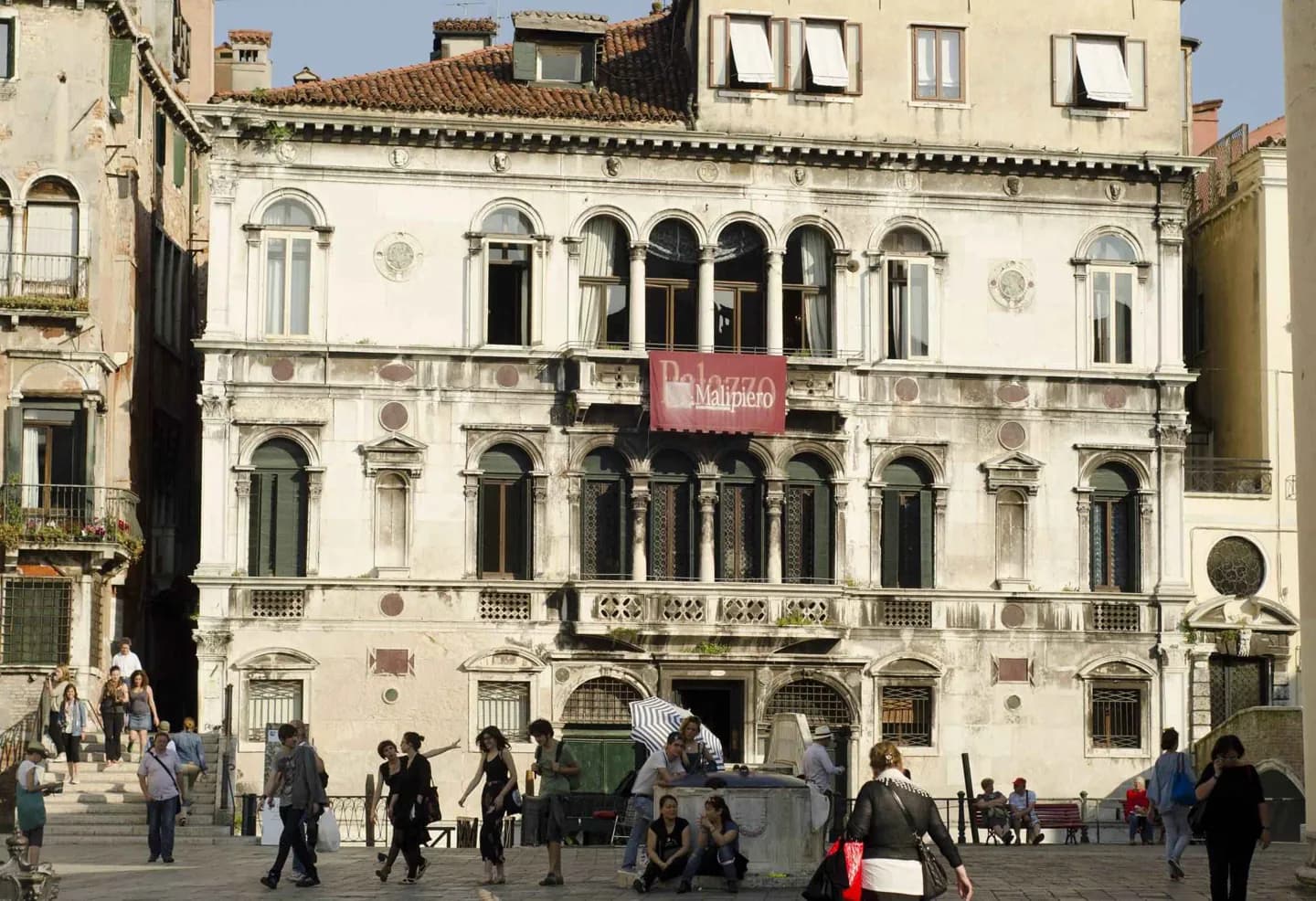
Malipiero rewards comparing buildings within the same small canal-side cluster. Its long development, from Byzantine beginnings through later enlargement and restoration, contrasts with Palazzo Grassi's unified classical design. The associated Italian-style garden is an unusual element in a city of tightly packed palaces, giving this residence a different relationship with open space.
What to look for
- The palace occupies the Grand Canal frontage beside Palazzo Grassi.
- An Italian-style garden forms part of the palace grounds.
The full story
Palazzo Malipiero developed through additions rather than a single building campaign. Its early Byzantine structure gained another floor, and the Cappello family later enlarged the canal façade. The palace's storehouses were also used for printing and publishing, connecting a patrician residence with a new commercial activity. The Malipiero family acquired the property through marriage and purchases in the early seventeenth century. Caterino Malipiero's work created a large entrance, marked by his initials and the date 1622. Further alterations in the eighteenth century helped bring the accumulated parts into a more unified appearance. The garden uses a fountain and statues to organize a perspective from the entrance hall, extending the formal arrangement of the interior into the open air. Later decline and restoration brought further changes, including a substantial campaign by the Barnabò family in 1951. The palace's appearance records several generations adapting an inherited building and its grounds.
Useful to know
- Compare the palace exterior with neighboring Palazzo Grassi at San Samuele.
- Treat a visit to exhibition spaces as a separate plan requiring a programme check.
Your next visit
Estimated · Declared scenario and planning estimates; no live opening, weather, queue or booking service.
Outdoor visit · 15–20 min
World planning estimate; admission, opening, visit duration and access need checking.