
Why go
Cubism, Surrealism and Abstract Expressionism shift the focus from Venice's old masters to the movements a single collector championed. The palace was Guggenheim's home, giving the art a personal setting rather than a purpose-built museum hall. Its unfinished form is also distinctive among the tall façades along the canal.
What to look for
- The collection includes Cubist, Surrealist and Abstract Expressionist works.
- Palazzo Venier dei Leoni has an unusually low Grand Canal frontage.
The full story
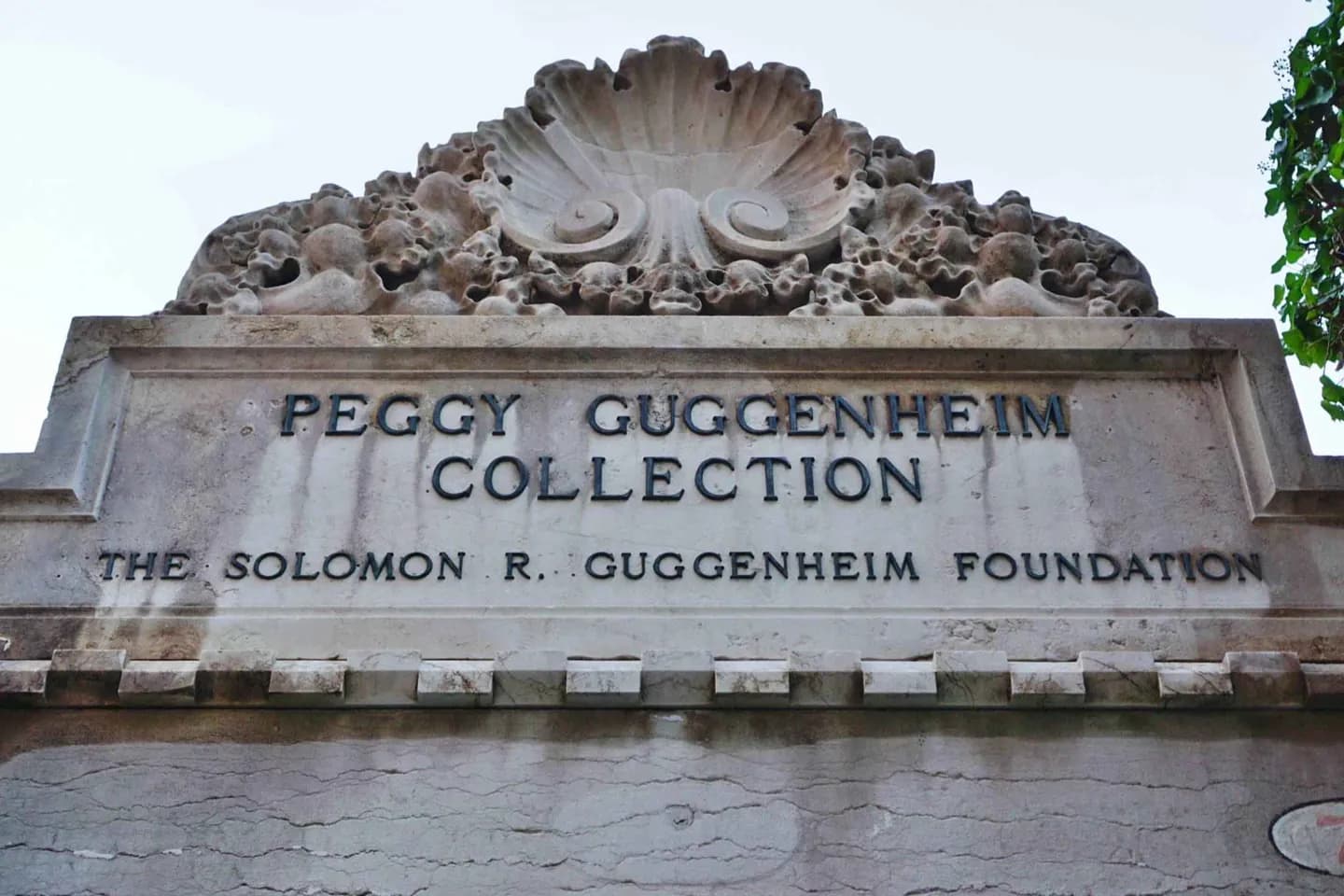
Peggy Guggenheim assembled much of her collection in Europe as war approached and later in the United States. Her support for artists included recognising Jackson Pollock's work, helping connect the collection with the growth of American modernism as well as European movements. She acquired Palazzo Venier dei Leoni and lived there for three decades, opening her home and art to visitors. The building can be mistaken for a modern structure because of its low elevation, but it is an unfinished eighteenth-century palace designed by Lorenzo Boschetti. Its incomplete form gave the collection an unusual domestic setting on the Grand Canal. After Guggenheim's death, the collection passed to the Solomon R. Guggenheim Foundation. Its museum role grew from the public display she had begun at home. The result preserves the relationship between a collector's choices, the artists she supported and the Venetian residence where those works became accessible.
Useful to know
- Pair this with the Accademia only if comparing historic and modern art is the day's main aim.
- Study the palace's low profile from the canal-facing setting as well as the art inside.
Your next visit
Estimated · Declared scenario and planning estimates; no live opening, weather, queue or booking service.
Indoor visit · 60–90 min
World planning estimate; admission, opening, visit duration and access need checking.