
Why go
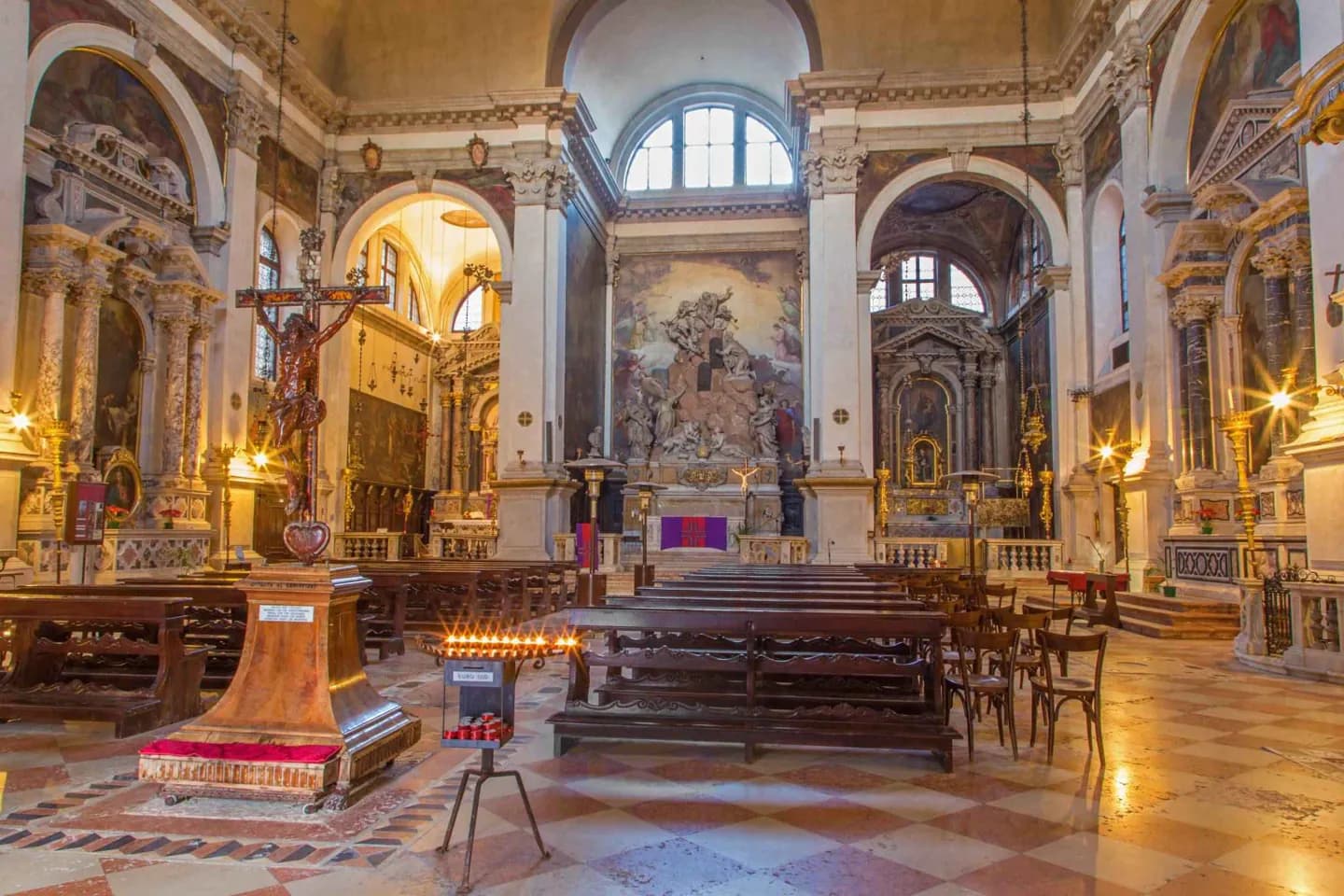
The church makes patronage unusually visible. A benefactor's portrait occupies the façade, while the interior turns its biblical dedication into a large sculptural drama. This combination rewards attention to how a religious building could display both devotion and a family's recently acquired standing in Venetian society.
What to look for
- Vincenzo Fini's bust stands above the entrance.
- Moses receiving the Tablets dominates the altar's sculptural composition.
- Palma il Giovane's Last Supper is among the interior paintings.
The full story
Moses is an unusual church dedication to modern eyes, but Venetians, like the Byzantines, could venerate Old Testament prophets as saints. The name also recalls Moisè Venier, who supported an earlier rebuilding. The later Baroque church continued this close relationship between religious identity and private patronage. Vincenzo Fini funded the elaborate façade associated with Alessandro Tremignon and Heinrich Meyring. His portrait above the doorway made the building a public expression of wealth and social position. In a city that restricted statues in public spaces, a church façade offered a setting for a benefactor's likeness. The dramatic sculpture inside shifts attention back to scripture. Tremignon and Meyring's composition represents the revelation on Mount Sinai rather than simply framing a painted altarpiece. Looking from the patron's portrait outside to that theatrical biblical scene makes the church's two kinds of display easy to distinguish.
Useful to know
- Look at the patron's bust before entering to compare the façade's message with the altar scene.
- Combine San Moisè with Santa Maria del Giglio to compare two façades shaped by private benefactors.
Your next visit
Estimated · Declared scenario and planning estimates; no live opening, weather, queue or booking service.
Outdoor visit · 20–35 min
World planning estimate; admission, opening, visit duration and access need checking.