
Why go
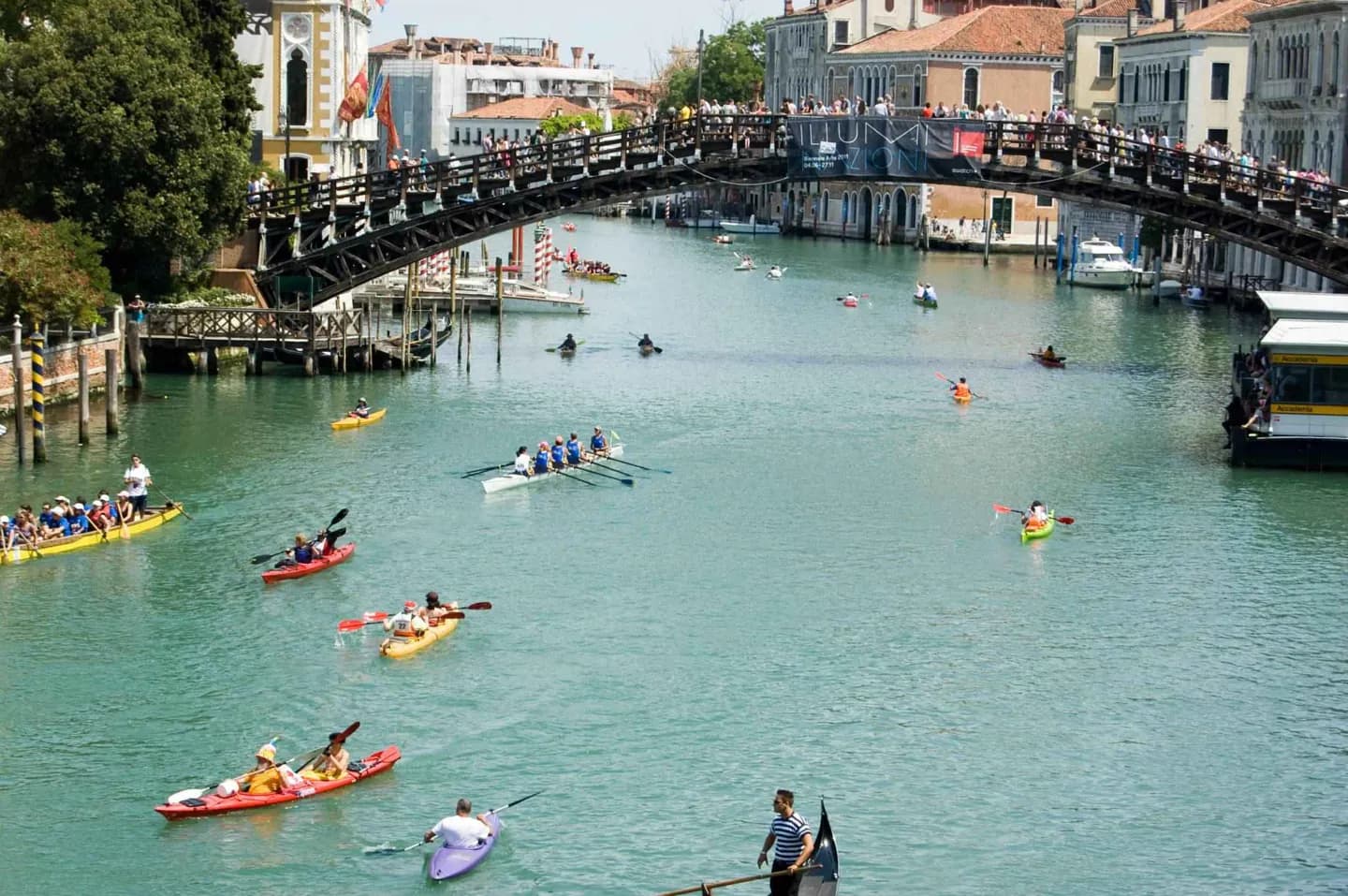
Crossing here changes both district and viewpoint. The gallery landing on the Dorsoduro side makes the bridge a natural start for an art-focused walk, while the canal view reveals a larger urban space than the surrounding lanes. Its timber appearance also differs markedly from the stone Rialto Bridge.
What to look for
- The wooden crossing spans the Grand Canal near the Accademia landing.
- The bridge connects San Marco and Dorsoduro.
The full story
The bridge takes its name from the art academy that shared the nearby Carità complex with the gallery. That institutional connection explains why both a crossing and a boat landing carry the Accademia name, even though the academy later moved away and the museum remained. The timber form was not the site's first bridge. An earlier metal structure was replaced by Eugenio Miozzi's wooden design. A later replacement retained that familiar construction, giving the crossing a continuity of appearance despite changes in the physical bridge. Its history also belongs to the difficulty of connecting Venice across the Grand Canal. A very early proposal for a crossing here was dismissed by the governing council, long before a bridge was finally built. The connection now feels like part of an ordinary walk, but it represents a significant alteration in how people could move between these two districts.
Useful to know
- Cross from the Santo Stefano area to begin a Dorsoduro walk at the Accademia.
- Pause for the canal view before continuing toward the gallery or Punta della Dogana.
Your next visit
Estimated · Declared scenario and planning estimates; no live opening, weather, queue or booking service.
Outdoor visit · 15–25 min
World planning estimate; admission, opening, visit duration and access need checking.