
Why go
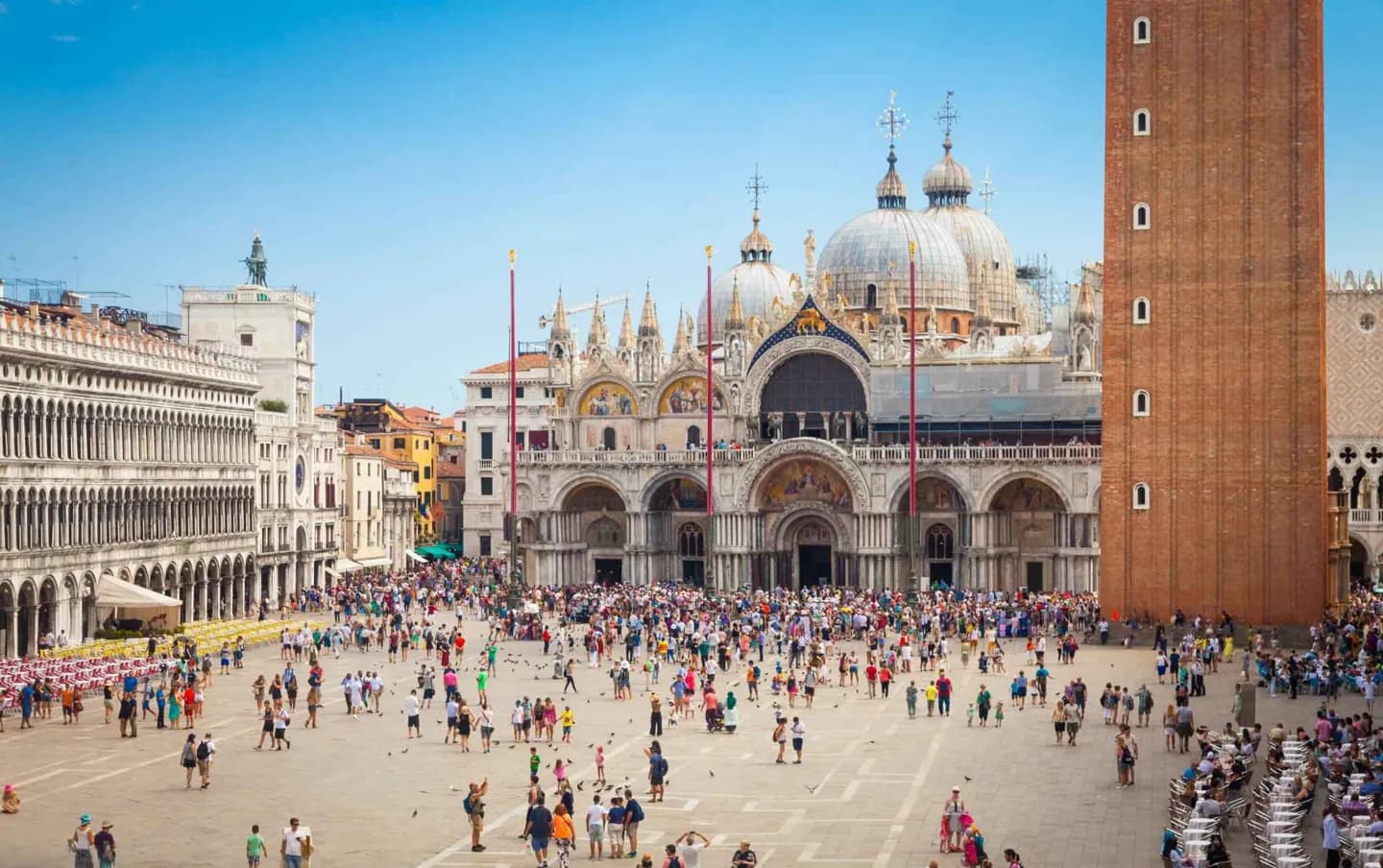
The sestiere connects Venice's former seat of government with its cultural life. The Basilica and Doge's Palace explain public power, La Fenice adds performance, and Palazzo Grassi brings contemporary art to the canal frontage. Walking between these anchors reveals a district with several distinct reasons to spend time.
What to look for
- St Mark’s Square concentrates the Basilica, Campanile and Doge’s Palace.
- La Fenice anchors the district's theatrical history.
- Palazzo Grassi extends the cultural walk to the Grand Canal.
The full story
San Marco's identity begins with the institutions around St Mark's Square. The Doge's Palace was the seat of government, while the Basilica, Campanile and Clock Tower helped form the Republic's ceremonial centre. Their concentration explains why this part of Venice carries such strong civic associations. The district's cultural geography continues beyond that ensemble. Churches such as Santa Maria del Giglio, Santo Stefano and San Samuele punctuate the built area. La Fenice represents the city's theatrical tradition, while palaces along the Grand Canal show how patrician residences became settings for other kinds of cultural activity. A walk through San Marco benefits from a choice of themes. Monumental civic history concentrates around the square; theatre and church architecture draw attention farther into the district; art venues bring the route to the canal. These clusters explain the sestiere's variety and give a way to shape a visit without reducing it to a list of famous buildings.
Useful to know
- Plan St Mark’s Square and the San Samuele side of the district as separate clusters.
- Select individual interiors before setting out; the district walk connects many more venues than one visit can cover.
Your next visit
Estimated · Declared scenario and planning estimates; no live opening, weather, queue or booking service.
Outdoor visit · 60–150 min
World planning estimate; admission, opening, visit duration and access need checking.