
Why go
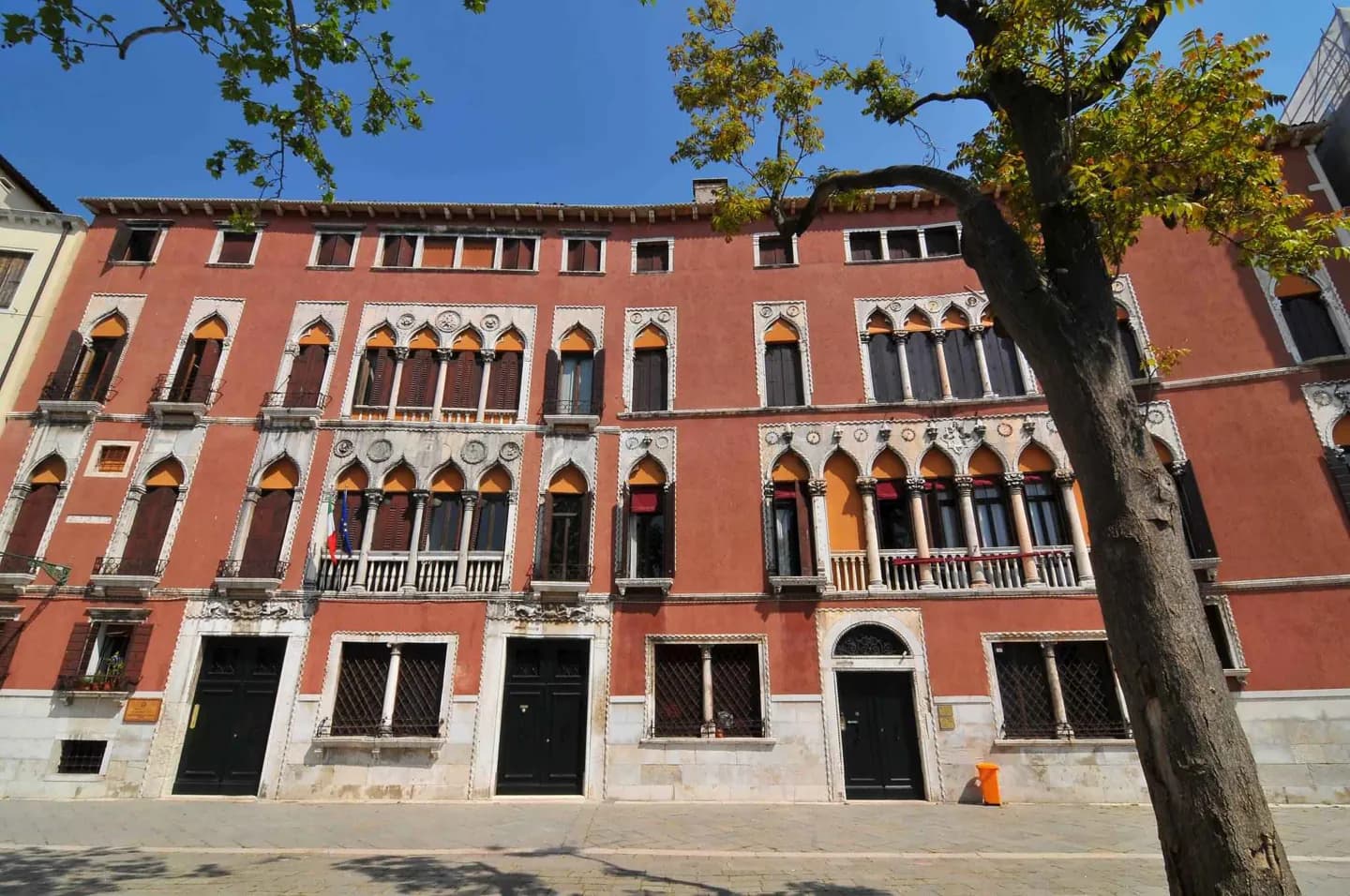
These adjoining palaces make changing Venetian geography visible. Their façades originally addressed a canal, although they now overlook the campo directly. Comparing the older and newer buildings also reveals two stages of Gothic palace design, with the broad principal-floor window group giving the later house its distinctive emphasis.
What to look for
- Pointed openings define the Gothic palace frontages.
- A flamboyant balcony adds detail to the paired façades.
- Eight adjacent principal-floor windows distinguish the newer palace.
The full story
The Palazzi Soranzo once faced the Rio Sant’Antonio, with small bridges connecting the houses to Campo San Polo. The canal was filled in during the eighteenth century, changing the relationship between the residences and public space. What now looks like a palace frontage directly on a square originally belonged to a waterside arrangement. The complex comprises two adjoining Gothic houses built in different periods. The older part dates to the fourteenth century; the later building added a broad group of eight windows on its principal formal floor. The contrast provides a way to read enlargement and changing architectural taste within a single family’s residential setting. The newer house once carried frescoes by Giorgione, another reminder that Venetian exteriors could be more colorful than their surviving appearance suggests. Later losses of paintings and removable decoration changed the houses further. Their enduring interest from the campo is the combination of Gothic detail, successive construction and a waterway that has disappeared from view.
Useful to know
- View the paired palaces from the east side of Campo San Polo.
- Compare both façades before continuing around the square.
Your next visit
Estimated · Declared scenario and planning estimates; no live opening, weather, queue or booking service.
Outdoor visit · 15–20 min
World planning estimate; admission, opening, visit duration and access need checking.