
Why go
The church's position makes the connection between worship and business unusually easy to see. Bankers and money changers once worked in front of it, while the clock addressed a practical need in the trading quarter. Its surviving portico gives an architectural threshold to a building embedded in Rialto's commercial history.
What to look for
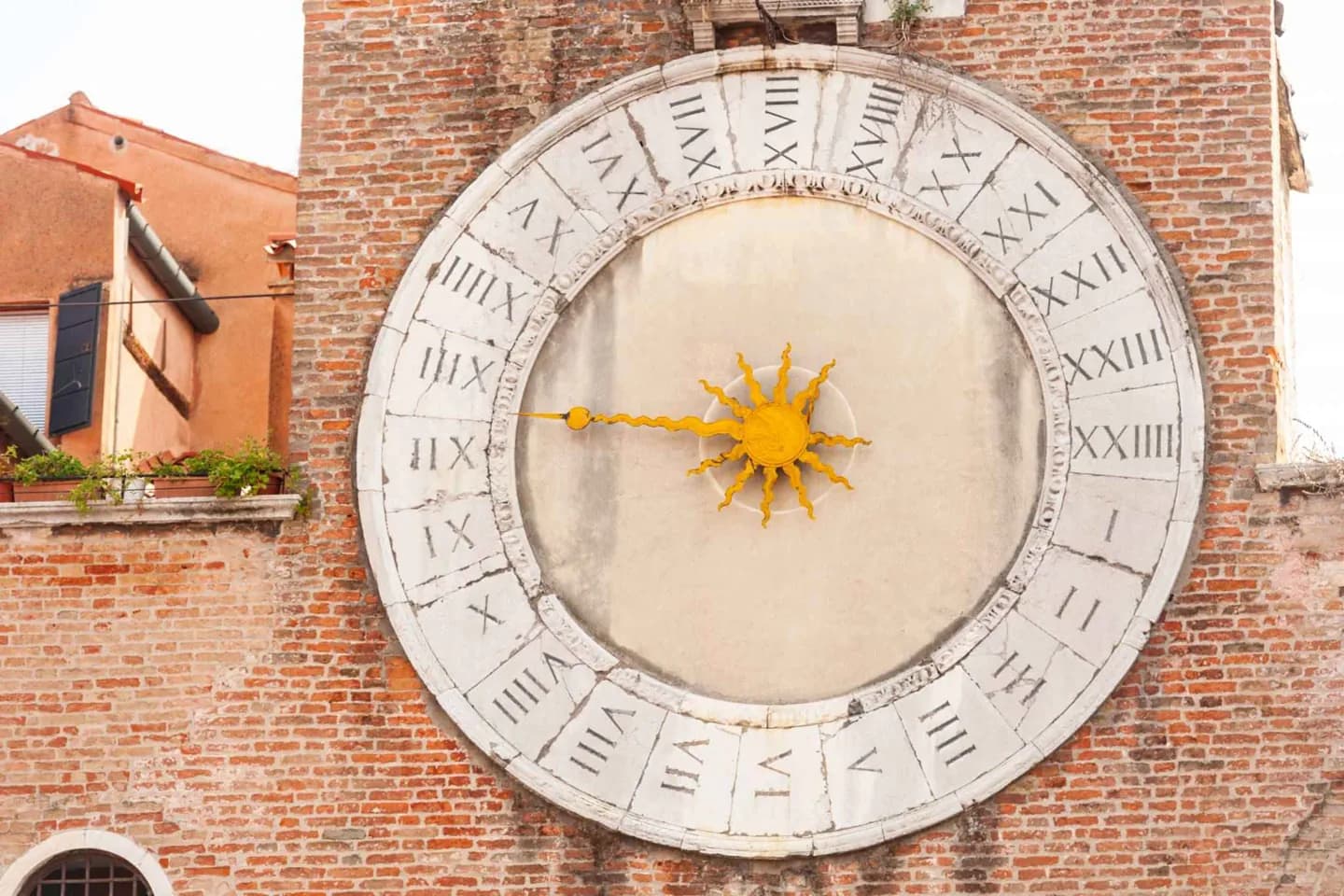
- A large fifteenth-century clock sits above the entrance.
- The Gothic portico forms a distinctive entrance frontage.
The full story
Tradition places San Giacomo's foundation in 421 and calls it Venice's oldest church. That story belongs to the city's account of its origins; the first documentary reference to the church dates to 1152. Keeping the distinction in mind makes the building interesting as both a historic church and a focus of civic memory. Its more tangible connection is with Rialto's business district. Bankers and money changers operated in front of the church, and the area was associated with bills of exchange that transferred credit between bankers. Public timekeeping belonged to this environment of transactions. The central dome belongs to a building with several layers of alteration. Inside are ancient Greek marble columns with Veneto-Byzantine capitals. Restoration in the early seventeenth century included raising the pavement to counter high water. That intervention connects the church's long commercial setting with a recurring Venetian problem: preserving usable space beside the water.
Useful to know
- Look at the façade while exploring the surrounding Rialto market quarter.
- Do not confuse it with San Giacomo dell’Orio in Santa Croce.
Your next visit
Estimated · Declared scenario and planning estimates; no live opening, weather, queue or booking service.
Outdoor visit · 15–20 min
World planning estimate; admission, opening, visit duration and access need checking.