
Why go
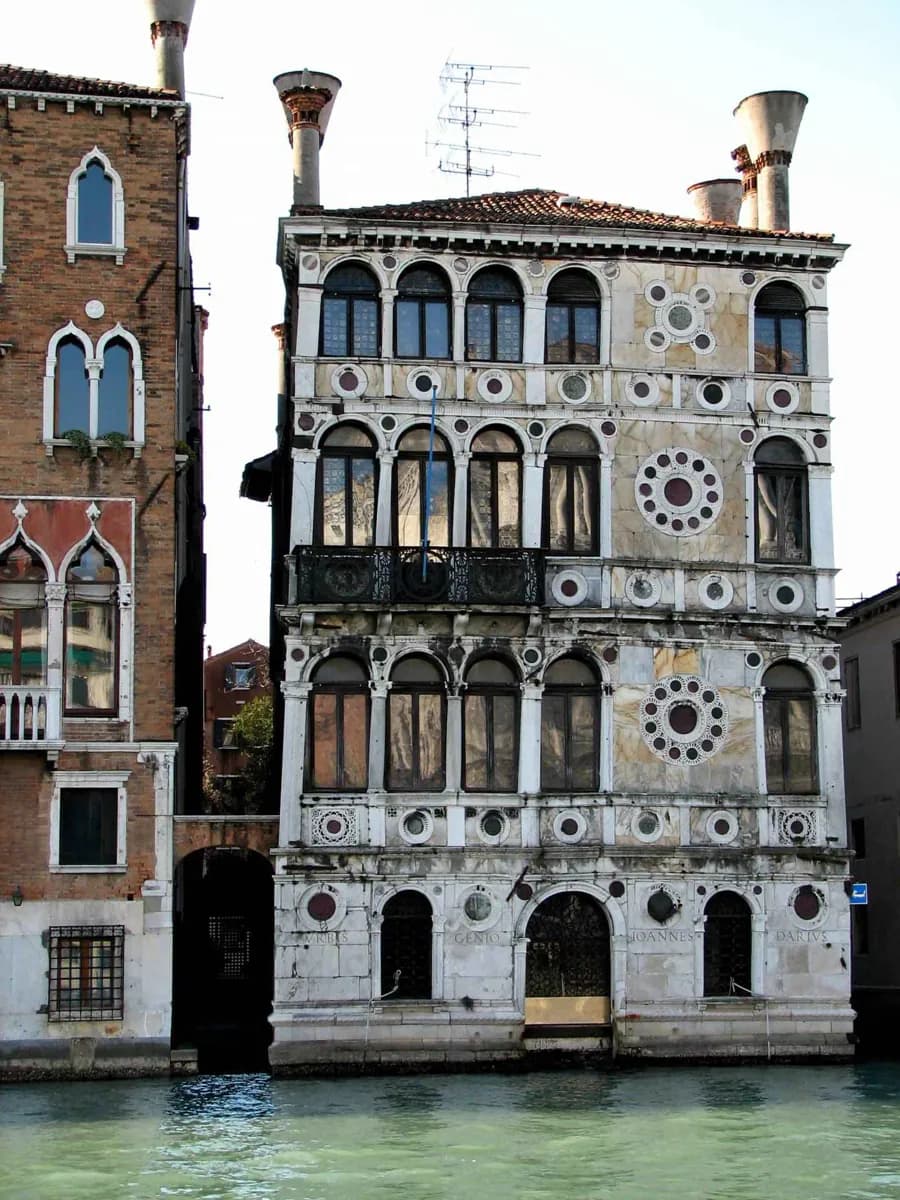
The palace brings Gothic forms and Renaissance remodeling together in a distinctive small building. Circular marble details attracted Ruskin's attention, and Monet later painted the canal frontage. Those artistic responses encourage looking closely at the surface and composition, rather than treating the palace as another name along the water.
What to look for
- Marble-encrusted circular openings distinguish the canal façade.
- Gothic arches remain on the Campiello Barbaro side.
The full story
Giovanni Dario was a secretary to the Venetian Senate, a diplomat and a merchant. Remodeling after 1486 adapted an existing Gothic palace for him using Renaissance elements. The building's combination of styles reflects that intervention rather than a single architectural moment. After Dario's death, the house passed through his daughter into the neighboring Barbaro family. The Senate also sometimes rented it for visiting Turkish diplomats, a use that connects domestic architecture to Venice's international relationships. The little square behind the palace carries the Barbaro name, preserving another part of this family geography. Later owners restored and altered the house, including substantial marble replacement and stabilization. Its surfaces also attracted artists and writers. John Ruskin studied its circular marble details, and Claude Monet painted it during his 1908 stay in Venice. Those connections make the façade interesting as an architectural object repeatedly interpreted, repaired and represented over time.
Useful to know
- Use Campiello Barbaro for a landward view during a Dorsoduro walk.
- Look at the exterior separately from any plans for palace interiors.
Your next visit
Estimated · Declared scenario and planning estimates; no live opening, weather, queue or booking service.
Outdoor visit · 10–15 min
World planning estimate; admission, opening, visit duration and access need checking.