
Why go
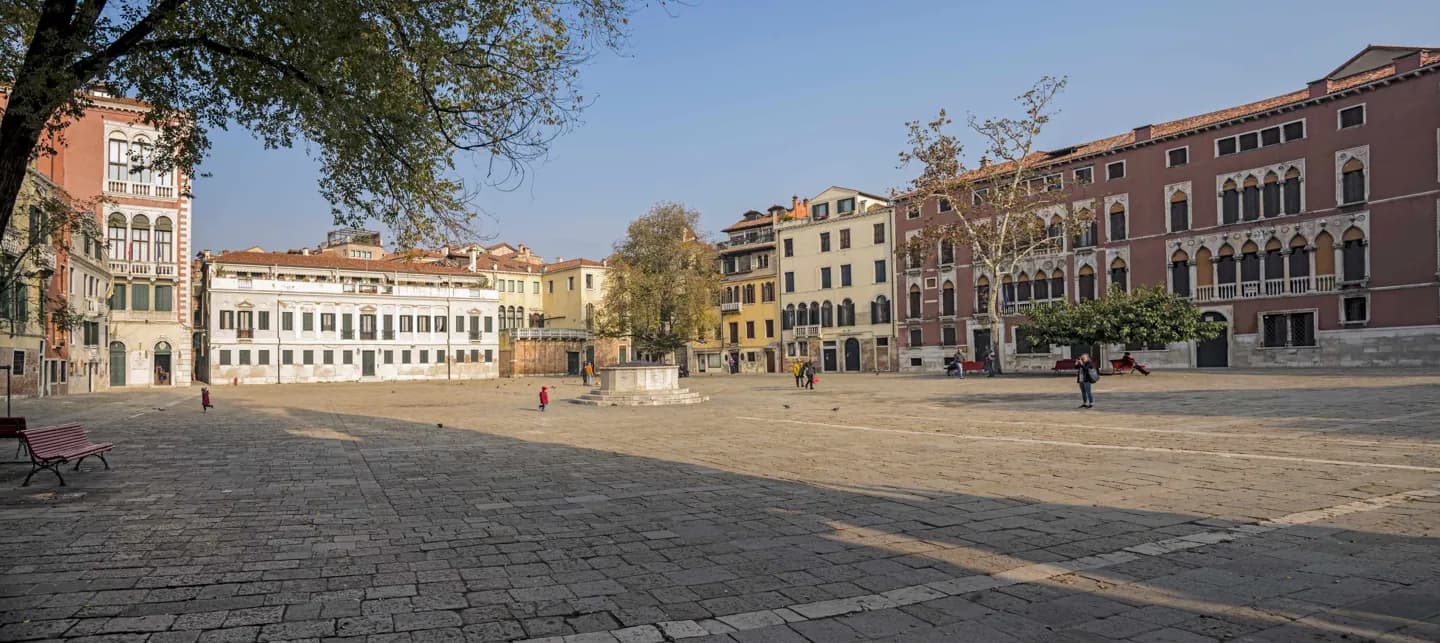
The campo's scale allows the surrounding buildings to be read as a group rather than encountered one doorway at a time. It also carries a history of changing public uses, from agricultural ground to markets and large gatherings. This is a place to look at how Venice made room for collective life within its built fabric.
What to look for
- The large open campo contrasts with the surrounding built district.
- The Church of San Polo anchors the square.
- Palazzo Donà Brusa overlooks the campo.
The full story
The word campo means field, and Campo San Polo once had a use close to that name: grazing and agriculture. Paving in 1493 transformed the ground into an urban square, with a well placed at its centre. The change turned working land into a shared civic setting while retaining its older name. Public life subsequently filled the space in very different ways. Bullfights, mass sermons and masked balls gathered people here. The market for poorer traders later moved from Piazza San Marco to the campo, adding another commercial role to a district already shaped by Rialto. These uses show that a Venetian square could serve spectacle, religion and everyday exchange. Surrounding palaces supplied a permanent architectural frame for activities that changed over time. Looking across the open ground makes that relationship clear: the buildings define a generous communal space within a district of tighter streets. Its interest lies as much in that capacity to gather people as in any single façade.
Useful to know
- Survey the surrounding buildings from the open square before continuing through San Polo.
- Combine the campo with Rialto for a contrast between civic space and commercial lanes.
Your next visit
Estimated · Declared scenario and planning estimates; no live opening, weather, queue or booking service.
Outdoor visit · 20–40 min
World planning estimate; admission, opening, visit duration and access need checking.