
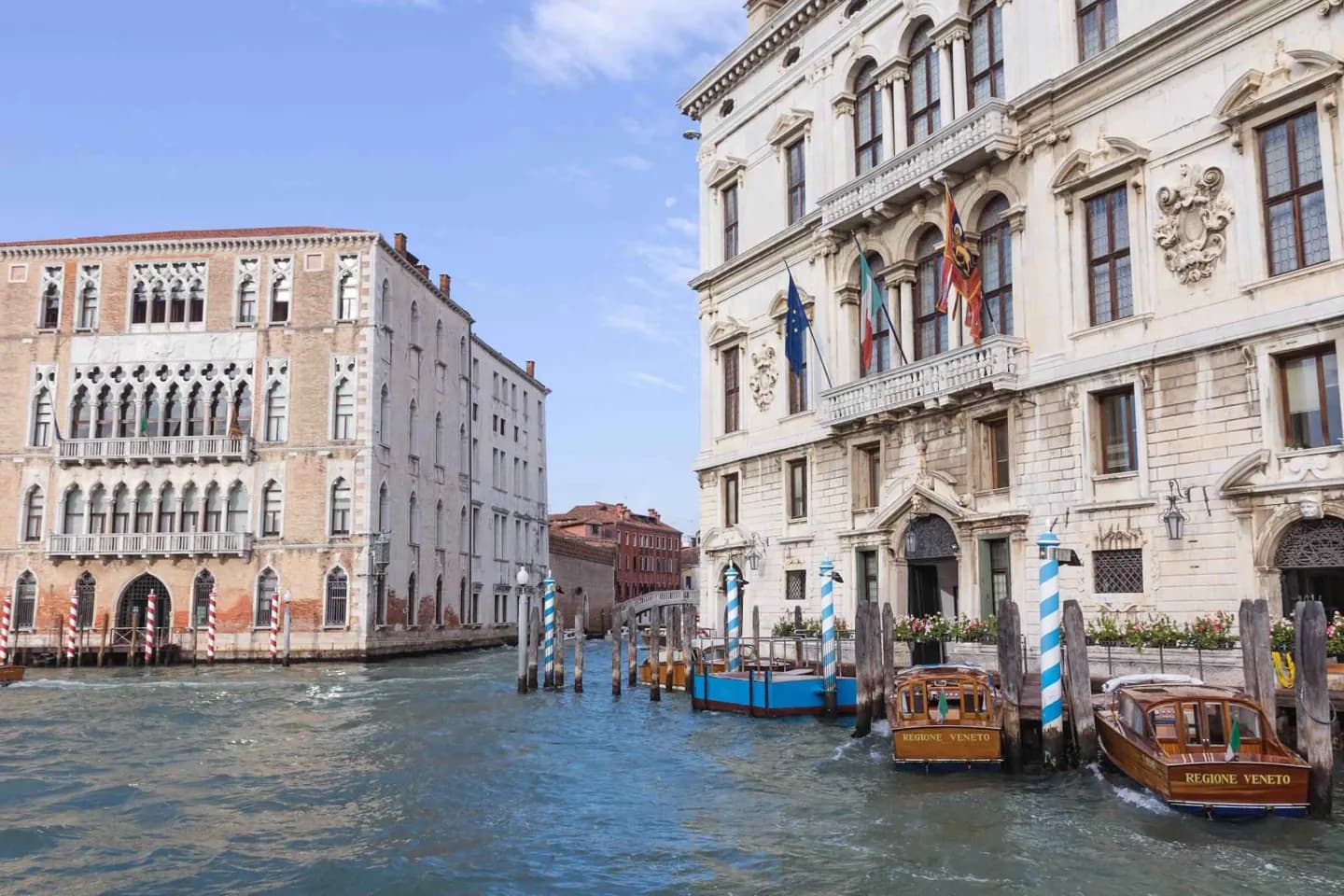
Why go
The building rewards looking upward through its ordered façade, from the central doorway to grouped windows, oval openings and roof pinnacles. Designed for the Balbi family from 1582, it shows late-sixteenth-century palace architecture adding elaborate detail to a classical structure. Its later governmental use adds another chapter to the residence's civic relationship.
What to look for
- Two obelisk-shaped pinnacles rise above the roofline.
- Small oval windows sit in elaborate frames beneath the cornice.
- Balbi family coats of arms appear between the first-floor windows.
The full story
Palazzo Balbi was built from 1582 as a residence for the Balbi family, with a design by Alessandro Vittoria. Its façade combines an ordered classical structure with increasingly elaborate detail, placing it at a transition toward Baroque palace architecture. The composition divides the upper floors into three sectors, with grouped windows occupying the centre. Family coats of arms, framed oval openings and obelisk-shaped roof pinnacles add identity and ornament to that underlying symmetry. Looking upward through these features makes the architectural progression easier to follow than treating the frontage as a single image. Later ownership brought new purposes to the residence. It passed through the hands of Michelangelo Guggenheim and an electricity company before becoming regional property in the twentieth century. Those changes illustrate a recurring pattern among Venetian palaces: patrician houses became settings for other institutions while retaining a façade designed to express the status of the original family.
Useful to know
- Look at the exterior as part of observing the Grand Canal frontage near Ca’ Foscari.
- Keep palace entry separate from an ordinary canal-side architectural visit.
Your next visit
Estimated · Declared scenario and planning estimates; no live opening, weather, queue or booking service.
Outdoor visit · 10–15 min
World planning estimate; admission, opening, visit duration and access need checking.