
Why go
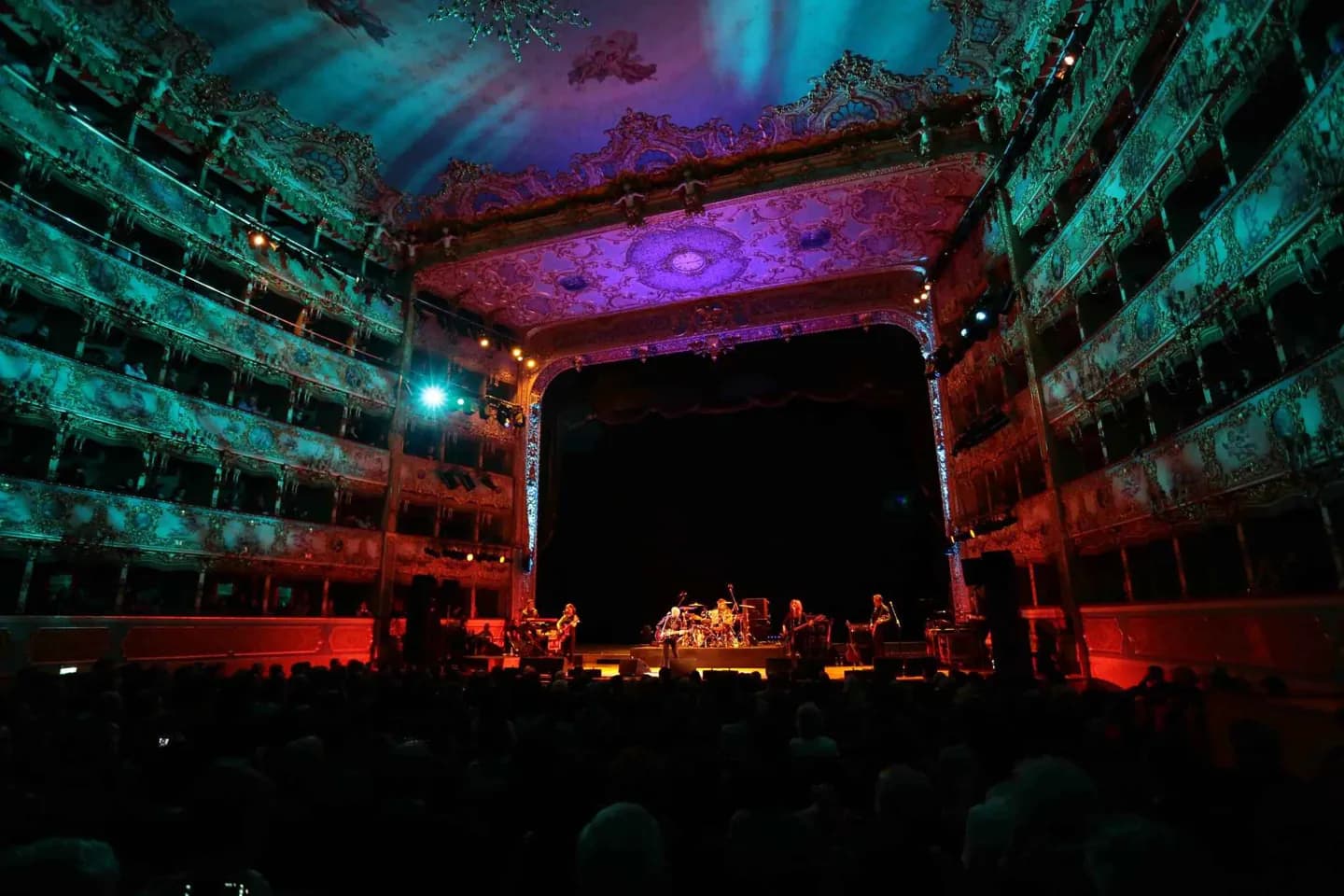
The auditorium shows opera as a social and architectural event: tiers of boxes wrap around the performance space rather than facing it in a simple hall. Its history of premieres adds meaning to the room, while the reconstructed decoration raises a useful question about how Venice restores places of cultural memory.
What to look for
- Tiers of boxes follow the auditorium's horseshoe plan.
- Gilt decoration and stucco enrich the theatre interior.
- The building addresses both a campo and a canal.
The full story
La Fenice means the phoenix, a name chosen for an opera company that had survived the loss of earlier premises. The theatre that followed Gianantonio Selva's design fitted a horseshoe auditorium into a site with both a campo frontage and canal access. It became a venue for major operatic premieres, including works by Rossini and Bellini. Fire made the name repeatedly relevant. A destructive blaze led to rebuilding by the Meduna brothers, who created an interior rich in gilt and stucco. A later arson attack destroyed the house again, leaving its exterior walls. Reconstruction restored the theatre's familiar decorative character so performance could return to this setting. The room seen today therefore carries the memory of earlier interiors as well as the history of music performed within them. Its splendour is also evidence of deliberate restoration, rather than an uninterrupted survival of the original theatre.
Useful to know
- Decide between a daytime theatre visit and a performance according to whether architecture or live opera is the priority.
- Recheck the official visitor timetable close to your visit; performance work can alter access.
Your next visit
Estimated · Declared scenario and planning estimates; no live opening, weather, queue or booking service.
Indoor visit · 45–75 min
World planning estimate; admission, opening, visit duration and access need checking.