
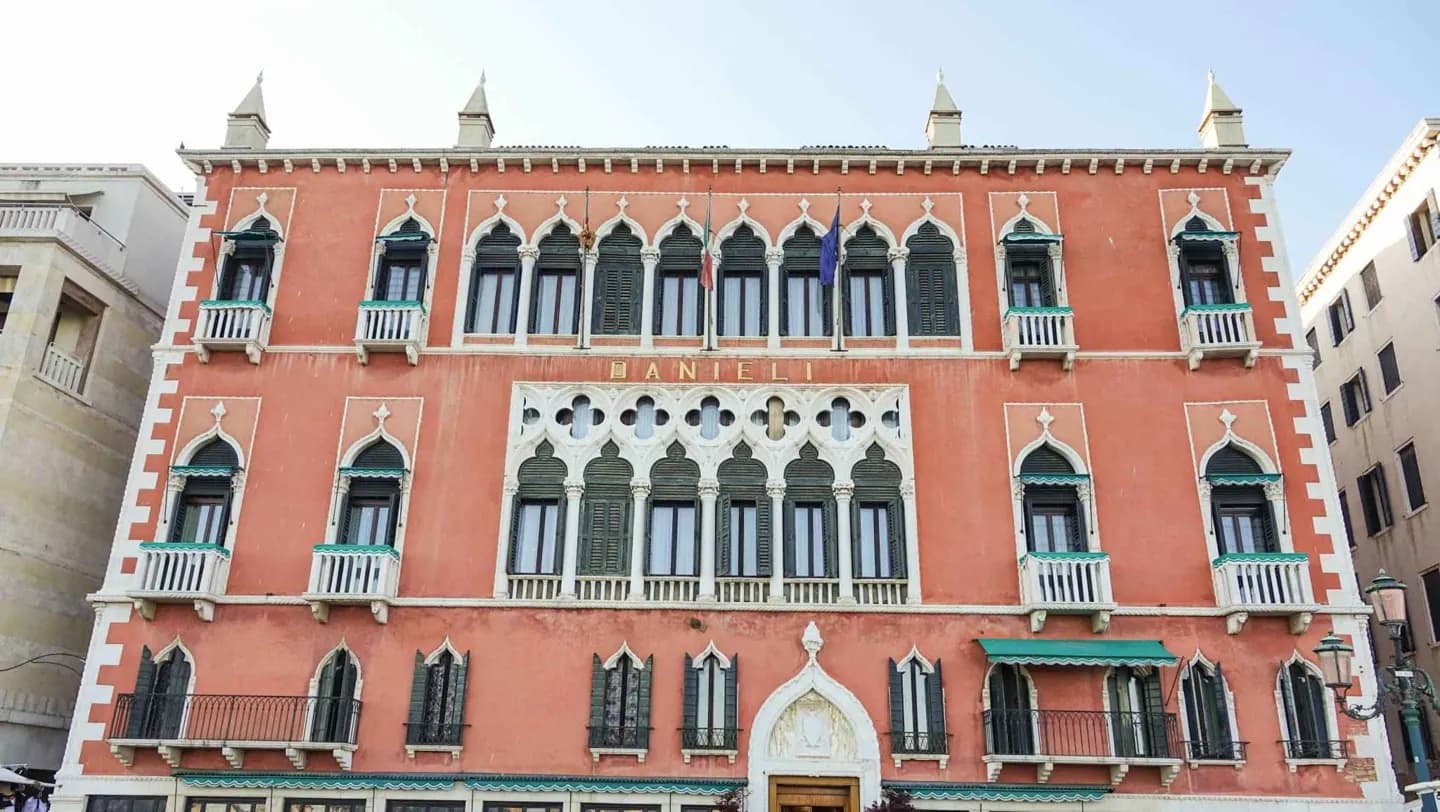
Why go
The palace shows how Venice's aristocratic houses acquired new roles after the Republic's decline. Its position on the Riva degli Schiavoni addressed the basin before it became a hotel landmark. The Dandolo and Danieli names hold those two identities together, making the exterior a useful stop on the waterfront walk.
What to look for
- Palazzo Dandolo forms the historic core of a three-palace hotel complex.
- The waterfront frontage belongs to the Riva degli Schiavoni setting.
The full story
Built for a branch of the Dandolo family in the late fourteenth century, the palace belonged to Venice's patrician residential world. Later divisions among family members and subsequent owners changed its occupation, while gatherings and celebrations continued to use the grand house. A wedding celebration in 1629 included a performance with music by Monteverdi, connecting the residence to Venetian musical life. Its hotel identity emerged after the Republic's fall. Giuseppe Dal Niel, known as Danieli, rented part of the building in 1822, then purchased and restored it as a hotel. That conversion illustrates a wider change in Venice: noble residences became places serving visitors rather than the households that had built them. George Sand and Alfred de Musset were among the writers associated with its nineteenth-century history. Their connection adds literary memory to an already layered building. Seen from the waterfront, the palace brings together patrician status, cultural gatherings and the growth of travel to Venice in one address.
Useful to know
- Include the exterior during a walk along Riva degli Schiavoni.
- Keep the waterfront observation separate from any plans involving hotel interiors.
Your next visit
Estimated · Declared scenario and planning estimates; no live opening, weather, queue or booking service.
Outdoor visit · 15–20 min
World planning estimate; admission, opening, visit duration and access need checking.