
Why go
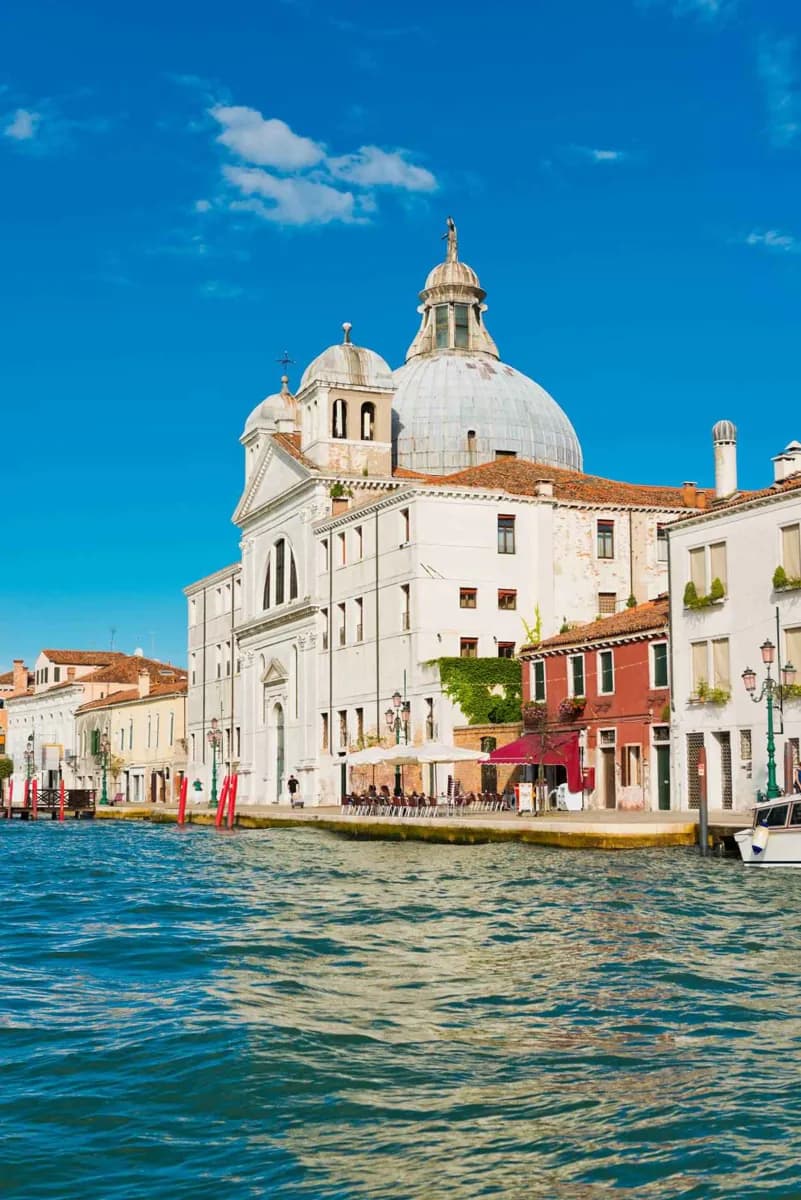
The church gains meaning from the buildings around it. They belonged to an institution sheltering young women without dowries, so the complex connects religious architecture with a specific form of social support. Its dome and twin small bell towers also provide a useful comparison with the larger Redentore along the waterfront.
What to look for
- Two small bell towers flank the façade.
- A lantern tops the large dome.
- The surrounding buildings form a horseshoe around the church.
The full story
The name Zitelle refers to the young unmarried women for whom the institution provided shelter. Its purpose was to assist women who lacked a dowry, linking the religious building with a practical concern in Venetian society. The residence surrounds the church, so the complex's arrangement makes that institutional relationship visible. The church is often attributed to Palladio, but the authorship is disputed. Contemporary documentation does not establish his involvement securely, and construction began after his death. The design should therefore be considered in relation to Palladian architecture without treating the attribution as certain. That distinction is useful on a Giudecca walk. The Redentore is a documented work by Palladio, whereas the Zitelle offers a different and less secure connection to his design language. Comparing the two can begin with their façades and domes, while retaining the charitable institution as the Zitelle's own defining history.
Useful to know
- Use the exterior as the eastern anchor of a Giudecca walk from the Redentore.
- Check current visit information before planning time around the church interior.
Your next visit
Estimated · Declared scenario and planning estimates; no live opening, weather, queue or booking service.
Outdoor visit · 10–20 min
World planning estimate; admission, opening, visit duration and access need checking.