
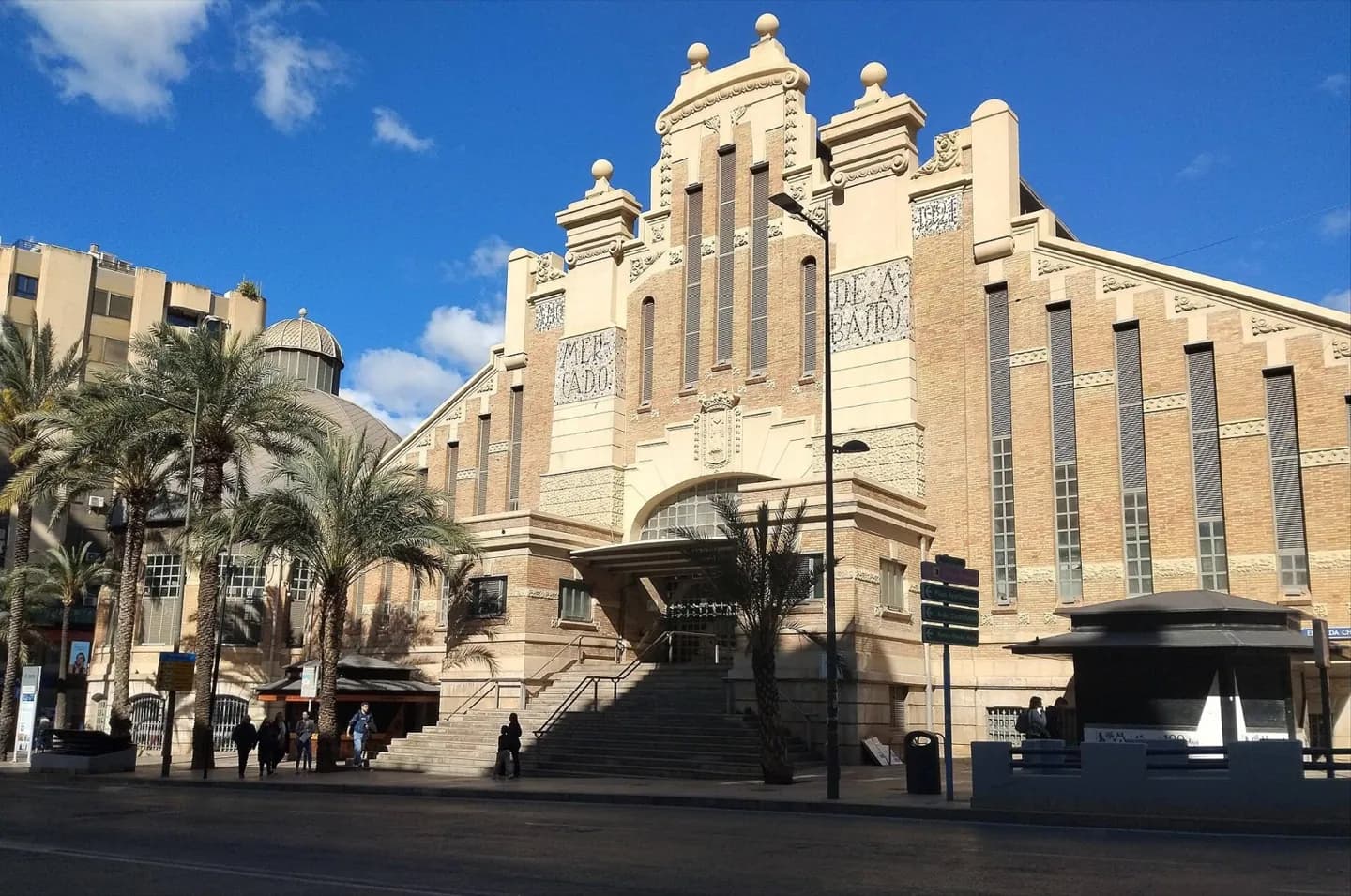
Why go
Visit to see Alicante's ingredients in active use rather than arranged for a museum display. Fish, meat, fruit, vegetables and prepared foods occupy three naturally lit naves beneath a steel structure. Outside, Plaza 25 de Mayo adds essential historical context through its memorial to the market's 1938 bombing.
What to look for
- Valencian Art Nouveau ornament wraps a practical steel-framed market hall.
- Three basilica-like naves organise counters for fish, meat, produce and prepared food.
- Plaza 25 de Mayo behind the market memorialises victims of the 1938 bombing.
The full story
The Central Market was designed as both civic architecture and working infrastructure. Its ornamented exterior belongs to the early 20th century, while the steel structure and naturally lit naves organise the practical business of feeding the city. That combination still shapes the visit: decorative details reward a circuit outside, but the building makes most sense when the counters are active within. The square behind it carries a much darker layer of memory. In 1938, during the Spanish Civil War, an air raid struck the crowded market area and killed civilians. Plaza 25 de Mayo now commemorates the victims. Seeing the memorial after the produce halls changes the market from a picturesque food stop into a place where daily life, architecture and Alicante's wartime history meet.
Useful to know
- Go while the stalls are actively trading and confirm the current market timetable before setting out.
- Allow 45 to 60 minutes to browse the hall and visit the memorial square behind it.
- Continue downhill toward the old town or Explanada for an efficient central route.
Your next visit
Estimated · Declared scenario and planning estimates; no live opening, weather, queue or booking service.
Indoor visit · 30–60 min
World planning estimate; admission, opening, visit duration and access need checking.