
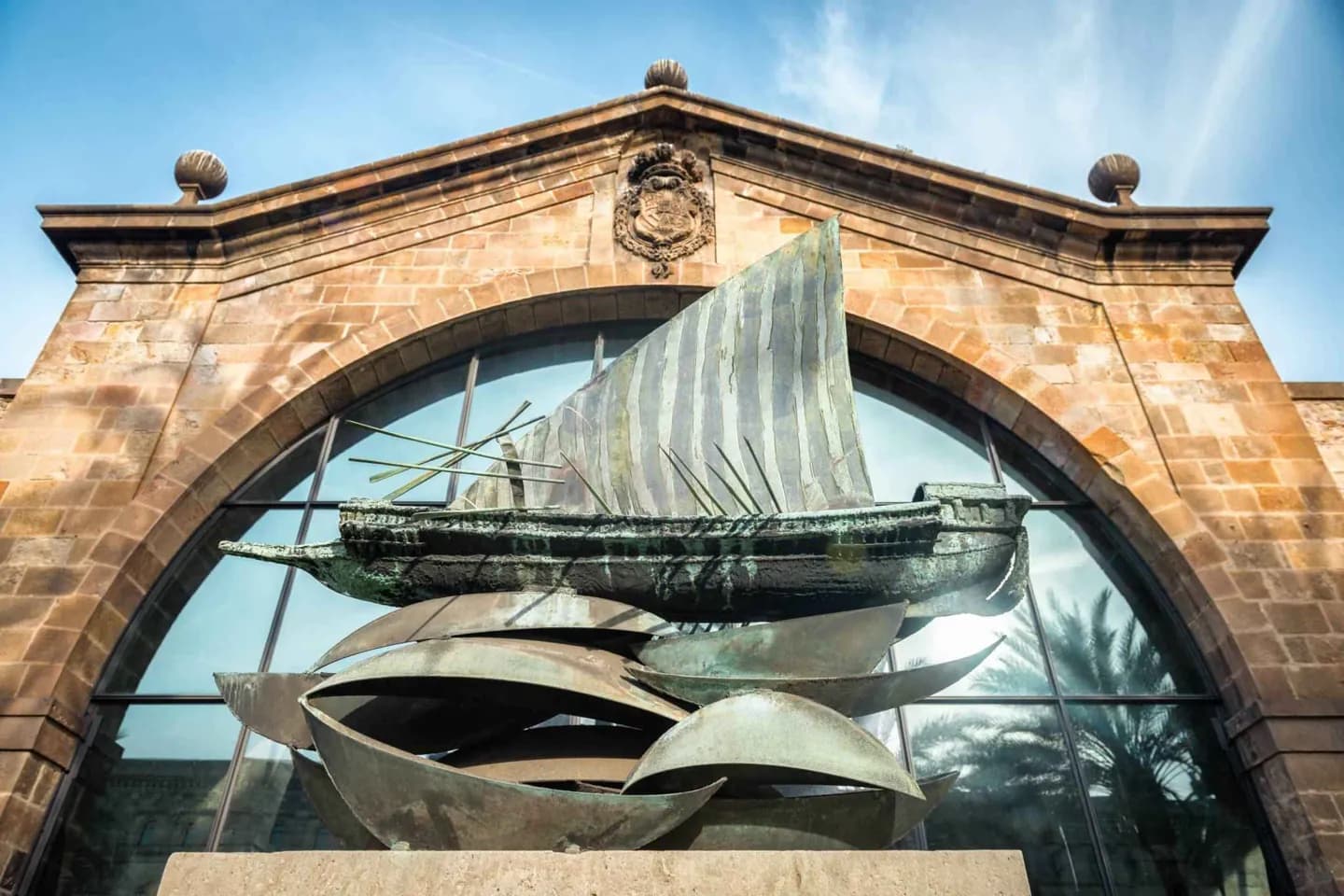
Why go
The collections of instruments, charts, paintings and maritime objects have a particularly strong setting in the old galley-building halls. The building is part of the visit, so leave time to look up and along the bays. The old structure makes the maritime history immediate.
What to look for
- Look along the Royal Shipyards’ Gothic hall bays.
- Seek out navigation instruments and portolan charts.
- Connect the exhibits with the nearby working harbor.
The full story
The Maritime Museum occupies the Royal Shipyards, a former arsenal beside Barcelona’s old port. The halls were made for building and sheltering galleys, and their repeated Gothic bays give a physical measure of the work. Inside, navigation instruments, portolan charts, paintings and other maritime objects tell a wider story of seafaring. The setting keeps those exhibits tied to the city rather than floating in a generic museum space. Look down the long hall before concentrating on individual cases: the structure explains why ships could be assembled and stored here. The nearby harbor adds another useful comparison after the visit. Port Vell has become a public waterfront, while the museum preserves a building from an earlier maritime economy. Seeing the two together makes Barcelona’s relationship with the sea more concrete.
Useful to know
- Plan this as a museum stop before or after a Port Vell walk.
- Check the museum’s current visit details before setting an exact entry.
Your next visit
Estimated · Declared scenario and planning estimates; no live opening, weather, queue or booking service.
Indoor visit · 30–45 min
World planning estimate; admission, opening, visit duration and access need checking.