
Why go
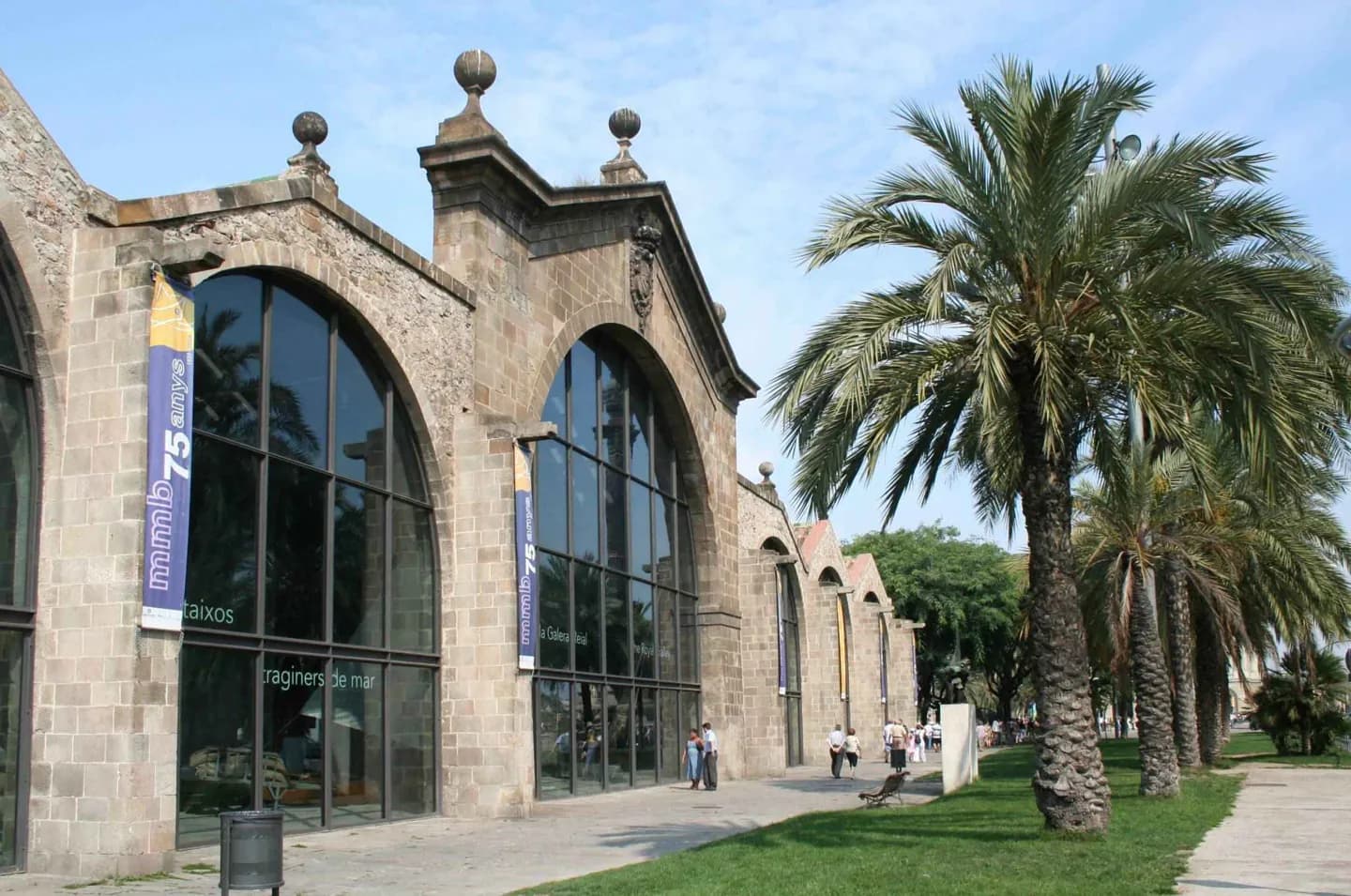
Long arcades and repeated bays make the scale of medieval shipbuilding visible. The complex also shows how a practical waterfront structure changed over centuries as the shoreline and harbor shifted. It gives the building a purpose you can see. This scale matters.
What to look for
- Look down the long, repeated Gothic bays.
- Notice the scale needed to build and store galleys.
- Compare the historic halls with the museum exhibits they now contain.
The full story
Barcelona’s Royal Shipyards grew from a medieval dockyard into a large complex for building and sheltering galleys. References to a shipyard on this coast reach back to the thirteenth century. The halls were expanded in stages, using repeated Gothic bays that could accommodate ships and the work around them. Their regular rhythm remains the most striking feature of a visit. The structure also has a less obvious history: archaeological work found that parts of the building were remade farther inland in the late sixteenth century, after changes to the port and shoreline caused flooding. The Gothic form continued even as the site changed, which can make the halls seem older and more uniform than their construction history really is. Today the Maritime Museum occupies the complex. Looking at the building as a former workshop gives the exhibits a physical setting rather than a neutral gallery.
Useful to know
- Enter through the Maritime Museum for access to the halls.
- Check the museum’s current visit information before choosing a precise time.
Your next visit
Estimated · Declared scenario and planning estimates; no live opening, weather, queue or booking service.
Outdoor visit · 30–45 min
World planning estimate; admission, opening, visit duration and access need checking.