
Why go
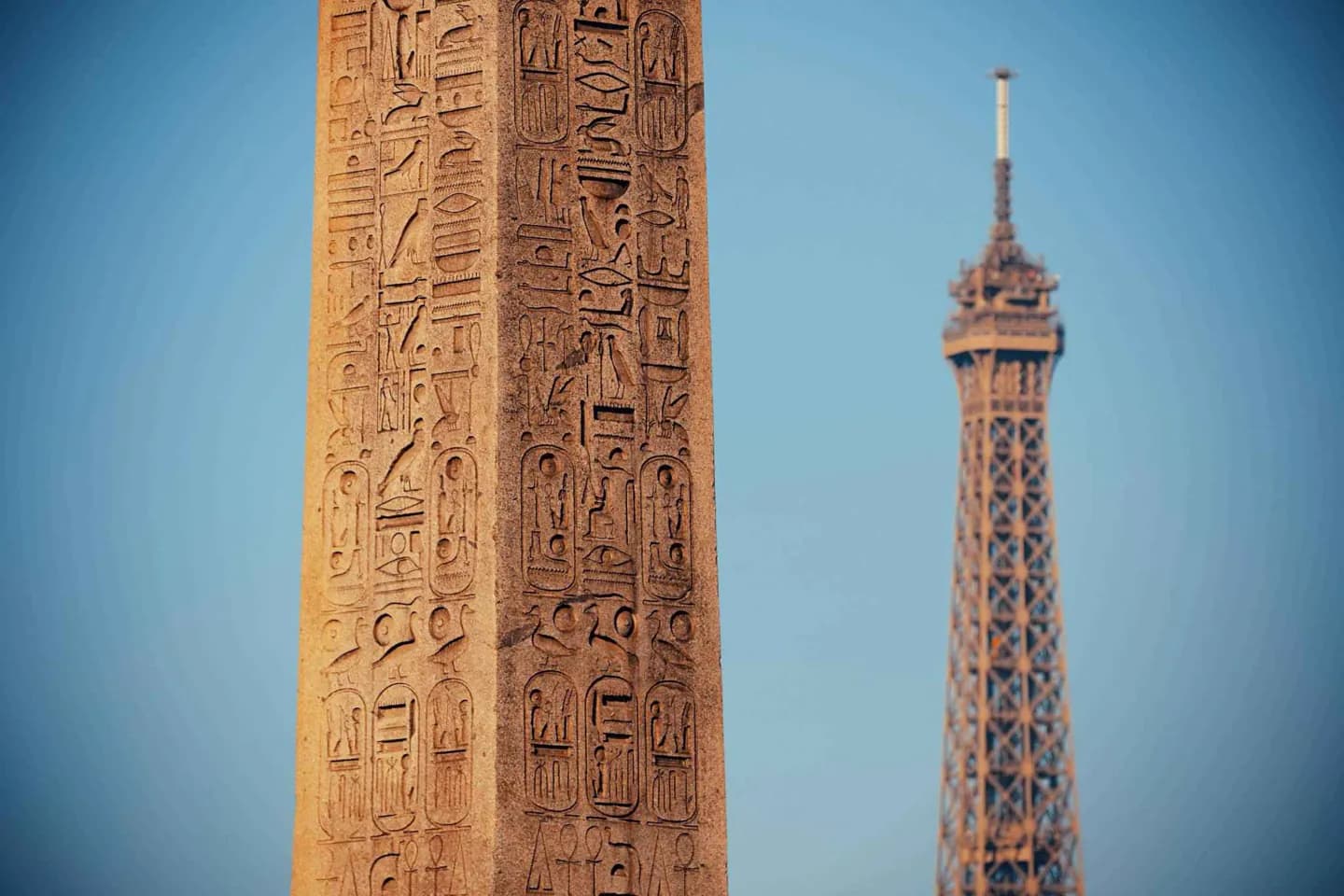
The obelisk is more than the centre marker of a vast traffic circle. Its carved praise of Ramesses II, transportation diagrams on the pedestal and modern gold-leaf cap reveal several layers at once: ancient Egyptian kingship, a difficult nineteenth-century engineering project and France’s reshaping of Place de la Concorde.
What to look for
- Hieroglyphs praising Ramesses II run up the yellow-granite shaft.
- Pedestal diagrams explain how the monument was transported and raised.
- A gold-leaf pyramidion catches the light at the summit.
The full story
The obelisk originally stood before Luxor Temple, where its twin remains. Muhammad Ali of Egypt presented it to France, and moving the massive granite monument required a purpose-built barge and years of work. It reached Paris in 1833 and was raised in Place de la Concorde on 25 October 1836 under Louis-Philippe. The operation became a public demonstration of contemporary engineering; diagrams on the pedestal still explain the machinery used to lower, transport and erect it. The shaft itself is far older, carved with hieroglyphs celebrating Ramesses II. Its current setting is therefore an intentional collision of periods: an Egyptian royal monument, a nineteenth-century French square and a gilded pyramidion added in 1998. The obelisk was classified as a historical monument in 1936.
Useful to know
- View the carvings from the central refuge and use designated crossings around Place de la Concorde.
- Pair it with the two Concorde fountains, which form a balanced ensemble around the monument.
Your next visit
Estimated · Declared scenario and planning estimates; no live opening, weather, queue or booking service.
Outdoor visit · 30–45 min
World planning estimate; admission, opening, visit duration and access need checking.