
Why go
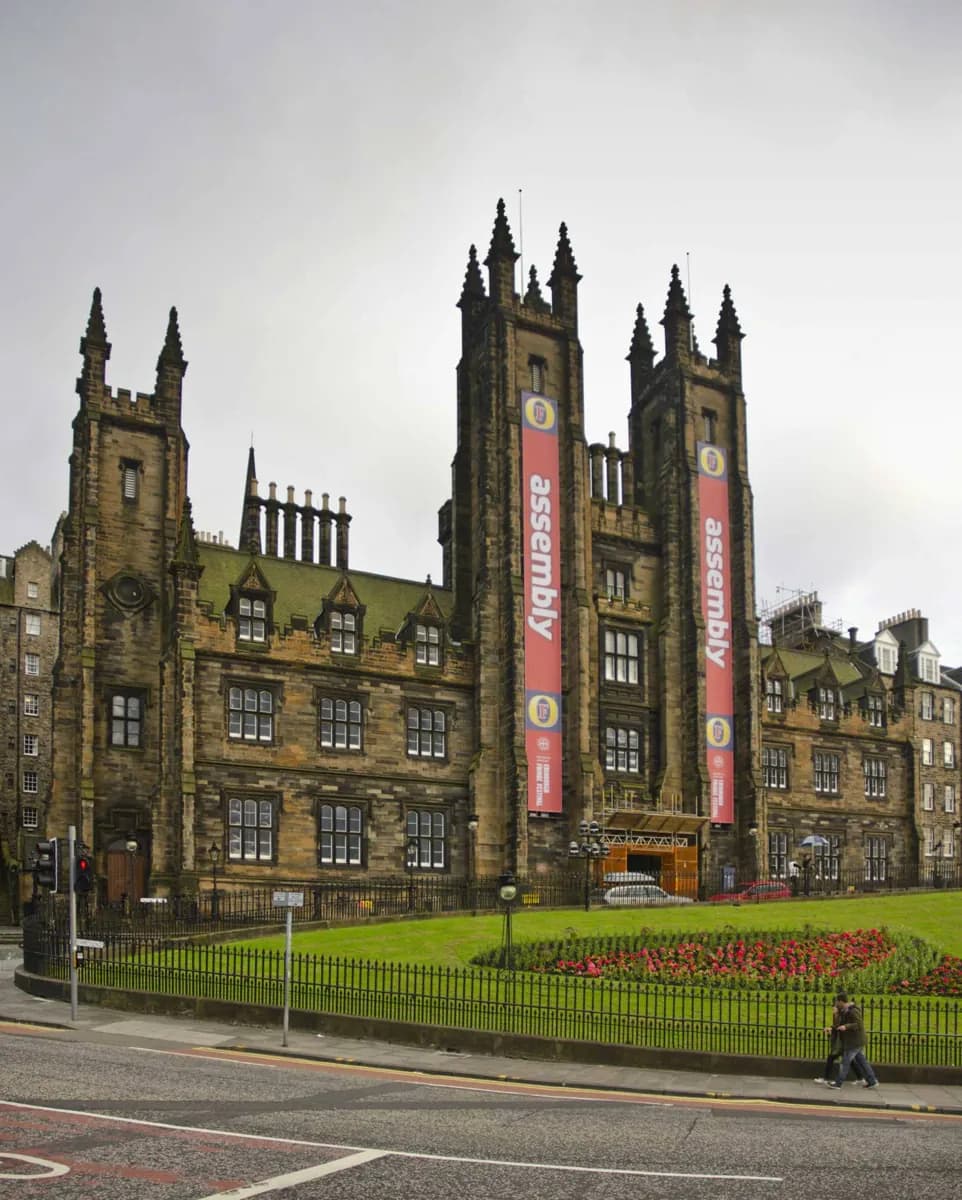
The college introduces a different architectural and institutional character above the classical galleries. Its origins in the Free Church of Scotland connect the Mound with Edinburgh’s religious history. Observing it during the climb towards the Old Town gives that history a named place without requiring a separate university visit.
What to look for
- The college’s spires rise above the Mound.
- The building houses the University of Edinburgh’s School of Divinity.
The full story
New College opened in 1846 as a college of the Free Church of Scotland. Its founding gives the building a religious history distinct from the art institutions below it on the Mound. It later belonged to the United Free Church, and from the 1930s became the home of the University of Edinburgh’s divinity teaching. Preparation for ministry remained part of its work, including study by candidates from different churches. In the 1970s, undergraduate teaching broadened into theology and religious studies. That development helps explain why the building is a university institution rather than simply a church or a monument to an earlier denomination. Seen from the surrounding streets, its spires contribute to the Mound’s mixture of religious, academic and civic architecture. The exterior is the useful focus for an ordinary city walk. Teaching rooms and research facilities serve the college’s continuing academic work, so their presence should not be read as an invitation to a general interior tour.
Useful to know
- Observe the exterior as part of a Mound walk; confirm any institutional visit separately.
- Pair it with the Scottish National Gallery below for contrasting architecture.
Your next visit
Estimated · Declared scenario and planning estimates; no live opening, weather, queue or booking service.
Outdoor visit · 15–25 min
World planning estimate; admission, opening, visit duration and access need checking.