
Why go
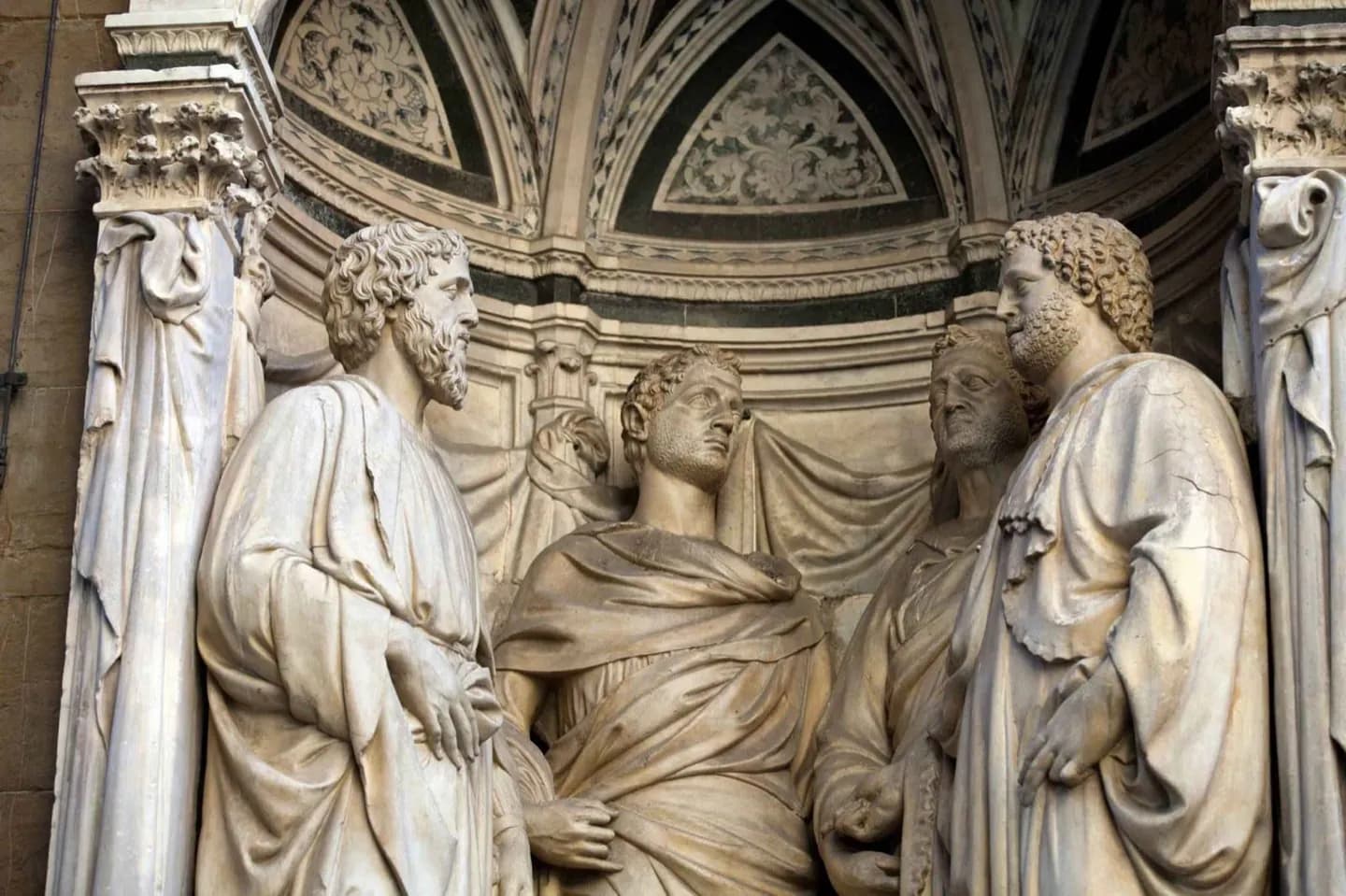
The building explains how trade guilds shaped Florence’s public art. Fourteen façade niches became a competition in stone and bronze, while the former grain store above preserves the originals and offers a city viewpoint unlike the familiar tower terraces nearby.
What to look for
- Read the blocked market arches at ground level as traces of the building’s first use.
- Match the façade niches to the patron saints commissioned by Florence’s guilds.
- Inside, seek Andrea Orcagna’s Gothic tabernacle around the Madonna and Child.
The full story
Orsanmichele began as a grain market, built in 1337 on the site of a former monastic garden. Its open ground-floor arches served commerce, offices occupied the next level, and grain stored above offered protection against famine or siege. Between 1380 and 1404 the market became the chapel of Florence’s craft and trade guilds. The conversion did not erase the building’s civic role; it redirected commercial rivalry toward public art. Guilds were assigned exterior niches and commissioned patron saints from leading sculptors. Wealthier trades chose bronze, then far more costly than stone, as a visible measure of status. The figures outside today are protective copies, while most originals occupy the museum above. Inside, Andrea Orcagna’s elaborate Gothic tabernacle surrounds a painted Madonna and Child, placing an object of devotion within the former market hall. Seen together, granary, church and sculpture museum show commerce and religion sharing one structure rather than occupying separate worlds.
Useful to know
- Inspect the exterior copies first, then use the museum to look for the protected originals upstairs.
- Check the official tourism listing for current museum access before planning around the upper-floor panorama.
Your next visit
Estimated · Declared scenario and planning estimates; no live opening, weather, queue or booking service.
Outdoor visit · 30–45 min
World planning estimate; admission, opening, visit duration and access need checking.