
Why go
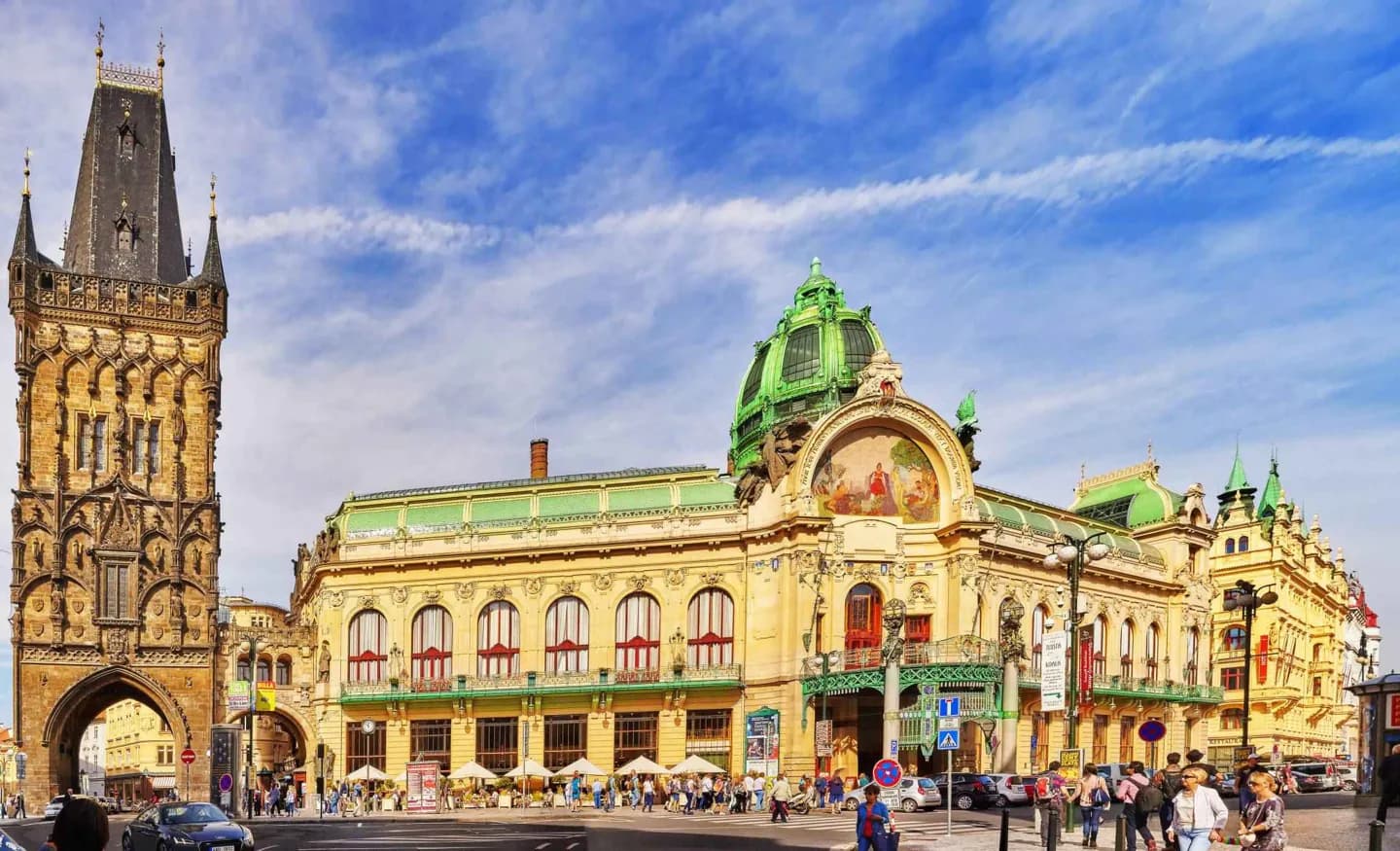
Its setting makes two eras of Prague visible at once: the Gothic gate stands next to a civic building opened in 1912. Study the mosaic above the entrance and the sculpted figures outside. If the interiors matter to you, seek a guided tour or performance to see Smetana Hall and the salons.
What to look for
- Karel Špillar's mosaic sits above the main entrance.
- Allegorical sculpture and stucco enrich the façade.
- Smetana Hall and Art Nouveau salons form the interior tour's main draw.
The full story
Municipal House rose on the site of Prague's former Royal Court, a residence used by Bohemian kings before the court moved to the Castle. The present building opened in 1912, designed by Osvald Polívka and Antonín Balšánek. Its Art Nouveau façade used mosaic, stucco and allegorical sculpture to express a modern civic identity. The building then became a stage for a defining political moment: the declaration of Czechoslovak independence in 1918. This makes its place beside Powder Gate especially telling. A medieval gateway and a twentieth-century civic hall meet at the start of the old ceremonial route through town. Inside, Smetana Hall serves as a concert venue, while decorated salons extend the building's artistic programme. Even from the street, the mosaic above the entrance and the sculpted groups show that this was designed as more than an ordinary office building.
Useful to know
- Check the venue's dated tour or performance programme before planning to enter the historic halls.
- View the exterior together with the neighbouring Powder Gate.
Your next visit
Estimated · Declared scenario and planning estimates; no live opening, weather, queue or booking service.
Indoor visit · 30–45 min
World planning estimate; admission, opening, visit duration and access need checking.