
Why go
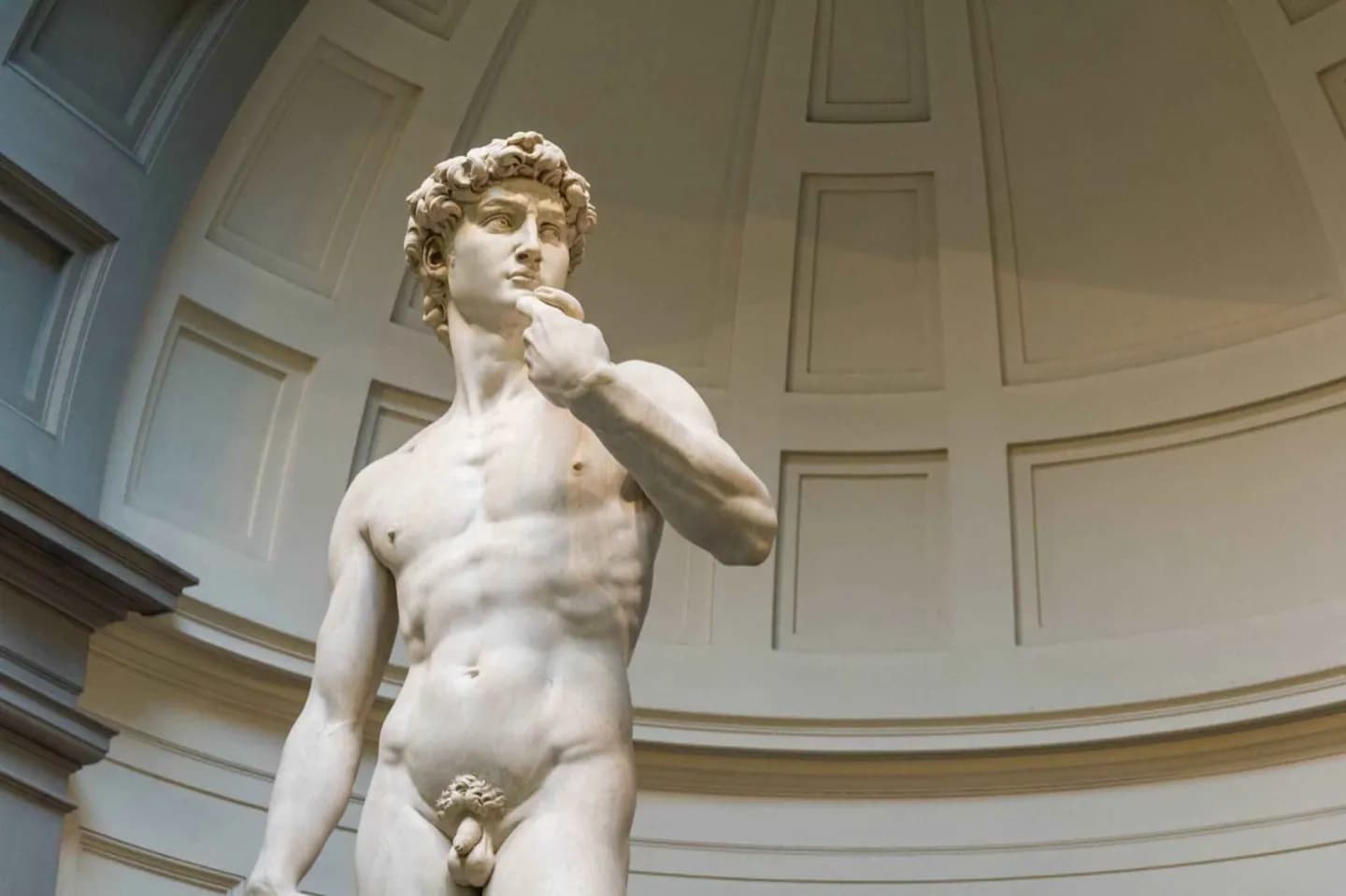
David is the decisive draw, but the approach through Michelangelo’s unfinished Prisoners makes the encounter richer. Their rough, emerging bodies expose the sculptor’s working process before the fully resolved marble stands beneath a tribune designed specifically for its permanent display.
What to look for
- Walk past Michelangelo’s unfinished Prisoners before facing David in the tribune.
- Circle David to compare the poised body with the tense gaze before battle.
- Look for Giambologna’s plaster model for the Rape of the Sabine Women near the entrance.
The full story
The gallery developed from collections for students of Florence’s Academy of Fine Arts, founded in 1784. In 1873, Michelangelo’s David moved indoors from Piazza della Signoria for protection from weather and age. Emilio De Fabris designed the tribune that became its permanent setting in 1882; the figure before Palazzo Vecchio is now a replica. Michelangelo carved David from 1501 to 1504 out of a large marble block that earlier sculptors had begun and abandoned. The commission originally belonged to a cathedral program of biblical figures, but the completed work took on civic meaning when placed before Florence’s seat of government. Rather than showing victory after Goliath’s defeat, Michelangelo presents concentration before action: the sling is understated, the head turns, and tension gathers through the hands and gaze. The gallery’s unfinished Prisoners sharpen that reading by exposing a different stage of carving, where bodies seem caught between raw stone and finished form.
Useful to know
- See David from the end of the gallery first, then move close enough to study the hands, face and sling.
Your next visit
Estimated · Declared scenario and planning estimates; no live opening, weather, queue or booking service.
Outdoor visit · 30–45 min
World planning estimate; admission, opening, visit duration and access need checking.