
Why go
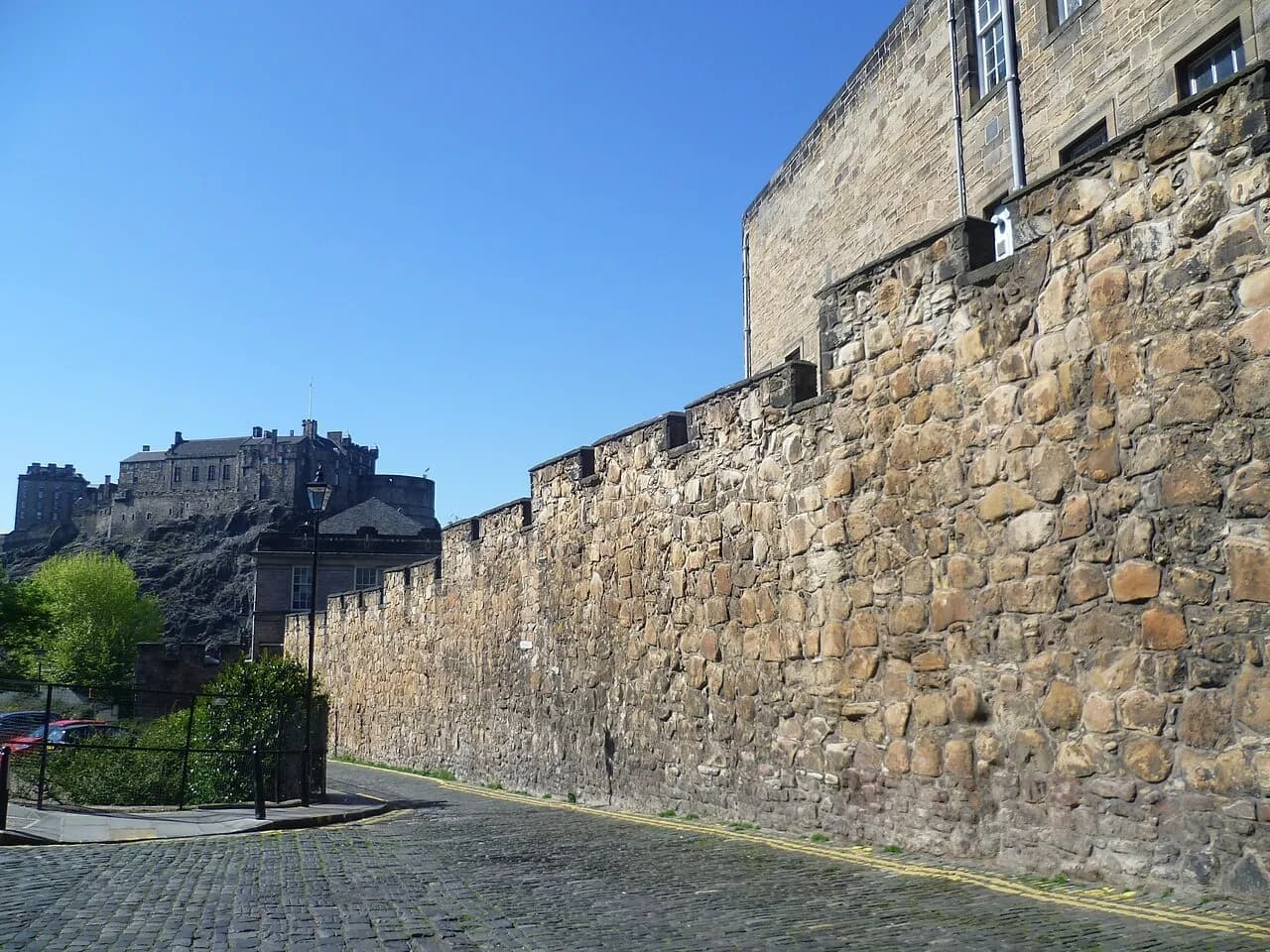
This surviving masonry gives the aftermath of Flodden a physical presence near the Grassmarket. The wall enlarged the burgh’s boundary after James IV’s defeat, but it also helped control goods entering the city. The bastion is worth examining alongside the wider history of Edinburgh’s town walls.
What to look for
- The surviving bastion stands at the Vennel and Heriot Place.
- The expanded boundary brought the Grassmarket and Cowgate within the wall.
The full story
James IV invaded northern England in 1513 in support of France and the Auld Alliance. The Scottish army was heavily defeated at Flodden, and the king died on the battlefield. Edinburgh expected an English invasion and resolved to build a new wall. Construction began the following year but continued until 1560, so this was a long project rather than an immediate emergency barrier. The town council also used the opportunity to tackle smuggling. Extending the boundary south brought the Grassmarket and Cowgate into the enclosed burgh, allowing closer control of trade. The wall had six principal ports and smaller postern gates. Netherbow was the most elaborate entrance, with towers and, after rebuilding, a clock tower above its gateway. The bastion surviving at the south-western extent is a reminder of the wall’s substantial scale. It also shows how military anxiety and the ordinary business of regulating goods shaped the same city boundary.
Useful to know
- Observe the remnant from the surrounding public route; do not assume entry to enclosed premises.
- Pair this stop with the Grassmarket and the history of Edinburgh’s successive town walls.
Your next visit
Estimated · Declared scenario and planning estimates; no live opening, weather, queue or booking service.
Outdoor visit · 15–20 min
World planning estimate; admission, opening, visit duration and access need checking.