
Why go
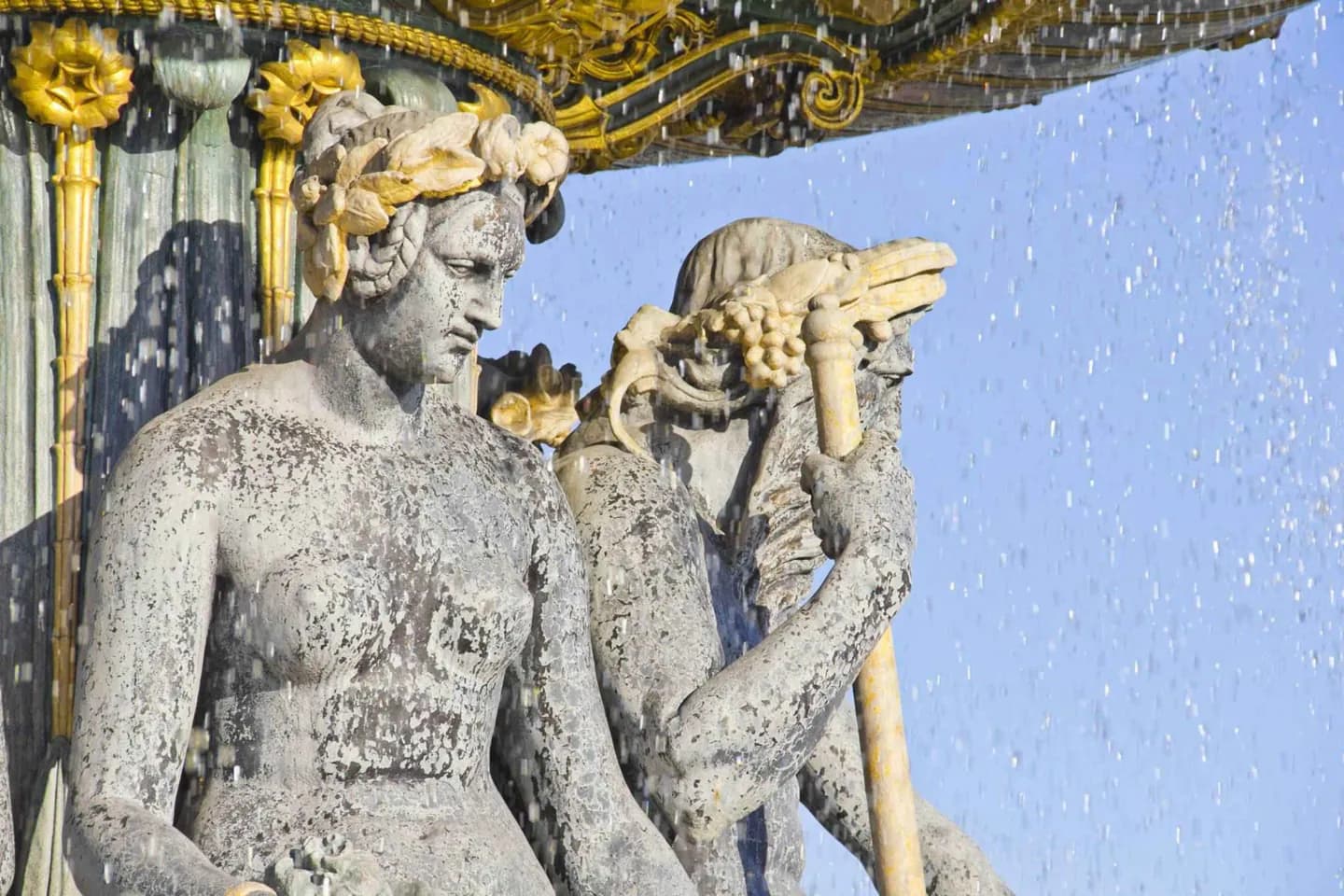
Seen together, the fountains explain how architect Jacques Ignace Hittorff organized this enormous square around water and the obelisk. The southern basin evokes maritime trade and industry; the northern one represents inland navigation and rivers. Bronze figures, cascading bowls and repeated jets reward a slow circuit rather than a passing glance.
What to look for
- The southern fountain represents the seas, fishing and maritime commerce.
- The northern fountain represents French rivers and inland navigation.
- Mushroom-shaped upper basins create distinctive curtains of water.
The full story
Jacques Ignace Hittorff designed the fountains as part of his transformation of Place de la Concorde after the July Revolution. Earlier plans for fountains had failed because central Paris lacked sufficient water. The completion of the Canal de l’Ourcq changed that, and Hittorff developed a new ensemble around the recently arrived Luxor Obelisk. Completed in 1840, the matched fountains draw on Roman precedents in which water features balance an obelisk. Twelve sculptors contributed to their figures under Hittorff’s supervision. Their themes also respond to the square’s setting: the Ministry of the Navy overlooks the site, while an axis runs from the Madeleine through Rue Royale toward the Seine. The result joins urban planning, hydraulic display and allegory into one composition.
Useful to know
- Use the marked crossings to compare both fountains safely across the busy square.
- Walk around each basin to read its different groups of allegorical figures.
Your next visit
Estimated · Declared scenario and planning estimates; no live opening, weather, queue or booking service.
Outdoor visit · 30–45 min
World planning estimate; admission, opening, visit duration and access need checking.