
Why go
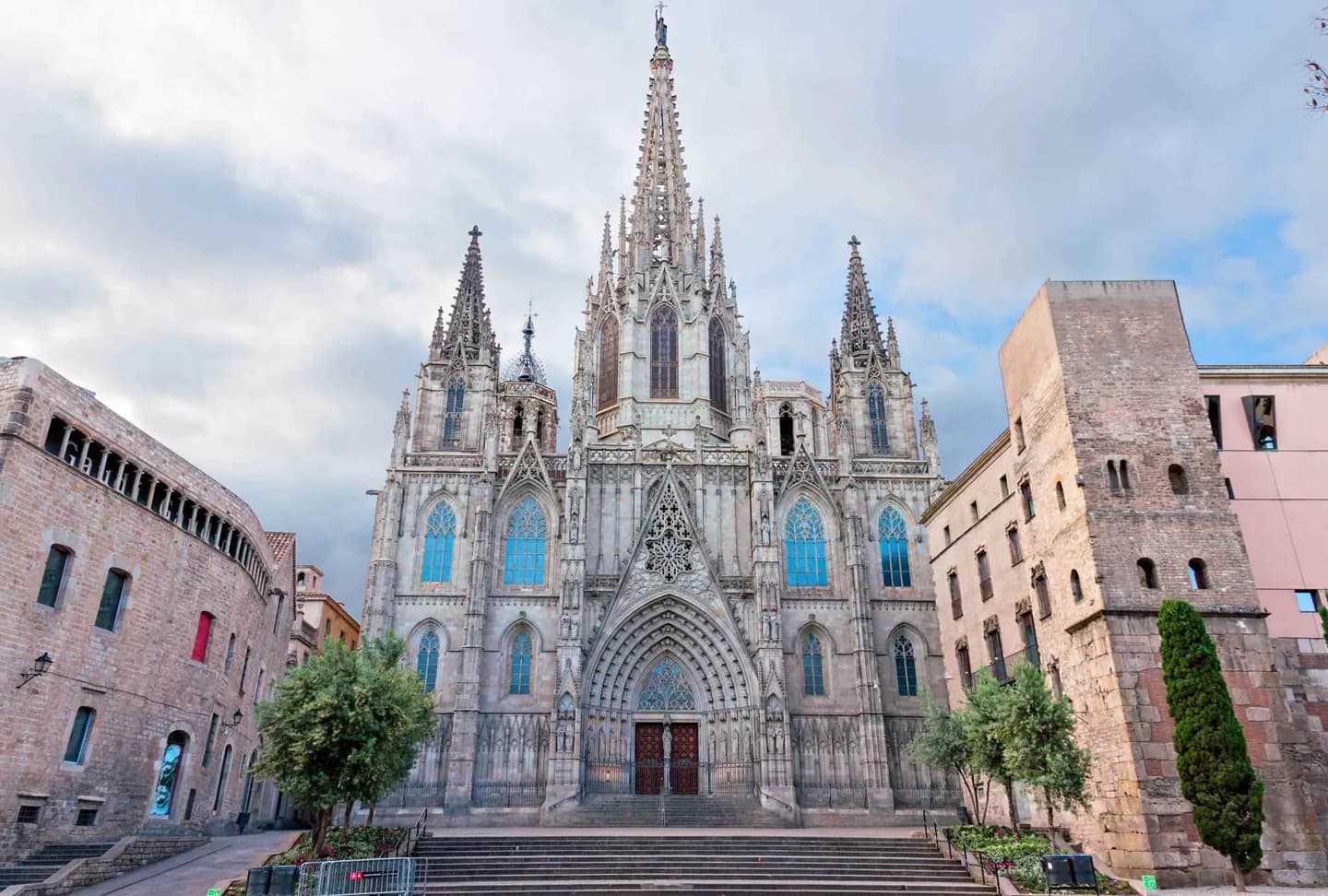
The cathedral rewards more than a look at its main façade. Move into the cloister to see its enclosed garden and geese, then consider the rooftop if you want to understand how the Gothic Quarter’s lanes fit together. The exterior and interior also tell different chronological stories: the prominent neo-Gothic front is later than much of the medieval church.
What to look for
- The cloister pond and thirteen white geese.
- The Gothic church interior and chapels.
- Views across the old city from the rooftop.
The full story
The Cathedral of the Holy Cross and Saint Eulalia grew largely between the thirteenth and fifteenth centuries, when Barcelona’s medieval city was taking shape around it. Its prominent street façade, however, was rebuilt in a neo-Gothic style much later. That mismatch is a reason to look beyond the first view from the square. Inside, the chapels and vaulted space lead toward the cloister, completed in the fifteenth century. Its pond is home to thirteen white geese, a detail closely associated with the cathedral and its patron saint. The roof offers a different reading of the same site: from above, the dense lanes of the Gothic Quarter spread around the church. Taken together, these spaces show the cathedral as a layered urban place, rather than just one façade or one era.
Useful to know
- Allow time for the cloister instead of stopping at the main façade.
- Check the cultural-visit timetable, especially on weekends, before planning an interior visit.
Your next visit
Estimated · Declared scenario and planning estimates; no live opening, weather, queue or booking service.
Outdoor visit · 15–25 min
Public-space exterior observation only; no interior, tower, rooftop or ticketed entry. Duration and walking are estimates; temporary restrictions may apply.