
Why go
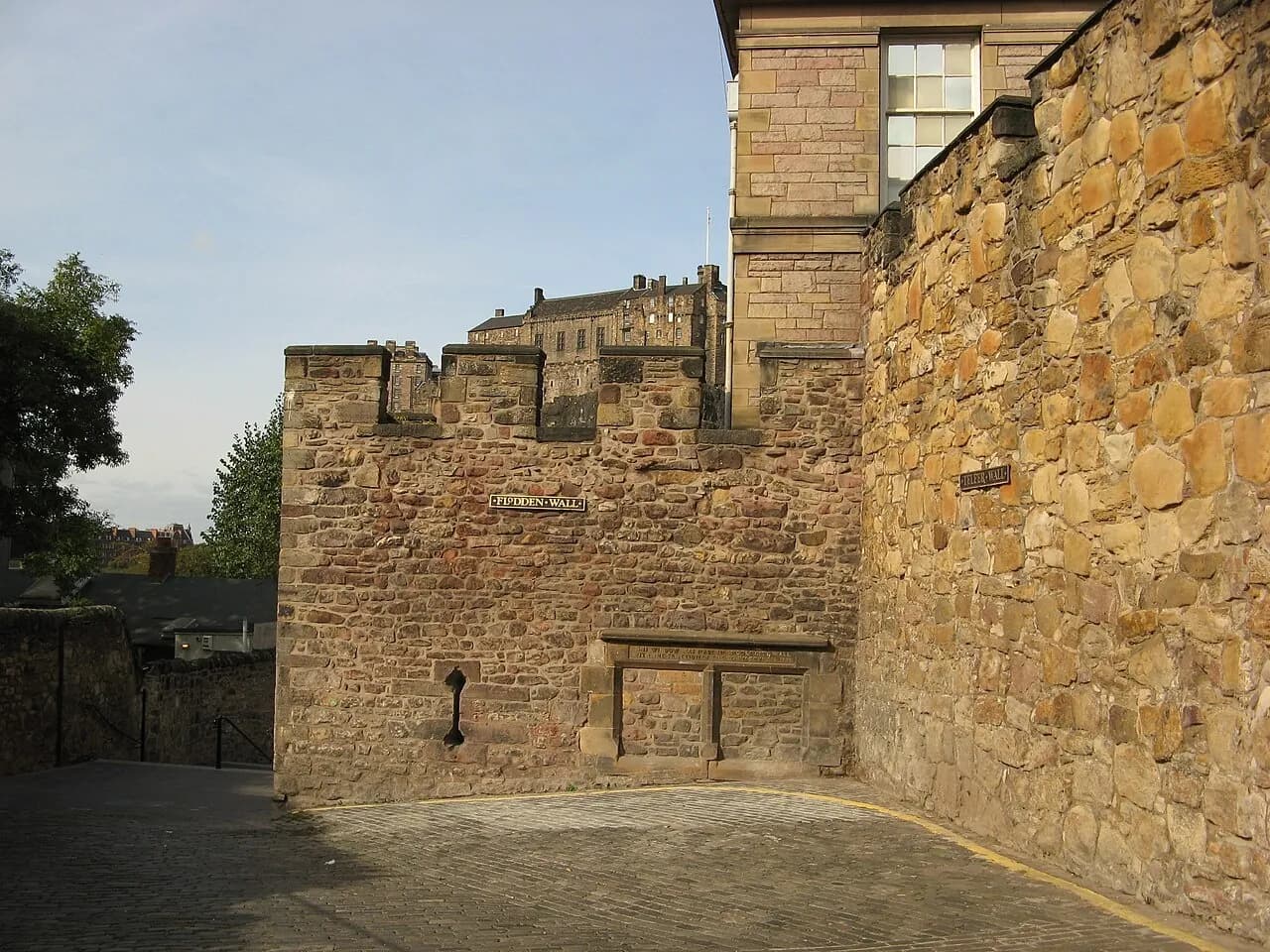
Read this before visiting the Flodden Wall at the Vennel and Heriot Place. The surviving stone belongs to a longer story of successive boundaries, gates and taxation. Knowing how the King’s, Flodden and Telfer walls worked makes a modest remnant more revealing than its size suggests.
The full story
The surviving walls are fragments of several successive boundaries. The first recorded construction was the King’s Wall in the mid-fifteenth century. A larger Flodden Wall followed Scotland’s defeat in 1513, and the Telfer Wall extended it in the early seventeenth century. The Flodden and Telfer bastion at the Vennel and Heriot Place is a useful place to connect this history to surviving masonry. Gates were called ports. The most important, Netherbow Port, stood partway down the Royal Mile, separating Edinburgh from the Canongate, then a distinct burgh with walls of its own. These boundaries were more effective at controlling trade, taxing incoming goods and discouraging smugglers than at stopping attackers. The walls were breached more than once. By the middle of the eighteenth century, their defensive and commercial purposes had faded. Demolition began, Netherbow Port came down in 1764, and further sections disappeared into the nineteenth century. None of the ports survives. Treat the Flodden Wall stop as a tangible fragment of this wider system, rather than searching for a separate Town Walls venue.