
Why go
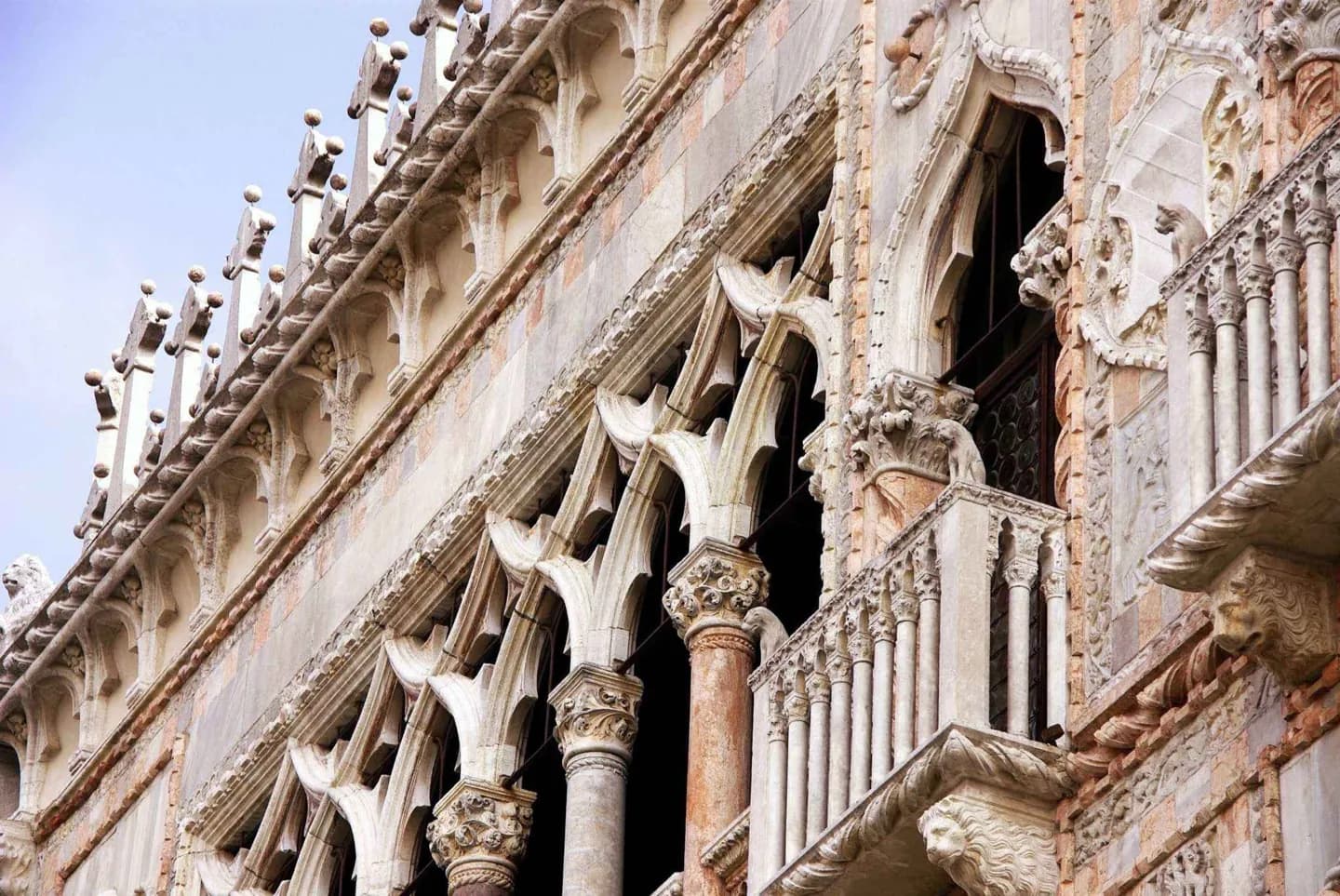
The façade is a clear place to study Venetian floral Gothic: colonnades, arches and quatrefoil openings become lighter as they rise. The gallery adds the perspective of Giorgio Franchetti, whose collecting and restoration shaped the palace's modern identity. This makes the building itself part of the cultural experience, rather than simply a container for art.
What to look for
- A recessed ground-floor loggia opens toward the Grand Canal.
- Quatrefoil openings sit above the arches of the principal-floor balcony.
- The upper loggia repeats the composition in a lighter form.
The full story
The name Ca’ d’Oro means Golden House. It recalls the gilding and colored decoration that once covered the exterior, so the pale façade seen today represents only part of its original visual effect. Built for the Contarini family in the fifteenth century, the palace was designed by Giovanni Bon and his son Bartolomeo. Its canal front organizes the principal spaces in rising layers. The lower loggia led directly from the water into the entrance hall, while the balconies above served the formal floors. The progressively lighter arches make the structure seem delicate without disguising its role as a substantial residence. After several changes of ownership and damaging alterations, Giorgio Franchetti acquired the palace in 1894. He restored its courtyard stairway and created a marble pavement using ancient materials, while assembling an art collection. His bequest to the Italian state in 1916 joined the house and collection in a public legacy. Preservation, architecture and collecting are inseparable here.
Useful to know
- Allow separate attention for the palace architecture and the Franchetti collection.
- Check the museum visit page before planning the gallery stop.
Your next visit
Estimated · Declared scenario and planning estimates; no live opening, weather, queue or booking service.
Indoor visit · 45–90 min
World planning estimate; admission, opening, visit duration and access need checking.