
Why go
The contrast between palace and collection gives this museum its character. Longhena's elaborate Grand Canal frontage belongs to patrician display, while the art connects Venice with experimentation and younger artists. It offers a different modern-art perspective from the personal collection at Peggy Guggenheim's former home.
What to look for
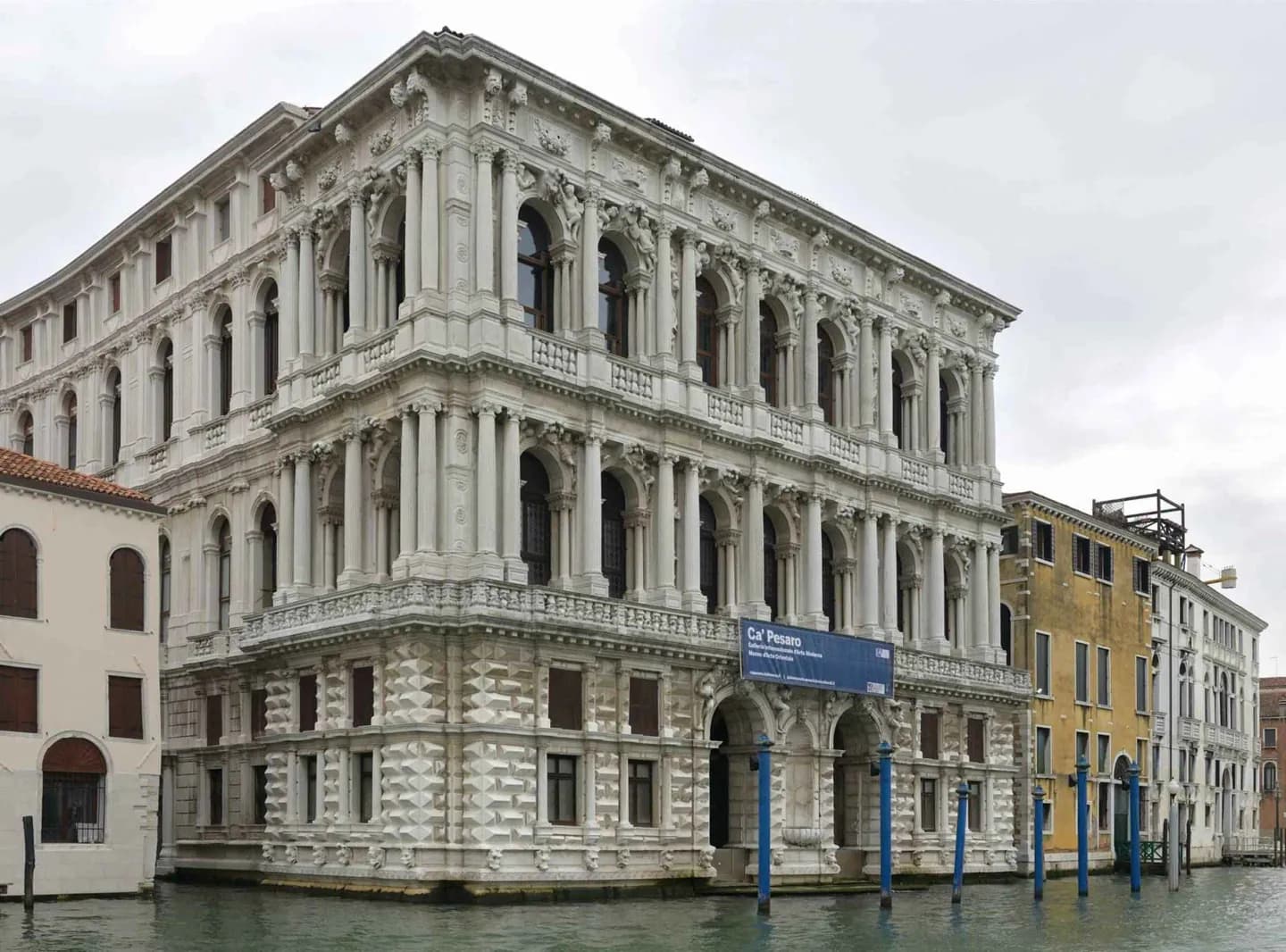
- The façade's columns and arched windows rise above a rusticated lower level.
- Adolfo Wildt's sculpture is a collection focus.
- The collection includes postwar Venetian artists such as Emilio Vedova and Tancredi.
The full story
The Pesaro family built the palace to display wealth and rank. Longhena designed it, and Gian Antonio Gaspari completed the unfinished project after his death. The original family art collection later dispersed, so today's museum is not simply the surviving contents of a noble household. Its civic role came through Duchess Felicita Bevilacqua La Masa, who bequeathed the building to Venice for modern art. The municipal collection grew through acquisitions and donations, including purchases associated with the Biennale. Exhibitions at Ca' Pesaro also supported younger artists, at times offering an alternative to the larger international exhibition. That history explains the range of the collection. Sculpture by Wildt and work associated with postwar Venetian movements belong to a continuing story of artistic experimentation. The palace became a place for new art rather than a permanent tribute to the taste of its original owners.
Useful to know
- Reserve a dedicated indoor visit for the modern-art collection rather than only viewing the canal façade.
- Compare the courtyard and entrance hall with the palace frontage to follow Longhena's architectural contrasts.
Your next visit
Estimated · Declared scenario and planning estimates; no live opening, weather, queue or booking service.
Indoor visit · 60–120 min
World planning estimate; admission, opening, visit duration and access need checking.