
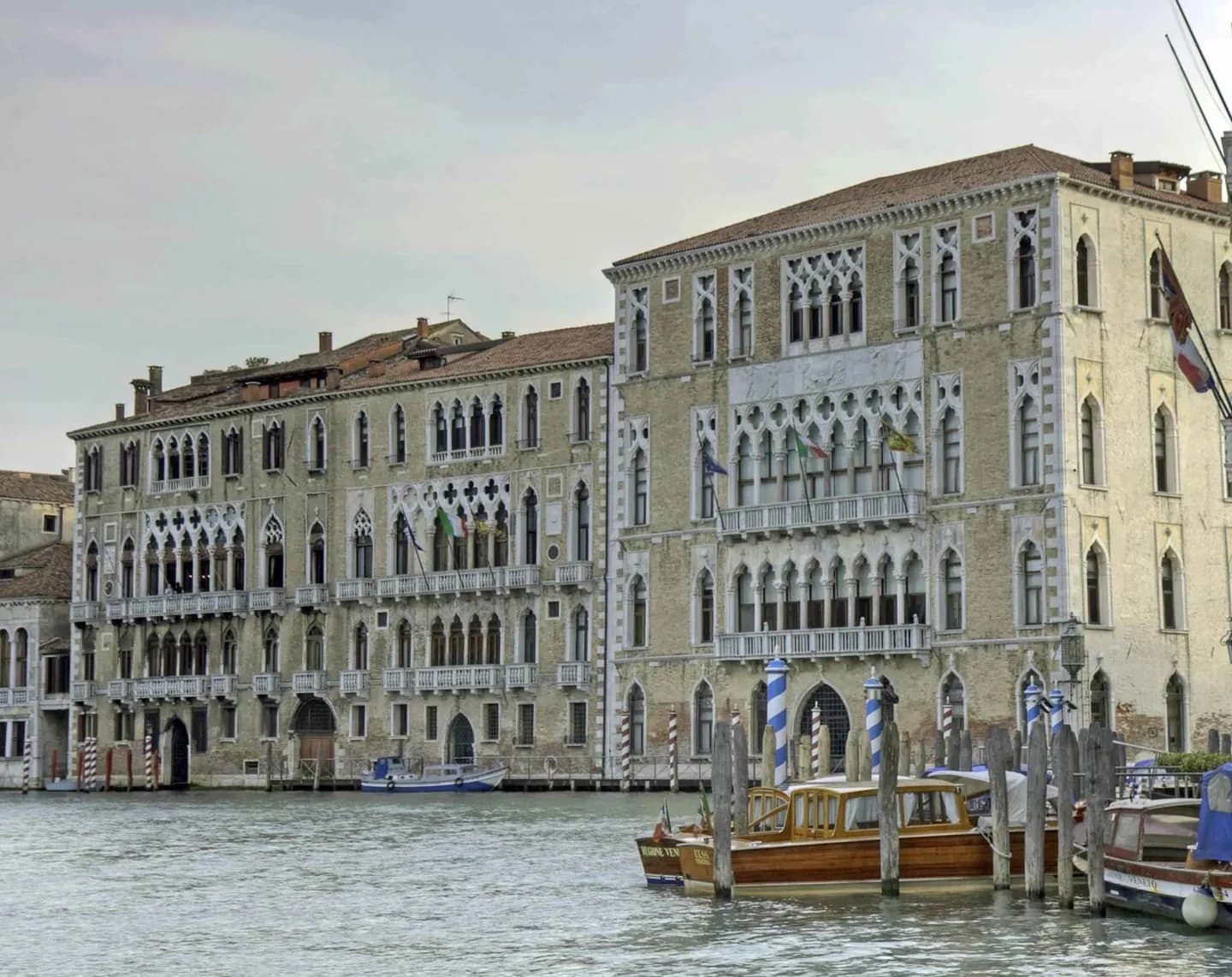
Why go
The canal-facing loggias show how a noble residence could address Venice's busiest waterway. Their stacked Gothic openings distinguish the palace from the classical façades nearby. Its association with Francesco Foscari also gives a useful contrast with San Marco: this was a doge's family residence rather than the Republic's government palace.
What to look for
- Two stacked central loggias use Venetian floral Gothic forms.
- Smaller windows flank the central openings.
- The palace occupies a prominent bend of the Grand Canal.
The full story
Francesco Foscari acquired the site and replaced an earlier palace with a new residence suited to his position. The location on the Grand Canal was part of that ambition: the frontage announced status from the water. Foscari was forced from office shortly after the rebuilding and retired to the house, giving the palace a connection with both political confidence and personal disgrace. Its arrangement also explains the workings of a patrician residence. Storage occupied the lower level, while the principal upper floors served formal entertaining and domestic life. The central loggias brought light to the large halls behind them. The university's use introduced a different public role. Carlo Scarpa worked on the transformation of a great hall into a lecture space, adding modern design to the Gothic building. Ca' Foscari thus connects a noble household's display with the continued adaptation of historic architecture for education.
Useful to know
- Include the frontage in a Grand Canal architecture walk through Dorsoduro.
- Consult the university's tour information for the halls; this is a working university building.
Your next visit
Estimated · Declared scenario and planning estimates; no live opening, weather, queue or booking service.
Outdoor visit · 10–20 min
World planning estimate; admission, opening, visit duration and access need checking.