
Why go
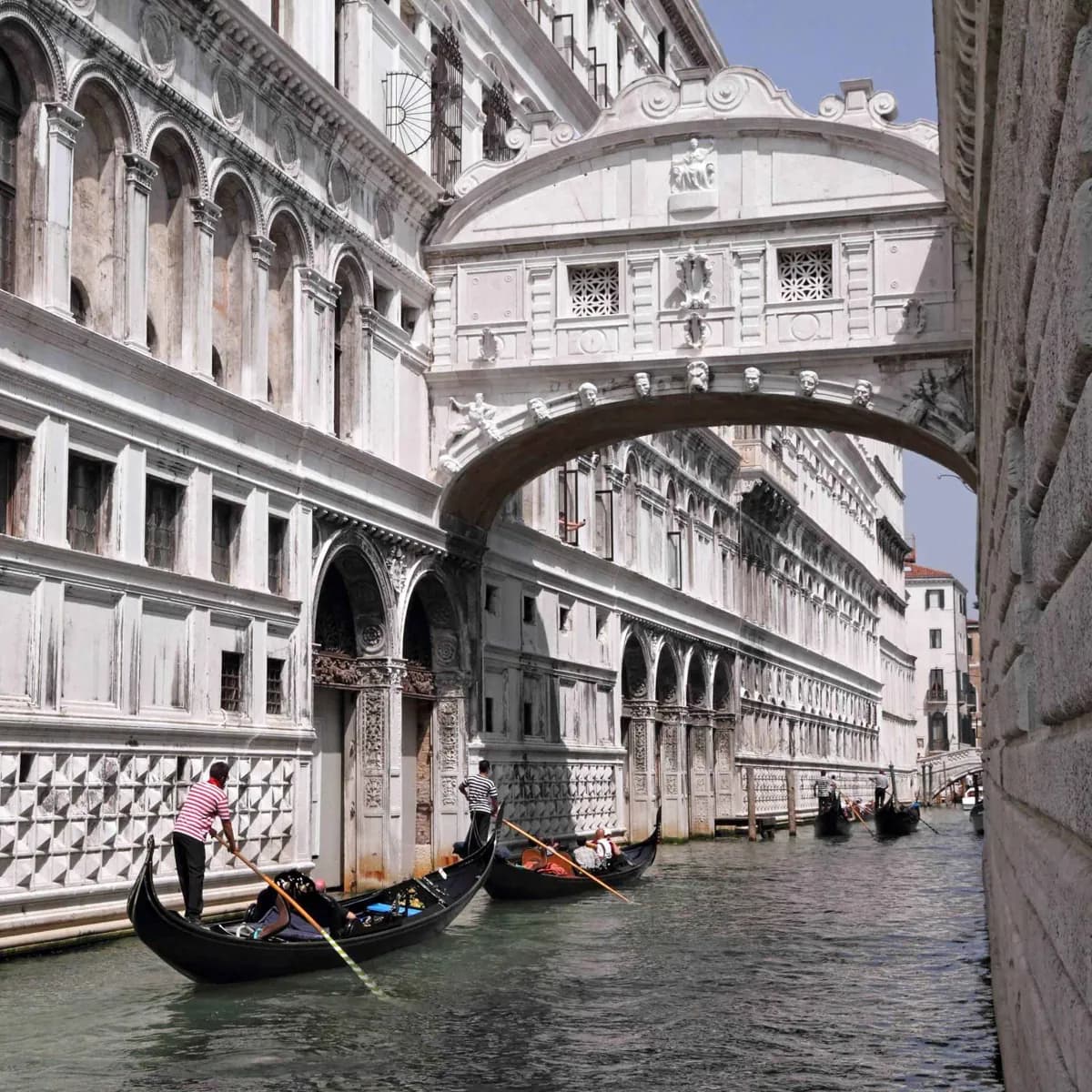
The contrast between its decorative exterior and restricted windows is the main point to notice. It was a working link in the palace's prison system, with separate internal corridors. The familiar Romantic name adds another layer, showing how a piece of judicial infrastructure became an image of Venice.
What to look for
- Stone grilles cover the bridge's small windows.
- The enclosed crossing spans the Rio di Palazzo.
- Its pale stone exterior joins the palace and prison buildings.
The full story
The bridge's purpose was to move people between the palace's judicial rooms and the New Prisons. Its enclosed design and two separate corridors belong to that practical function. The windows were not broad viewing openings: their stone grilles allowed only limited glimpses outside. Its name draws on a later Romantic association with prisoners sighing at a final sight of the lagoon. That interpretation has shaped how the bridge is imagined, but it should not replace the physical evidence. The small, barred openings and controlled passage tell a more precise story about confinement than a sweeping farewell view. The distinction matters on site. From outside, the bridge can look like another elegant Venetian ornament. Seen as part of the adjoining palace and prison buildings, it becomes a connection between civic authority and custody. Its fame rests on the tension between that original function and the emotional story later attached to it.
Useful to know
- Combine the exterior view with the Doge's Palace if you want the bridge's judicial context.
- Treat this as a short observation during a San Marco waterfront walk.
Your next visit
Estimated · Declared scenario and planning estimates; no live opening, weather, queue or booking service.
Outdoor visit · 10–15 min
World planning estimate; admission, opening, visit duration and access need checking.